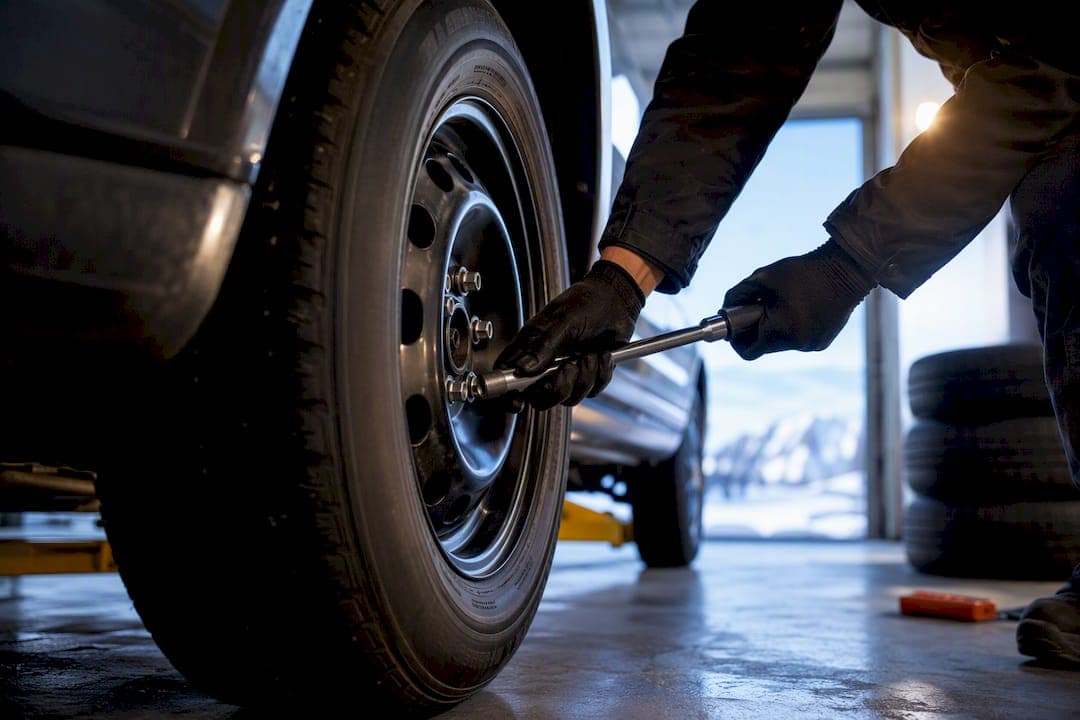
Switch to winter tires in Calgary typically in the fall when temperatures drop consistently below 7°C, and switch back to summer or all-season tires in spring once temperatures consistently rise above 7°C, often around mid-April or after Victoria Day. The trigger is temperature, not the calendar: watch for a consistent stretch below 7°C in your overnight and daytime forecasts, since a Calgary chinook or a freak October snowfall can shift either window by weeks.
TL;DR:
- The optimal time to switch to winter tires in Calgary is once overnight lows stay below 7°C for a week or two, not simply when the calendar indicates.
- Booking early in October is crucial because shops fill up quickly after the first significant snowfall, especially in busy neighborhoods and during cold snaps.
- Spring removal should only occur after several days of consistently staying above 7°C, with caution for late snowfalls or overnight frosts in mountain areas.
- Using winter tires before the 7°C threshold can cause unnecessary wear and reduce tire lifespan, while leaving them on in warm weather impairs safety and fuel efficiency.
- Check tire tread depth, pressure, and sidewall symbols before swapping and consider mobile or multiple shop options to avoid last-minute delays.
Table of Contents
- Fall timing: when to install winter tires in Calgary
- Spring timing: when to remove winter tires safely
- Why the 7°C rule matters for your safety
- Calgary's weather quirks that complicate the timing
- Risks of switching too early or leaving winters on too long
- Your swap-day checklist for a safe seasonal change
- Where to book your seasonal tire swap in Calgary
- Local perspective: how Calgary drivers actually behave
- How GarageMap helps you book your seasonal swap
- Sources
- FAQ
Fall timing: when to install winter tires in Calgary
Most Calgary drivers book their swap sometime between late October and mid-November, but the right week depends on how the season is behaving, not a fixed date on the wall calendar. If an early cold snap hits in the first half of October, that's your cue to move sooner rather than wait for a specific week to arrive.
The 7°C rule gives you a concrete way to decide. Once your local forecast shows overnight lows dropping into single digits and staying there for a week or two, rubber compounds on all-season tires start losing grip even without snow on the ground. Check a 7 to 14 day outlook rather than reacting to one cold morning.
Booking early matters more in Calgary than the actual install date does. Shops fill up fast once the first real snowfall lands, and local reporting has noted that Calgary shops get booked solid after that first heavy snow catches drivers off guard.
- Watch overnight lows and 7 to 14 day forecasts rather than a single cold day.
- Book your appointment in early to mid-October, even if the install happens later; for expert guidance on winter tire and brake maintenance, check out First Stop Braking in Canada for tips on keeping your vehicle safe all season.
- Ask about weekday slots or mobile swap services, which tend to have shorter waits than weekend bookings.
Spring timing: when to remove winter tires safely
Spring removal in Calgary typically falls between mid-April and sometime after the Victoria Day long weekend, depending on how the season plays out. The safest signal is a run of several consecutive days holding above 7°C, not just one warm afternoon followed by a cold snap.
Alberta has no legislated swap dates in either direction. The Alberta government's own guidance frames winter tires as a safety recommendation, not a legal requirement, which means the decision sits entirely with you and the weather in front of you.
- Confirm several straight days above 7°C before booking removal, not just a mild weekend.
- If you regularly drive into the mountains or higher elevations west of the city, hold off longer since spring snow lingers there.
- Keep an eye on overnight lows through April: a warm afternoon can still be followed by a hard frost.
Why the 7°C rule matters for your safety
Winter tire rubber is formulated to stay flexible in cold weather, while all-season and summer compounds start stiffening and losing grip once temperatures drop below roughly 7°C, even on dry pavement with no snow in sight. That's the part drivers often miss: this isn't only about snow traction, it's about how the rubber itself behaves in the cold.
Transport Canada's testing backs this up, showing that winter tires cut stopping distances compared with all-season tires in cold and snowy conditions, and the department recommends using winter tires in severe weather. Look for the mountain-and-snowflake (3PMSF) symbol on the sidewall when you're shopping. It confirms the tire meets the recognized winter performance standard rather than just being marketed as an all-weather option.
This is why a cold, clear, dry January morning can still be more dangerous on all-season tires than a mild, snowy one on winters. Temperature, not visible precipitation, is doing the work.
Calgary's weather quirks that complicate the timing
Chinooks are the wrinkle that makes Calgary trickier than most Canadian cities when it comes to tire timing. A chinook can push afternoon temperatures well above freezing while overnight lows still dip hard, which means a warm, sunny Tuesday tells you almost nothing about Wednesday's 6 AM commute.
Drivers on the outskirts, in communities like Airdrie, Chestermere, or Okotoks, often deal with more open road exposure and longer commutes, so timing decisions there carry a bit more weight than a short in-city drive. A longer highway commute means more time on pavement that cools faster once the sun goes down.
Rather than trusting a single forecast, check a rolling 7 to 14 day outlook from Environment Canada and watch the overnight low trend specifically, not just the daytime high. That's the number that tells you when the rubber is actually going to struggle.
Risks of switching too early or leaving winters on too long
Swapping to winter tires before the weather actually turns costs you tire life for no safety benefit. Winter tire compounds wear faster on warm, dry pavement than all-season rubber does, so every week you run them above 7°C for no reason shortens the tread life you paid for.
The flip side carries its own cost. Winter tires left on through a warm Calgary spring lose braking performance and cornering grip on dry roads, and they tend to burn a bit more fuel than a properly matched all-season set.
Mixing tire types, winters on the front and all-seasons on the back, is a bigger risk than either extreme, since it can throw off handling balance in a skid or hard stop. Run four matching tires, always. Alberta doesn't mandate winter tires by law, but drivers are still expected to operate their vehicle safely for the conditions in front of them.

Your swap-day checklist for a safe seasonal change
A few minutes of checking before you book saves you a wasted trip or a bad surprise mid-winter.
- Confirm the forecast is trending consistently below (or above, in spring) 7°C before locking in your appointment.
- Measure tread depth on your winter set, aiming for more than 4 millimetres if you want a full season of grip left.
- Check tire pressure cold, using the spec on your door frame rather than the number printed on the tire sidewall, since Transport Canada notes cold weather drops tire pressure and it needs rechecking through the season.
- Look for the 3PMSF snowflake symbol if you're buying new winters rather than reusing an older set.
- Ask your shop whether they balance and properly torque the wheels after the swap, not just bolt them on.
Pro Tip: Mark your winter wheels with a paint dot or zip tie on install day, it makes next year's swap faster and helps the shop spot any uneven wear right away.
Ask about mobile swap options, expected wait times right after the first snowfall, and whether they offer seasonal tire storage if you don't have space at home.
Where to book your seasonal tire swap in Calgary
Calgary has a fairly deep bench of shops that handle seasonal swaps, and lead times shift hard once the first snow hits. Shops like Prince Tires, Good Tire, TIRE SURPLUS Calgary Wheel & Tire Shop, and KMJ TIRE Calgary tend to be busy independents with strong local followings, while larger chains such as Kal Tire, Fountain Tire, Canada Tire, and Canada Tire Pro offer more locations and appointment flexibility across the city.
The practical difference between them usually comes down to booking lead time rather than the swap itself. Independent shops can book up a week or more in advance once cold weather arrives, while multi-location chains sometimes have more flexibility if one branch is full. Either way, calling or booking online in early October, before the rush starts, beats trying to get a same-week slot in November.
If you'd rather compare several shops at once instead of calling around individually, GarageMap's tire services page lets you check availability and request quotes from multiple vetted shops across Calgary in one search. It's a faster way to see who has open slots before the post-snowfall crunch hits.

Local perspective: how Calgary drivers actually behave
Community forums and local reporting both point the same direction: most Calgary drivers change over in late October or early November, following the weather rather than a fixed date. Daily commuters tend to move earlier, since a bad morning commute on bald all-seasons is a bigger risk for them than for someone who mostly drives short errands. Either way, the operational reality holds: shops fill up fast right after the first serious snowfall, so booking ahead of that rush, not after it, is what actually protects you.
— Andrii
How GarageMap helps you book your seasonal swap
Finding a shop with an open slot in late October shouldn't mean five phone calls and three voicemails. You can compare tire shops across Calgary and surrounding areas in one search, so you can see who actually has availability before you commit to a date.
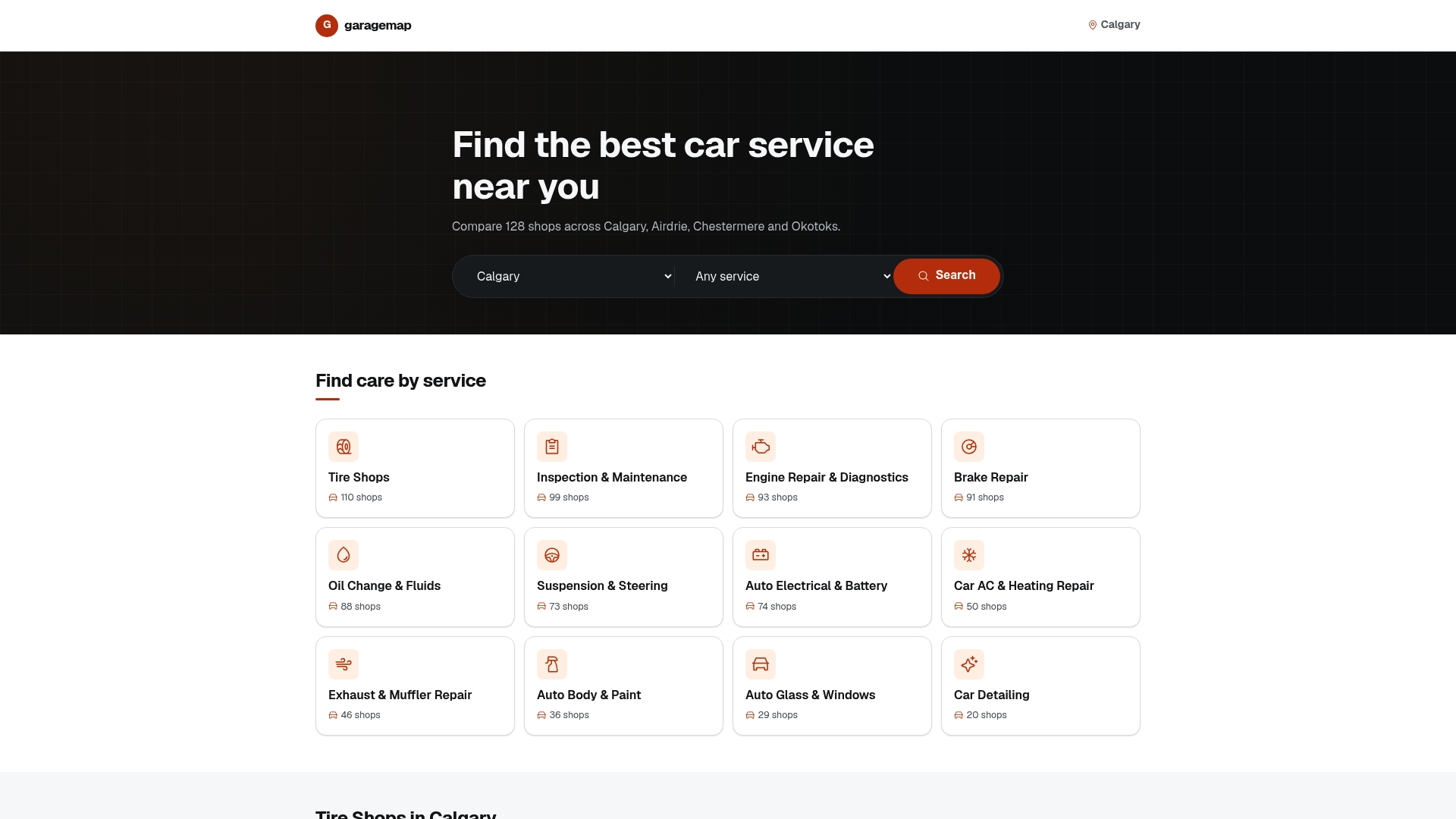
- Use the Calgary landing page to check local availability and request quotes directly from shops near you.
- Book a pre-winter inspection alongside your swap if your brakes or suspension need a look before the cold sets in.
Compare a few shops, request quotes, and lock in your slot before the first snowfall fills every calendar in the city.
Sources
For the science behind the 7°C rule and stopping-distance testing, see Transport Canada's winter tire guidance. For Alberta's official stance on winter tire use, see Alberta's safer winter highways guidance. For local timing patterns and shop demand, see CBC's Calgary reporting, and for province-by-province timing details, see Michelin Canada's guidance.
- Using winter tires | Transport Canada
- Alberta
- Need winter tires? A car expert breaks down your options | CBC
- When to put on winter tyres in Canada | Michelin Canada
FAQ
What is the 7°C rule for winter tires?
The 7°C rule says rubber in all-season tires starts stiffening and losing grip once temperatures consistently drop below 7°C, even without snow on the ground. Michelin Canada recommends switching to winter tires once daily temperatures stay below that threshold.
Is October too early for snow tires in Calgary?
Early to mid-October isn't too early if a cold snap or early snowfall has already arrived, since booking ahead of the rush beats scrambling in November. For a typical year, late October through mid-November is the window most Calgary drivers use, based on local reporting.
How early is too early to put on winter tires?
Installing winter tires while daytime and overnight temperatures are still consistently above 7°C wears them down faster for no safety benefit. Wait until your forecast shows a sustained cold trend rather than switching on the calendar alone.
What is the deadline for winter tires in Alberta?
Alberta has no legislated deadline or mandate for winter tires. The Alberta government encourages their use for safety but leaves the timing decision to drivers based on conditions.