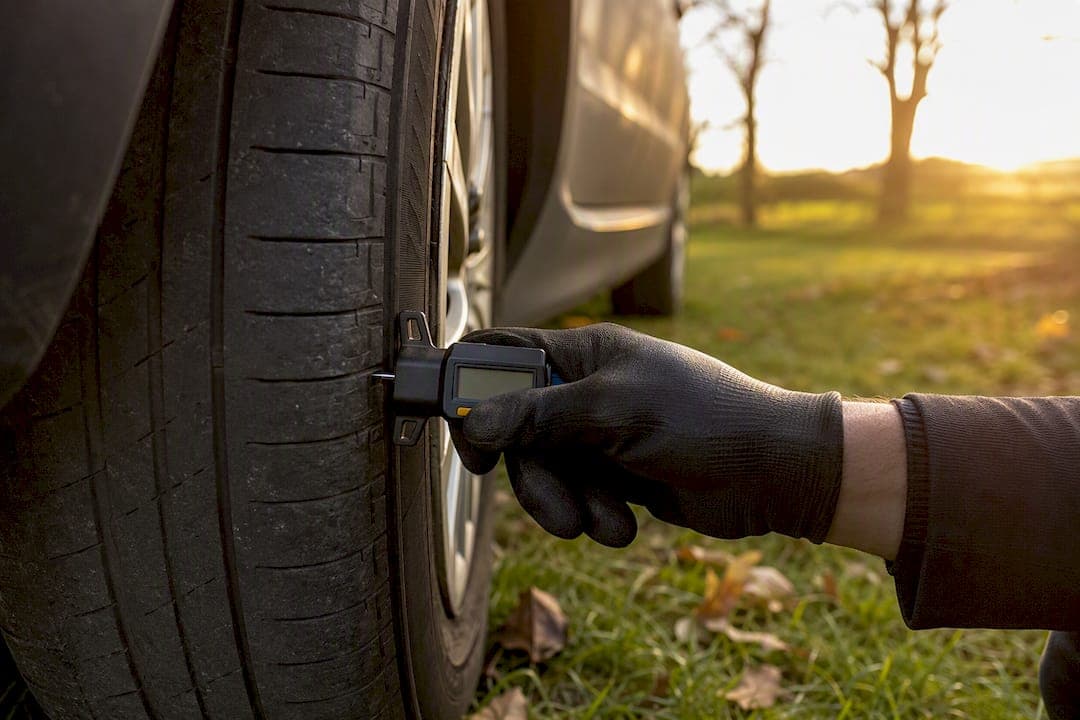
Get an alignment now if your car pulls to one side, the steering wheel sits off-centre, you feel vibration or wandering at speed, or your tyres show uneven wear. Otherwise, treat wheel alignment like an oil change: build it into a routine, roughly once a year or every several thousand miles.
Certain events move that timeline up immediately, no matter when you last checked. Hitting a pothole hard, scraping a curb, any collision, or having steering and suspension parts replaced all justify a same week check, according to Yokohama. New tyres deserve the same treatment before they wear unevenly.
- Pulling, off-centre steering, uneven tread wear, or vibration at speed: book now
- Recent pothole, curb strike, collision, or suspension/steering repair: book now
- No symptoms, no recent incidents: check annually or every 12,000 to 15,000 miles
- Ask for a measurement-only check and a before-and-after printout so you're paying for a documented fix, not a guess
Key Takeaways
Booking an alignment comes down to two triggers: acting immediately on symptoms or impact events, and keeping a steady annual or 12,000 to 15,000 mile baseline otherwise.
| Point | Details |
|---|---|
| Watch for four core symptoms | Pulling, off-centre steering, uneven tread wear, and vibration all mean book an alignment check now. |
| Trigger events override the calendar | Potholes, curb strikes, collisions, and suspension or steering repairs all call for an immediate check. |
| Baseline is annual or mileage-based | Check every 12,000 to 15,000 miles for typical driving, more often for rough roads or towing. |
| Get the printout, not just a promise | A legitimate shop shows before-and-after camber, toe, and caster measurements before you pay. |
| Pair checks with routine service | Tie your alignment check to a tyre rotation or seasonal swap so it never gets forgotten. |
Table of Contents
- Signs your car needs an alignment
- Events that mean you need an alignment check right away
- How often to get an alignment
- Alignment versus balancing, and what actually gets adjusted
- What to expect at the alignment shop
- Small habits that protect your alignment between visits
- Finding a shop you can trust with the job
- Why most drivers get the timing wrong
- Sources
Signs your car needs an alignment
Your car will usually tell you something's off before a technician has to. The trick is knowing which sensations are alignment issues and which are something else entirely, like a low tyre or a worn ball joint.
- The car pulls to one side. On a flat, empty road, take your hands off the wheel for a second (safely, at a legal speed) and see if the car drifts left or right instead of tracking straight.
- The steering wheel sits crooked. If you're driving straight but the wheel's logo or spokes are tilted, that's a toe or caster issue, not your imagination.
- Tyres wear unevenly. Run your palm across the tread. Feathering, cupping, or wear concentrated on one edge points to camber or toe problems, not just old rubber.
- You feel vibration or a vague, wandering feel at speed, or hear squealing through turns.
Any one of these on its own is worth a look. Two or more together, and you're likely overdue. Yokohama's guidance lists these same four signs as the clearest indicators that suspension geometry has shifted out of spec.
Pro Tip: Park on level ground, centre the wheel, then walk around the car and photograph each tyre's tread up close. Do this every few months and you'll spot uneven wear patterns long before they become a pulling problem.
Events that mean you need an alignment check right away
Alignment doesn't only drift with age and mileage. Certain impacts and repairs knock suspension geometry out of position instantly, and waiting for your next scheduled service just means driving on tyres that are already wearing wrong.

A hard pothole strike or a curb scrape can bend a tie rod or shift a control arm just enough to throw off toe and camber, even when nothing looks visibly damaged, based on Yokohama's findings on trigger events. Collisions, even minor fender benders, carry the same risk.
Beyond impacts, any of the following repairs should trigger an alignment check before you drive off the lot:
- Strut or shock replacement
- Tie rod or tie rod end replacement
- Control arm work
- Ball joint replacement
- New tyre installation
If you're not sure whether a recent bump did any damage, ask the shop for a suspension and steering inspection alongside a measurement-only alignment check. That gives you a printout showing whether anything's actually out of spec before you pay for a full adjustment.
How often to get an alignment
For most drivers on paved roads with a stock suspension, once a year or every several thousand miles is a sensible baseline, a range echoed in Michelin's maintenance guidance. A properly done alignment on healthy suspension components can actually hold for two to three years under normal conditions, but that's the upper limit, not something to count on.
Several things shrink that window considerably:
- Frequent driving on gravel, potholed streets, or unpaved roads
- Regular towing or hauling heavy loads
- Lowered or otherwise modified suspension
- Autocross, track days, or aggressive cornering
If any of those describe your driving, check annually at minimum, and consider every six months if you're doing performance driving regularly. The easiest way to stay on schedule without adding extra shop visits is pairing the check with something you're already doing, like a tyre rotation or a seasonal tyre swap.
Alignment versus balancing, and what actually gets adjusted
These two get lumped together constantly, but they fix completely different problems. Balancing corrects uneven weight distribution around a wheel and tyre, the thing that causes a vibration through the steering wheel at highway speed. Alignment adjusts the angles of your suspension so the tyres meet the road correctly, which is what Cars as the real fix for pulling and uneven wear.
Three angles matter here:
- Camber: the tyre's inward or outward tilt when viewed from the front. Bad camber wears one edge of the tread faster than the other.
- Toe: whether the tyres point slightly inward or outward relative to each other. Off toe causes feathered, sawtooth wear.
- Caster: the steering axis tilt, which affects stability and steering return.
Getting these right takes calibrated rack equipment and a trained technician, not a wrench and a guess.
What to expect at the alignment shop
A shop visit for alignment usually starts one of two ways: a measurement-only diagnostic, which tells you what's out of spec without touching anything, or a full adjustment where the technician actually corrects those angles. TireAdvise notes that many shops offer the measurement-only option specifically so you can see the problem before paying to fix it.
- Expect roughly an hour for a standard four-wheel alignment on most passenger vehicles.
- Cost typically falls in the neighbourhood of $75 to $168 for a four-wheel alignment depending on your region and the shop, according to AAA. Measurement-only checks often cost less, or nothing at all.
- Ask for the printout. A legitimate shop will hand you before-and-after numbers for camber, toe, and caster, and walk you through which ones were out of spec.
- Watch for red flags: a technician who can't produce measurements, vague language like "it just needed it," or pressure to replace tyres before showing you actual wear evidence.
Factors like all-wheel drive versus two-wheel drive, aftermarket lift kits, and whether the shop needs to loosen rusted hardware can all push cost toward the higher end of that range.
Small habits that protect your alignment between visits
You can't prevent every pothole, but a few habits genuinely slow down alignment drift and stretch the life of your tyres.
- Rotate your tyres on schedule and actually look at the wear pattern each time
- Keep tyre pressures at the manufacturer's spec; underinflation accelerates uneven wear and masks alignment problems
- Slow down for potholes you can see coming, and avoid scrubbing tyres against curbs when parking
- Get a measurement-only check after any hard impact, even if the car feels fine
- Keep every alignment printout and note the date and mileage, so you're not paying twice for the same diagnosis
Pro Tip: Snap a photo of your alignment printout and save it in your phone alongside your tyre rotation records. When a shop asks "when was your last alignment," you'll have the real numbers on hand instead of a guess.
Finding a shop you can trust with the job
Not every shop has calibrated alignment equipment, and not every technician who says "it's fine" has actually put your car on a rack to check. That gap is exactly why documentation matters so much here.
Garagemap lets you filter listings across Calgary, Airdrie, Chestermere, and Okotoks by the specific service you need, so you're comparing shops that actually list alignment equipment rather than sorting through general repair listings. Look for a few specifics before booking:
- Recent customer reviews that mention alignment work specifically, not just general service
- Clear, published pricing rather than "call for a quote"
- A shop willing to commit to a measurement printout up front
Compare vetted options and book directly through Garagemap's Calgary listings once you've narrowed down a shop that checks those boxes.
Why most drivers get the timing wrong
Most alignment advice treats it like an oil change: a fixed interval you mark on a calendar and forget about. That framing misses the point. Alignment problems are event-driven far more often than they're time-driven. A car with perfect alignment can hit one bad pothole and need service the same week, while a car that's never seen a curb might genuinely go three years without an issue.
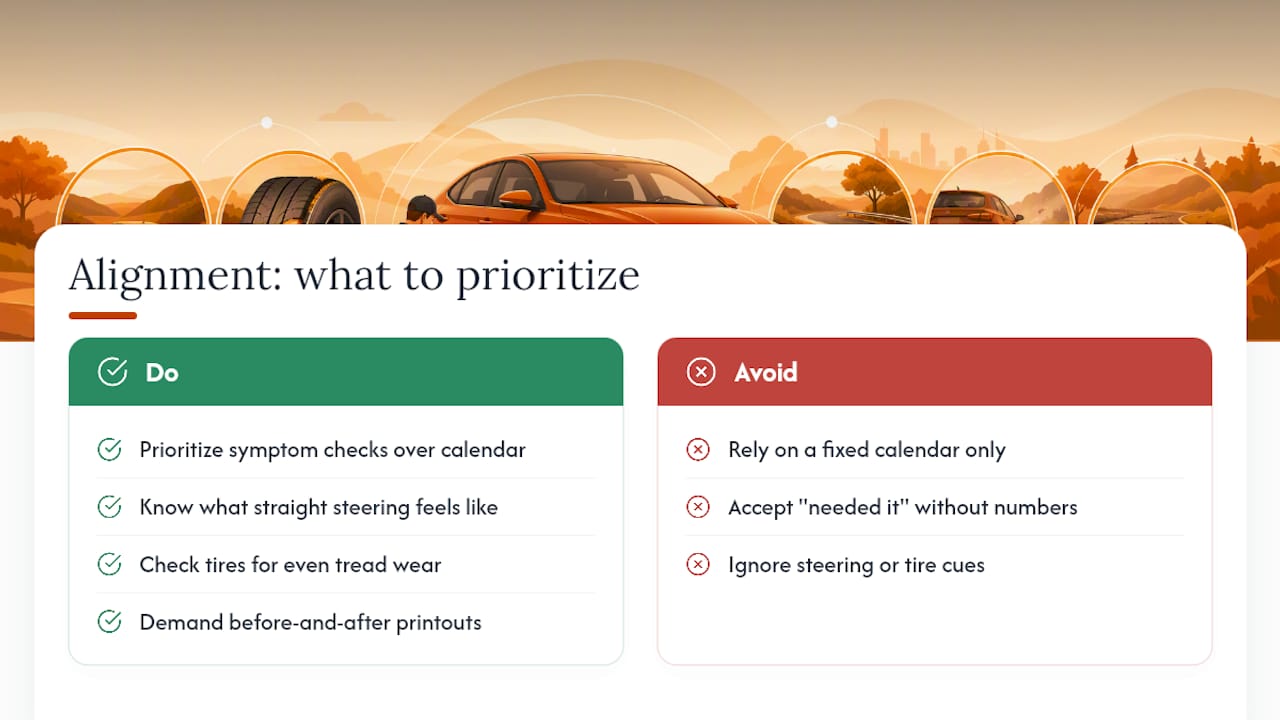
The conventional wisdom also underrates the printout. Plenty of shops will tell you an alignment "needed it" without ever showing you a number, and drivers rarely push back because the language sounds technical enough to trust. It shouldn't. Camber, toe, and caster are measurable, and any shop worth paying will show you the before and after without being asked twice.
If you take one thing from this, prioritize the symptom check over the calendar. Learn what your steering wheel looks like straight, learn what even tread wear feels like under your palm, and treat any deviation as the real signal to act on.
— Andrii
Whether you're chasing down a pull to the left or just due for your yearly check, Garagemap makes it simple to compare vetted shops across Calgary, Airdrie, Chestermere, and Okotoks by the exact service you need, alignment included, so you can book with a shop that'll actually show you the numbers.
Sources
- Yokohama — alignment measures
- Michelin — wheel alignment and balancing
- Cars
- TireAdvise — is tire alignment necessary?