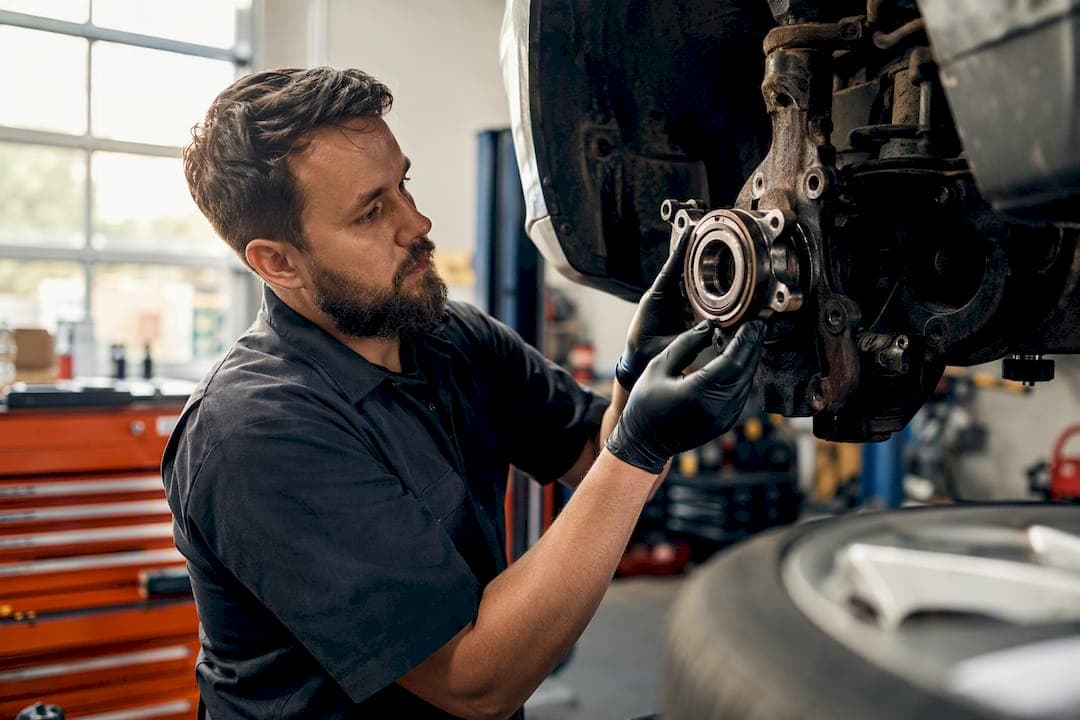
A humming or growling noise that gets louder as you speed up, and shifts pitch when you turn, is the clearest sign of a failing wheel bearing. If the sound is faint and steady, a short, careful drive to a shop is reasonable. If you hear grinding, feel the steering wheel shake, or notice a wheel wobbling, stop driving and arrange a tow instead.
TL;DR:
- Listening for a humming or growling noise that intensifies with speed and changes pitch during turns indicates serious wheel bearing wear.
- Grinding sounds, wheel wobble, or vibrations felt in the wheel, seat, or floor suggest the bearing has reached failure and requires immediate attention.
- Early symptoms like a faint hum can persist for weeks but can escalate quickly, making timely diagnosis crucial to prevent costly repairs.
- Proper diagnosis involves tests such as sway and wheel play checks, chassis ear, and pyrometer scans, not just listening by ear.
- Replacing a faulty bearing early costs less and reduces the risk of damaging surrounding components, while delaying can lead to hub or axle replacement.
Table of Contents
- Wheel bearing noise symptoms: what to listen and feel for
- How wheel bearing failure progresses and why waiting gets expensive
- How to figure out which wheel is making the noise
- Wheel bearing vs tire noise, CV joints, and differential problems
- Is it safe to keep driving with wheel bearing noise?
- What happens during a professional bearing inspection
- Finding a shop that actually tests before it quotes
- Why so many owners replace the wrong part first
- Book a wheel bearing check without the guesswork
- Sources
Wheel bearing noise symptoms: what to listen and feel for
Most drivers notice wheel bearing trouble with their ears before their hands. The sound usually starts subtle, at highway speed, and gets harder to ignore over a few weeks or months. Here's what each symptom actually tells you.
1. Humming, rumbling, or growling that builds with speed
This is the textbook symptom. A worn bearing produces a low pitched hum or growl that gets louder as road speed increases, often described as sounding like a low flying aircraft or a knobby tire on smooth pavement. It happens because the rollers or races inside the bearing have worn unevenly, so they no longer spin smoothly against each other. The telltale clue is that the noise often changes intensity when you make a gentle lane change or turn, because that shifts weight onto or off the damaged bearing.
2. Squealing or howling under specific conditions
A higher pitched squeal or howl sometimes shows up alongside the hum, particularly under load or during acceleration. This can point to a bearing that's lost lubrication or has a damaged seal letting in dirt and moisture. It tends to be less consistent than the classic hum, appearing and disappearing depending on speed and steering angle.
3. Grinding or metallic noise
Grinding means the bearing has moved past simple wear into structural failure. Metal is contacting metal where it shouldn't be, usually because the rollers have broken down enough that the hub has developed play. This is not a "keep driving and monitor it" symptom. It's a "get off the road" symptom.
4. Clicking or popping during turns
Clicking on turns is where many owners jump straight to "wheel bearing" and get it wrong. A rhythmic click or pop that happens specifically when turning, especially at low speed like pulling out of a parking lot, is far more often a CV joint problem than a bearing problem. Bearings tend to growl continuously and worsen with speed; CV joints click sharply and specifically on turns. Section five below walks through how to tell them apart in under five minutes.
5. Vibration you can feel in the wheel, seat, or floor
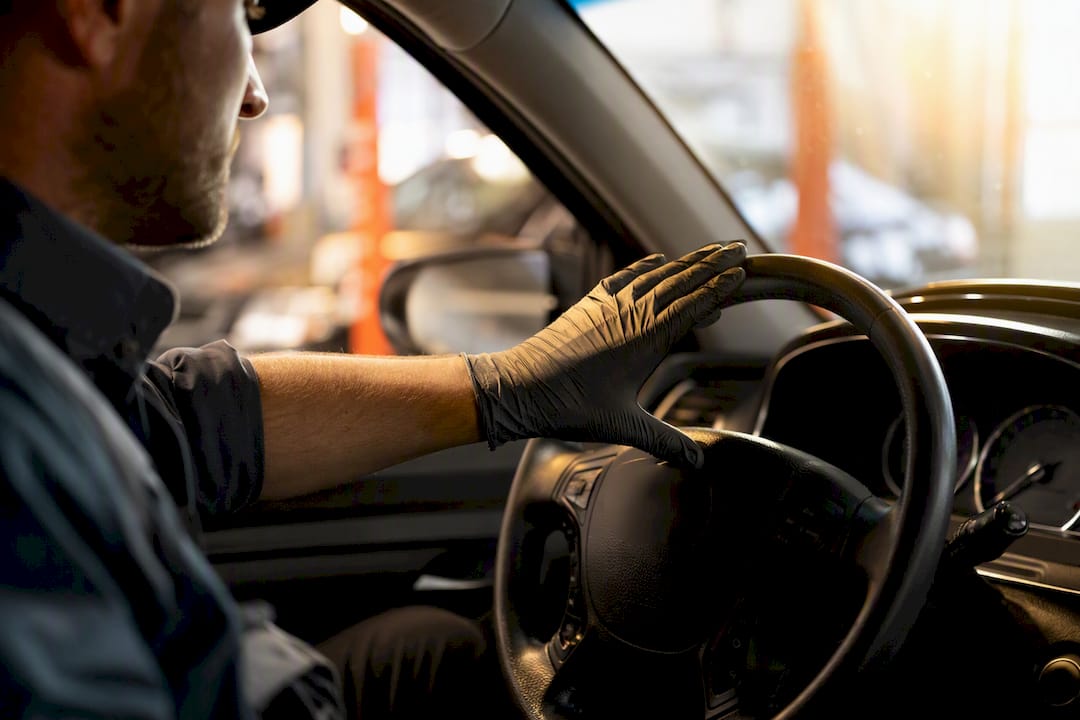
Vibration is often the first physical symptom, arriving before the noise gets loud enough to notice over road and wind sound. A front bearing failure tends to show up as a vibration in the steering wheel that intensifies with speed. A rear bearing failure is more likely felt through the seat or floor, since there's no steering column to carry the vibration forward. If the vibration changes when you brake, that's worth mentioning to your mechanic too, since bearing play can allow the rotor to shift slightly relative to the caliper.
6. Uneven tire wear, wheel wobble, and warning lights
A bearing with enough play lets the wheel move slightly within the hub assembly, which changes how the tire contacts the road and accelerates uneven wear on one edge of the tread. In more advanced cases, you might see or feel actual wheel wobble, particularly when jacking up the corner and grabbing the tire at the 12 and 6 o'clock positions. Because most modern wheel bearings include an integrated ABS sensor ring, a failing bearing can also trigger the ABS or traction control light, especially once wear affects the sensor's air gap. Some drivers also notice the brake pedal travelling a little further than normal right after a drive, a secondary effect of hub end play pushing the rotor slightly out of position relative to the pads.
How wheel bearing failure progresses and why waiting gets expensive
Bearing wear doesn't happen overnight, but it also doesn't happen at a predictable pace, which is exactly why "I'll deal with it later" is a risky plan.
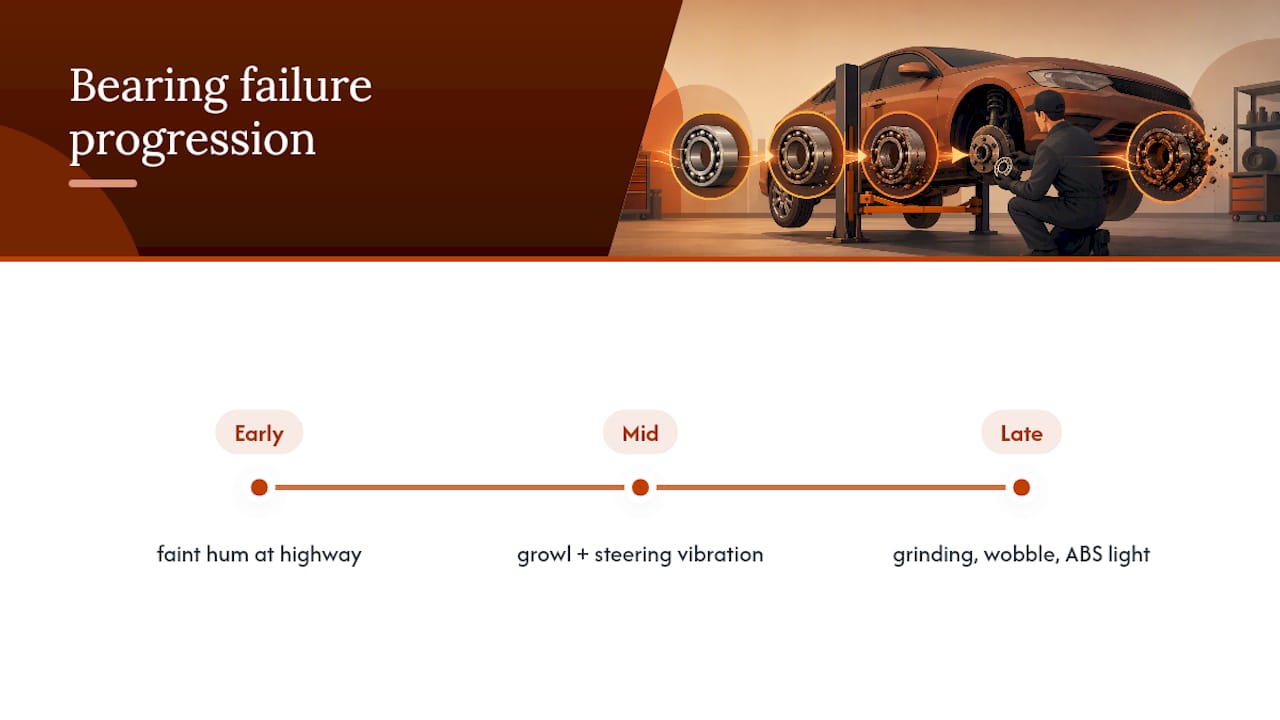
Early stage: a faint hum only noticeable at highway speed, in a quiet cabin, with the radio off. No vibration yet. Many drivers dismiss this stage entirely, assuming it's tire noise or road surface.
Mid stage: the hum becomes a growl, audible at lower speeds, and steering wheel or seat vibration appears. You might notice the sound gets louder when you turn away from the bad side, since that shifts more weight onto the damaged bearing.
Late stage: grinding, visible wobble, and possibly an ABS or traction light. At this point the bearing has measurable play, and the risk profile changes significantly.
Replacing a bearing early, before it damages surrounding parts, is usually a contained job. Wait too long and you're often looking at a full hub assembly, possible axle work, and in the worst outcomes, brake components that seized or wore unevenly because the wheel wasn't tracking correctly. Mechanics are consistent on one point: there's no reliable way to predict exactly when a noisy bearing will go from "annoying" to "catastrophic," which is the whole argument for getting it inspected as soon as the sound shows up rather than waiting to see how bad it gets.
How to figure out which wheel is making the noise
Noise travels through a vehicle's frame, so trusting your ears alone to identify the corner is a common mistake. Even experienced techs won't diagnose by sound alone; they run a sequence of tests that isolate the real source before anyone recommends a repair.
1. The sway or turn test. While driving at a safe, steady speed on an empty road, gently sway the vehicle left and right, or make a wide turn in each direction. A damaged bearing typically gets louder when you turn away from the bad side, since that shifts more of the vehicle's weight onto it.
2. The wheel play test. With the vehicle safely lifted, grab the tire at the 12 and 6 o'clock positions and rock it in and out. Repeat at 9 and 3 o'clock. Noticeable play at 12/6 with none at 9/3 points to a bearing issue rather than a tie rod or ball joint, though this test alone won't rule out every look-alike cause.
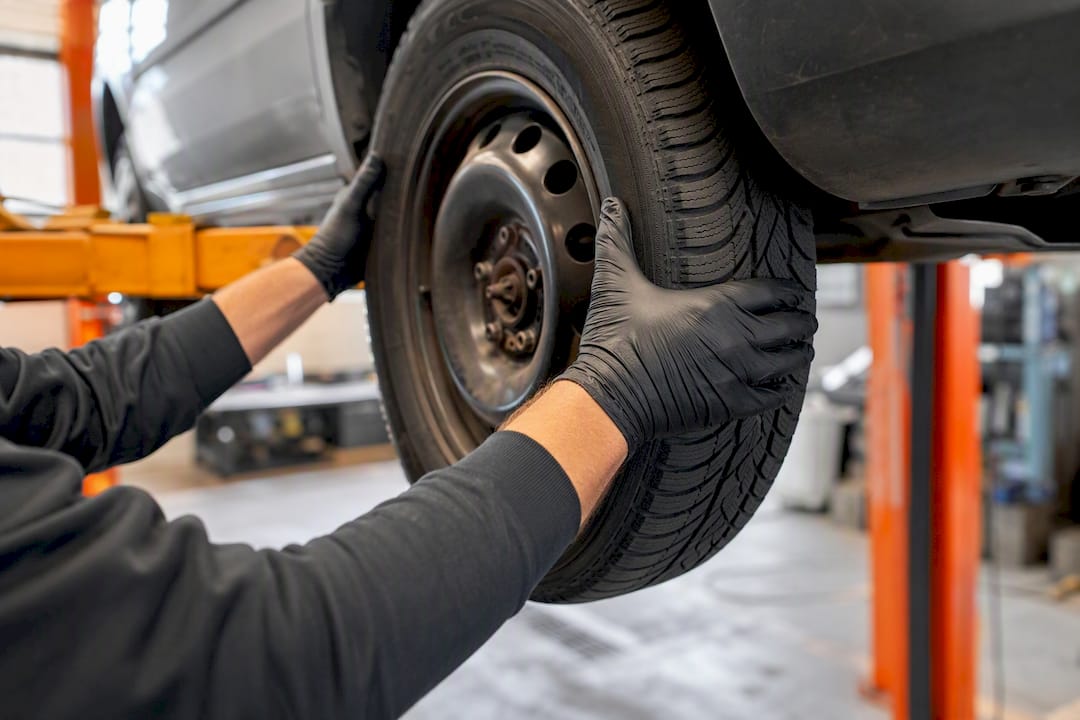
3. Hand-spin the wheel. Still on the lift, spin the wheel by hand and listen or feel for roughness, grinding, or resistance. A healthy bearing spins freely and quietly.
4. The chassis ear. Shops use an electronic chassis ear, a set of microphones clipped to each wheel end and monitored through headphones during a road test, to isolate exactly which corner is producing the sound instead of guessing from inside the cabin.
5. The pyrometer check. After a highway run, a non-contact pyrometer can scan each hub for heat. The hottest hub is often the failing one, though on vehicles with a live rear axle, a worn differential carrier bearing can produce a similarly hot reading and throw off the result.
6. The spring vibration trick. Some technicians hold a hand against the suspension spring while rotating the wheel, feeling for a rhythmic vibration transmitted through the coil. This can catch bearing roughness before it's loud enough to hear on a road test.
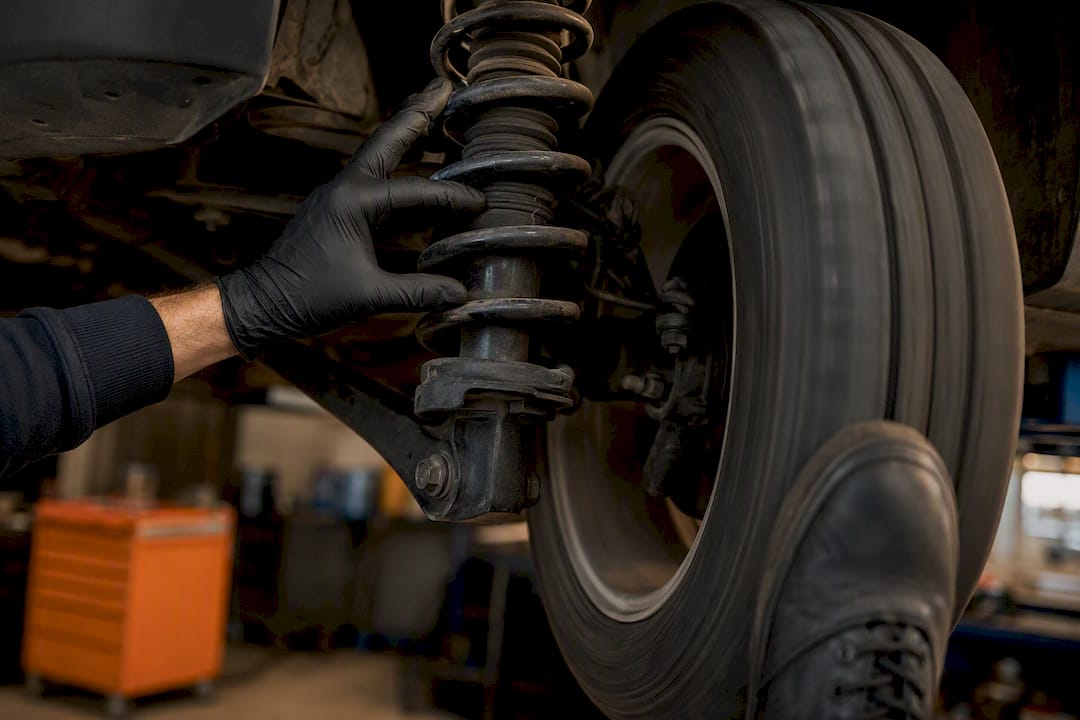
Pro Tip: If a shop only offers to "listen to it and take a guess," ask specifically whether they use a chassis ear or pyrometer. A five-minute test that isolates the correct corner can save you from paying for parts that were never the problem.
Wheel bearing vs tire noise, CV joints, and differential problems
Bearing noise gets blamed for a lot of sounds that have nothing to do with the wheel end. Sorting them out before you spend money matters.
- Tires: road noise stays fairly constant regardless of steering input and changes noticeably with pavement type, smooth asphalt versus coarse concrete. Check tread wear and balance first; it's the cheapest thing to rule out.
- CV joints: a sharp, rhythmic clicking specifically during tight turns, often at low speed, is the classic CV joint symptom. Pop the hood or get underneath and look for a torn or leaking CV boot; a visibly split boot is close to a confirmed diagnosis.
- Differential or drive axle: on live-axle vehicles, whining or grinding tied to acceleration and deceleration (rather than steady speed) can point to the differential. Metal debris in the gear oil, checked at a fluid service, is a strong indicator here.
- Priority order for checking: tires and tread first, then CV boots, then a wheel play test, then a professional inspection if nothing obvious turns up.
Manufacturer guidance from Timken makes the same point technicians repeat constantly: tire and suspension faults mimic bearing symptoms often enough that a single test is never enough to confirm a diagnosis on its own.
Is it safe to keep driving with wheel bearing noise?
A bearing can hum for weeks without failing outright, but that doesn't make it predictable. There's no reliable timeline for when a noisy bearing goes from tolerable to dangerous, which is exactly why mechanics treat any bearing with measurable play as unsafe for more than a few miles.
- Faint, steady hum with zero play in the wheel test: a short, low-speed drive directly to a shop is generally acceptable.
- Growling with any detectable play, vibration, or an ABS light: book an inspection immediately and avoid highway speeds in the meantime.
- Grinding, strong heat at the hub, visible wobble, or smoke: stop driving now. This is a tow-truck situation, not a "drive carefully" one.
If you're heading to a shop under your own power, stay off the highway, keep speeds low, and avoid sharp turns toward the noisy side, since that's when the load on a damaged bearing peaks.
What happens during a professional bearing inspection
A properly run inspection follows a sequence, not a guess. Most shops combine a road test, a chassis ear check, a lift inspection with a wheel play test, and a pyrometer scan to confirm exactly which corner is failing before ordering parts.
- On many modern vehicles, the bearing comes as a sealed hub assembly rather than a separate press-in bearing, and shops often replace the whole unit since it reduces the risk of contamination and cuts labour time.
- A thorough inspection usually checks adjacent systems too: brake pads and rotors for wobble-related wear, CV boots for splits, and the ABS sensor ring built into most modern hub units.
- Estimate cost depends heavily on your vehicle's make and model, whether the affected wheel is front or rear, and whether it's a sealed hub unit or an older press-in bearing design that takes more labour to service.
Ask upfront whether the estimate assumes a hub assembly replacement or a bearing-only repair; the price difference between the two can be significant depending on your vehicle.
Finding a shop that actually tests before it quotes
Not every shop runs the full sequence, road test, chassis ear, lift inspection, wheel play test, and pyrometer scan, before recommending a repair, and that gap is exactly where owners end up paying for parts that weren't the problem. GarageMap lets you search and compare vetted shops across Calgary, Airdrie, Chestermere, and Okotoks by the specific service you need, whether that's suspension and steering repair for a bearing diagnosis or broader engine diagnostics if you're not sure yet what's causing the noise.
When you're comparing options, it's worth asking a few direct questions before booking: does the shop use a chassis ear or pyrometer, will they perform a wheel play test on the lift, what's the parts warranty on a replacement hub assembly, and are the technicians certified for the make of vehicle you drive. A vehicle inspection and maintenance service is also a reasonable starting point if the noise is faint and you want a general wheel-end check before committing to a repair. GarageMap's comparison view makes it easier to see which shops actually list these diagnostic capabilities instead of a vague "brake and suspension" line item.
Why so many owners replace the wrong part first
The mistake shows up constantly: someone hears a hum, assumes it's the tires, buys a new set, and the noise comes right back a week later. Others chase a growl into new brake pads when the real issue was hub play shifting the rotor. An organized sequence, not a guess from the driver's seat, is what actually separates a bearing problem from its look-alikes.
If you take one thing from this, make it a three-step habit: listen for how the sound changes with speed and turns, do a quick sway or wheel play check yourself, and book an inspection that specifically requests a chassis ear or pyrometer test. That order alone prevents most of the wasted repair spending owners run into.
— Andrii
Book a wheel bearing check without the guesswork
Diagnosing bearing noise by ear from the driver's seat leads to a lot of wasted money on tires, brakes, or CV joints that were never the actual problem. GarageMap fixes that by letting you compare vetted shops across Calgary, Airdrie, Chestermere, and Okotoks by the exact service you need, so you can find a shop that actually runs a chassis ear and pyrometer test instead of one that quotes a repair from a five-minute listen.
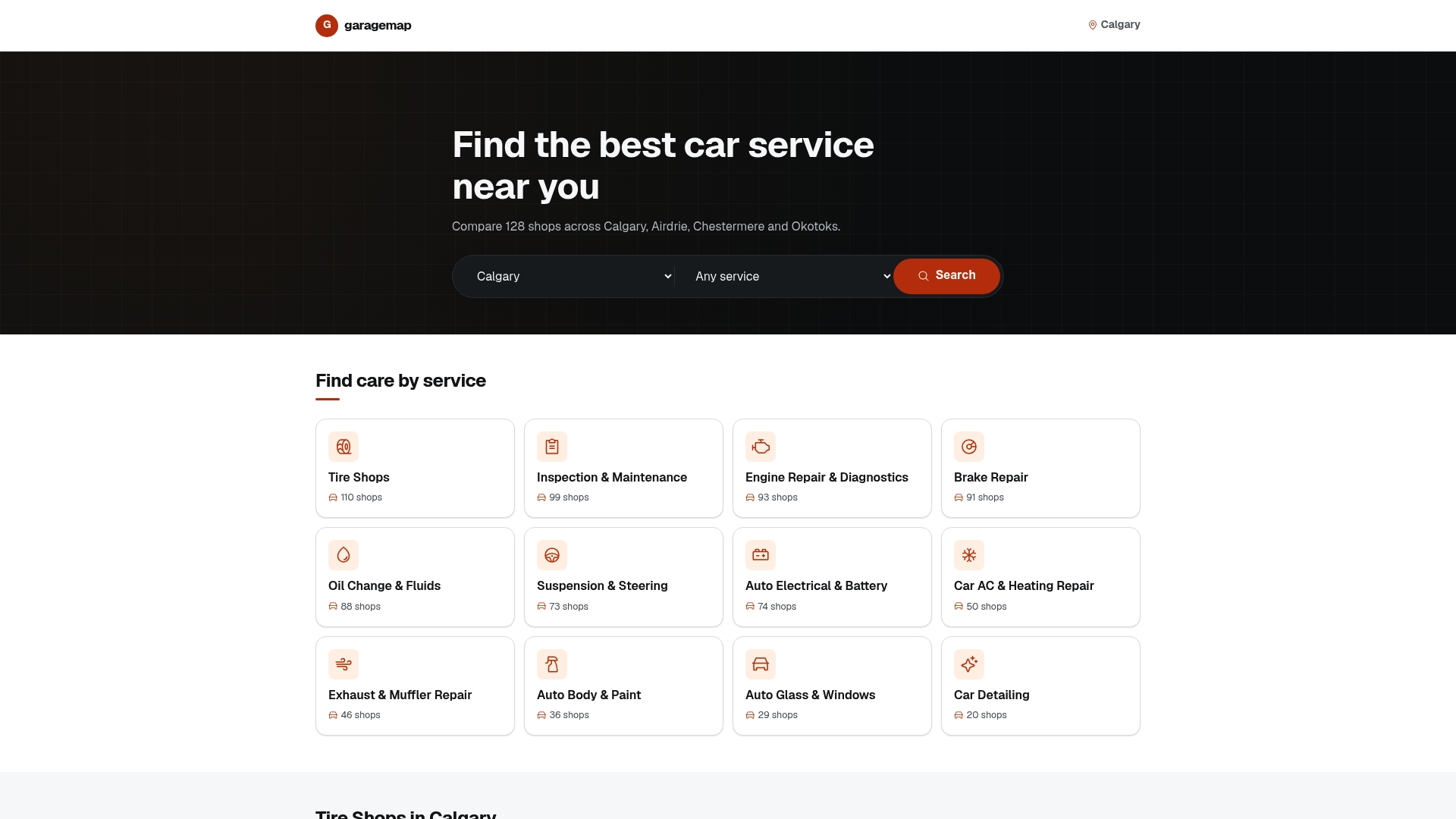
Start at GarageMap and filter by suspension and steering repair to find shops equipped for wheel-end diagnostics, or check engine diagnostics providers if you're still narrowing down the cause. If you're in Calgary, the local shop comparison page is a fast way to see who's nearby and what they offer. Search, compare, and request the specific tests covered in this article before you book anything.
Sources
For readers who want to go straight to the technical source material: Kelley Blue Book covers baseline bearing symptoms, Timken's technical notes detail hub wear signs, Brake & Front End explains pyrometer diagnostics, Ricks Free Auto Repair Advice walks through chassis ear testing, and The Motor Guy addresses safe driving limits with a bad bearing.
- Wheel Bearing: How Do I Know if I Need a Replacement? — Kelley Blue Book
- Diagnostic solutions: wheel bearing diagnosis — Brake & Front End
- How do I know if I have a bad wheel bearing? — Ricks Free Auto Repair Advice
- Diagnosis of worn wheel end bearings — MOOG technical tip
- Can you drive with a bad wheel bearing? — The Motor Guy