If your car pulls to one side on a flat road, the steering wheel sits off-centre when you're driving straight, or you're seeing uneven wear across your tires, book an alignment check soon. These symptoms rarely fix themselves, and waiting usually means replacing tires sooner than you should. Some overlap with wheel balance or worn suspension parts, so a proper inspection is what actually confirms the cause.
TL;DR:
- Most alignment problems stem from impacts such as hitting potholes or curbs, or from routine repairs that change suspension geometry, making checks necessary afterward.
- Uneven tire wear, particularly feathering or edge wear, can indicate specific misalignments, but deep wear bars or cupping require urgent inspection due to safety risks.
- Proper diagnosis benefits from checking tire pressure first and capturing tire wear patterns and steering wheel position through photos before visiting a shop.
- A full four-wheel alignment is standard for modern vehicles with independent suspensions, involving sensor-based adjustments to specified angles, followed by a road test.
- Costs vary based on vehicle type, region, and repair needs, but choosing shops that perform a final road test and provide a proper inspection ensures correct alignment servicing.
Table of Contents
- Wheel alignment symptoms you can catch while driving
- Reading tire wear patterns like a mechanic
- What throws your alignment off in the first place
- Simple checks before you call a shop
- What happens at the shop, and what it costs
- Finding a shop that actually checks it right
- Don't let a soft symptom become a hard bill
- Book an alignment shop without the runaround
- Sources
- FAQ
Wheel alignment symptoms you can catch while driving
The clearest sign is a pull. Find a flat, straight stretch of road with no crown or camber, hold the wheel lightly, and let the car settle on its own. A car that drifts steadily toward one side, rather than wandering randomly, usually has a toe or camber problem on that axle. This is one of the earliest indicators that alignment is out of spec, often showing up before you notice anything else.
An off-centre steering wheel is the second giveaway. Drive straight and check whether the logo or top spoke sits level. If it's rotated even slightly while you're tracking dead straight, that's a toe or caster error, and it's the same primary indicator cited alongside pulling by tire manufacturers.
Vibration is trickier. A wheel that shakes at highway speed and smooths out below 80 km/h is often a balance issue, not alignment. Vibration through the whole chassis, or one that gets worse the longer you drive, more often points to worn tie rods, bushings, or ball joints. On its own, vibration isn't a reliable alignment signal, but paired with pulling or lopsided tire wear, it strengthens the case for an alignment.
Squealing or scrubbing noises during low-speed turns, especially in parking lots, usually mean a tire is dragging at an angle it wasn't built for. And fuel economy takes a quiet hit too: misaligned wheels increase rolling resistance, which chips away at mileage in small, cumulative amounts you might not notice until you compare a few fill-ups.
Watch for this cluster of symptoms together:
- Steady pull to one side on a flat road with no crosswind
- Steering wheel visibly off-centre while driving straight
- Vibration that worsens with speed or mileage, not just at one threshold
- Scrubbing or squealing noise when turning at low speed
- A gradual drop in fuel economy with no other obvious cause
Pro Tip: Check your tire pressure before you diagnose anything else. Underinflated or mismatched pressure across the four tires can mimic a pull or vibration and send you chasing an alignment problem that isn't actually there.
Reading tire wear patterns like a mechanic
Your tires keep a record of every alignment problem your car has had, and you don't need a lift to read it.
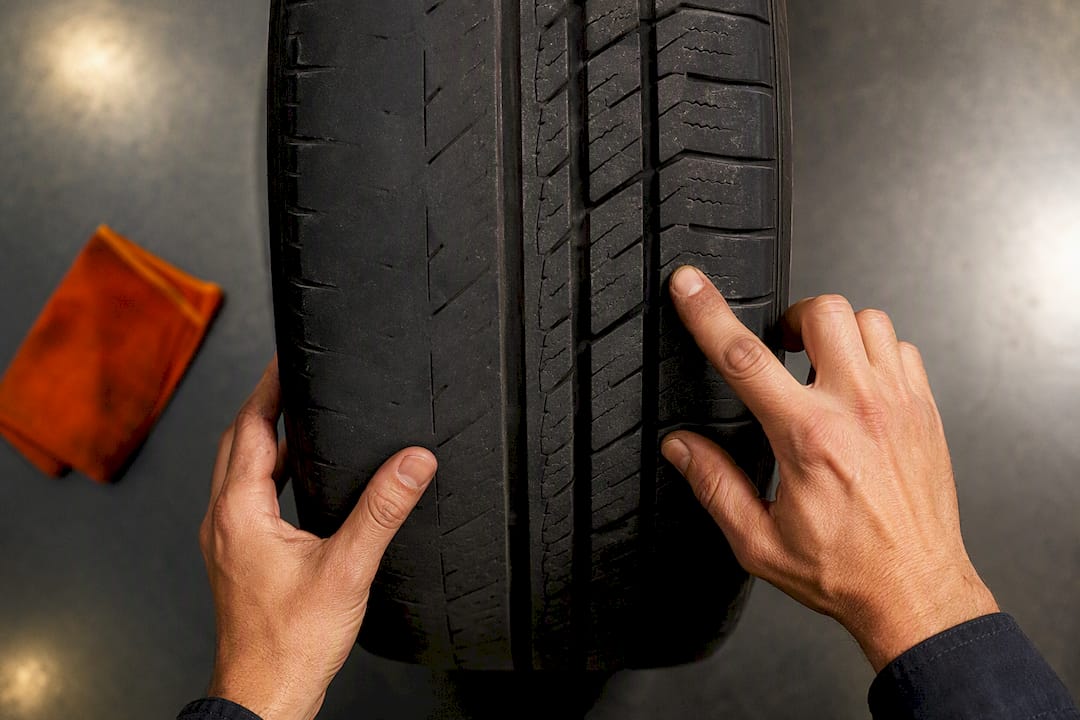
- Run your hand across the tread, not just look at it. Feathering feels smooth in one direction and sharp in the other across the tread ribs. That texture difference is one of the most reliable toe-misalignment signs there is.
- Compare the inner and outer edges of each tire. Wear concentrated on one edge, while the centre stays healthy, points to a camber angle that's off, tilting the tire so it rides unevenly on the road.
- Look for cupping, a scalloped, wavy pattern around the tread. This one is less about alignment and more about worn shocks, struts, or an imbalance, so don't assume it's a toe or camber issue without a broader inspection.
If you spot deep feathering or edge wear that's already exposing the wear bars, treat it as urgent. Tires in that condition can fail well before their expected mileage, and driving on them is a safety risk, not just a cost one.
What throws your alignment off in the first place
Alignment doesn't drift for no reason. A hard pothole strike, a curb hit while parallel parking, or any collision, even a minor one, can knock the angles out immediately and deserves a check right after it happens.
Beyond sudden impacts, a few routine events call for a check too:
- Installing a new set of tires, since shops typically recommend verifying alignment at the same time
- Replacing suspension or steering components, which changes the geometry those parts control
- An annual check, or sooner if you're noticing any of the symptoms above
Alignment also drifts slowly through ordinary driving, worn bushings, and road conditions. That gradual creep is why regular checkpoints after impacts, tire changes, and repairs work better than relying on a fixed mileage number alone. Symptom-driven timing beats guesswork.
Simple checks before you call a shop
A few minutes of homework saves you money and speeds up an accurate diagnosis.
- Check tire pressure first, on all four tires, before doing anything else. Low or mismatched pressure can fake a pull or vibration.
- Do the straight-road pull test on a flat, quiet street, hands light on the wheel, no traffic forcing quick corrections.
- Photograph the wear pattern on each tire and snap a picture of the steering wheel position while driving straight, if you can safely have a passenger do it.
- Write down the details: which side the car pulls toward, what speed the vibration starts and stops at, whether you've hit a pothole or curb recently, and whether new tires went on recently.
Handing a technician that information up front means less time on the rack figuring out what you already know, and a lower chance of paying for a balance job when what you actually needed was an alignment.
What happens at the shop, and what it costs
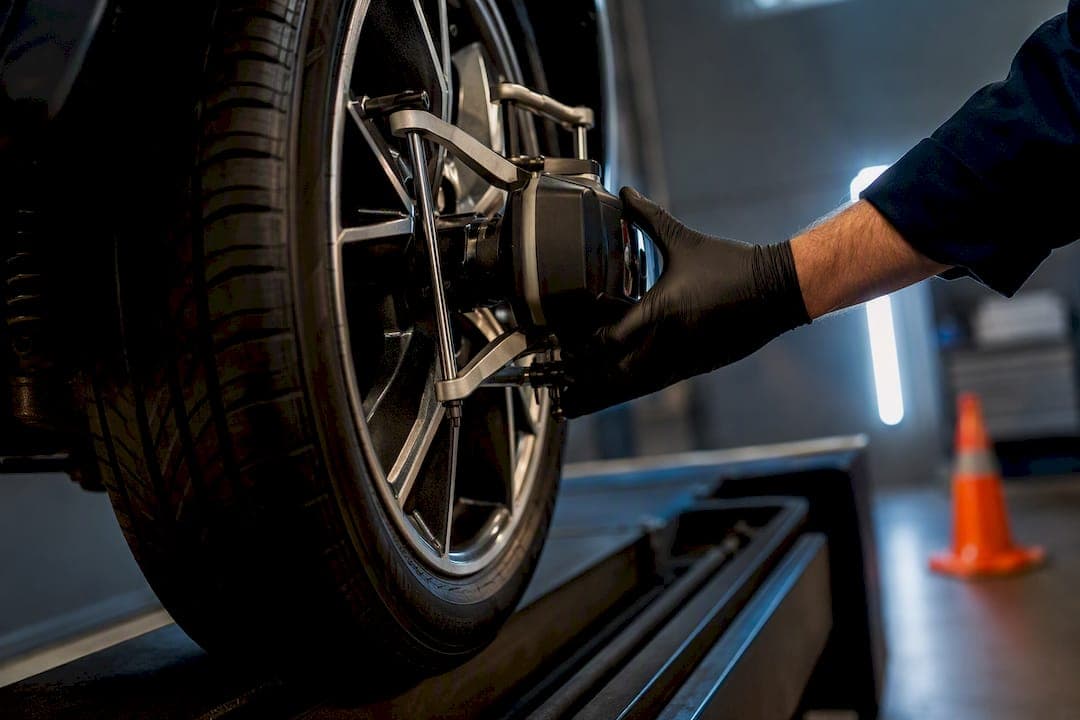
Most shops offer two options: a 2-wheel alignment, adjusting just the front axle, or a 4-wheel alignment, which corrects all four corners and is standard on most modern vehicles with independent rear suspension. The car goes on an alignment rack fitted with sensors that measure camber, caster, and toe against the manufacturer's specifications, then the technician adjusts accordingly.
A completed job should always end with a road test. If the steering wheel is still off-centre after the alignment is supposedly finished, the work isn't done, and you should ask the shop to recheck it before you leave the lot.
Costs vary by region, vehicle type, and whether you go to a dealer or an independent shop, with Ontario-based examples showing a wide range depending on those factors. Dealer labour rates and upfitter or installer pricing structures tend to run higher than independent shops, and costs climb further if the inspection turns up worn tie rods, ball joints, or bushings that need replacing before the alignment will even hold. A few things that commonly add to the bill:
- Vehicle type, since trucks and SUVs with more complex suspension setups often cost more to align than a compact sedan
- Dealer versus independent shop labour rates
- Any suspension or steering part replacement needed before the alignment can be performed correctly
Finding a shop that actually checks it right
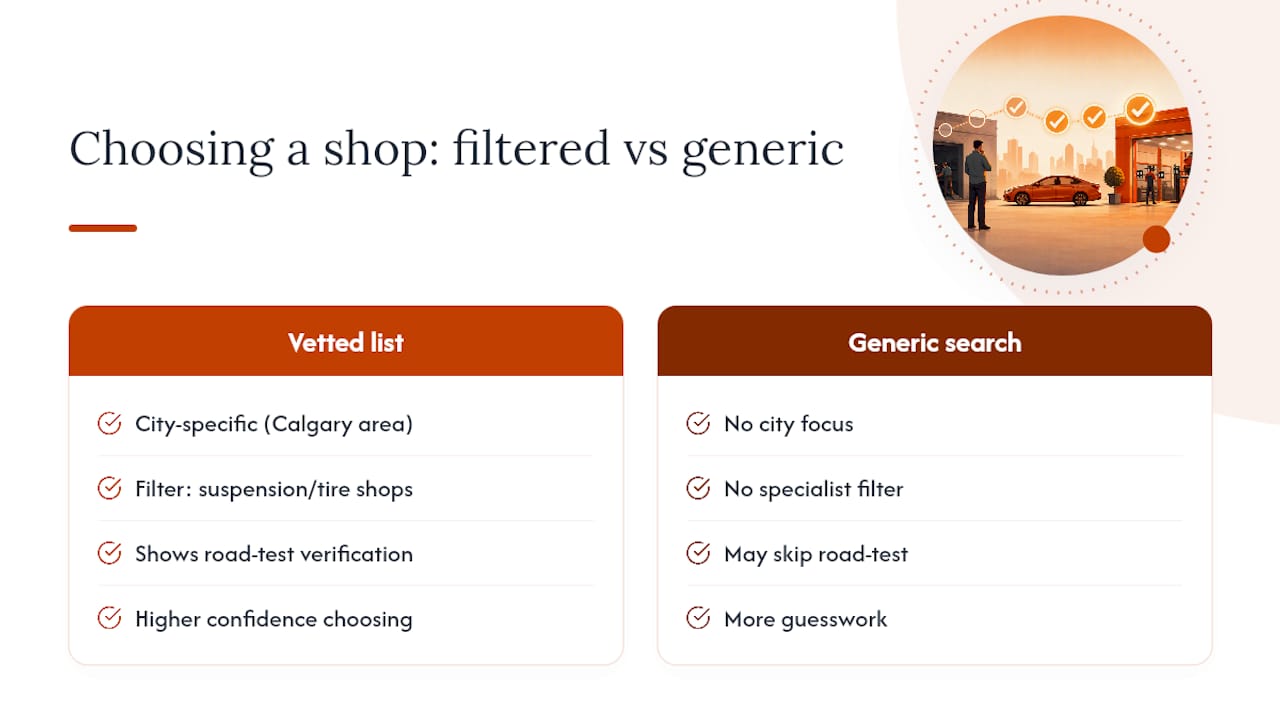
Not every shop inspects tires or runs a proper road test before handing back your keys. GarageMap lets you filter listings across Calgary, Airdrie, Chestermere, and Okotoks specifically for suspension and steering specialists or tire shops, so you're comparing vetted options instead of guessing from a generic search. Comparing a handful of listings side by side makes it easier to spot shops that mention road-test verification as part of their process, rather than a rushed adjustment and a handshake.
Don't let a soft symptom become a hard bill
If you've spotted a pull, an off-centre wheel, or feathering on your tires, get it looked at within the week, not "someday." I'd also suggest a habit most drivers skip: run your hand across your tread once a week if you suspect anything's off. It costs nothing and catches problems before they cost you a full tire set.
— Andrii
Book an alignment shop without the runaround
Instead of cold-calling shops one by one: search once, filter for suspension and steering specialists, and request quotes directly from shops that appear vetted on the platform.
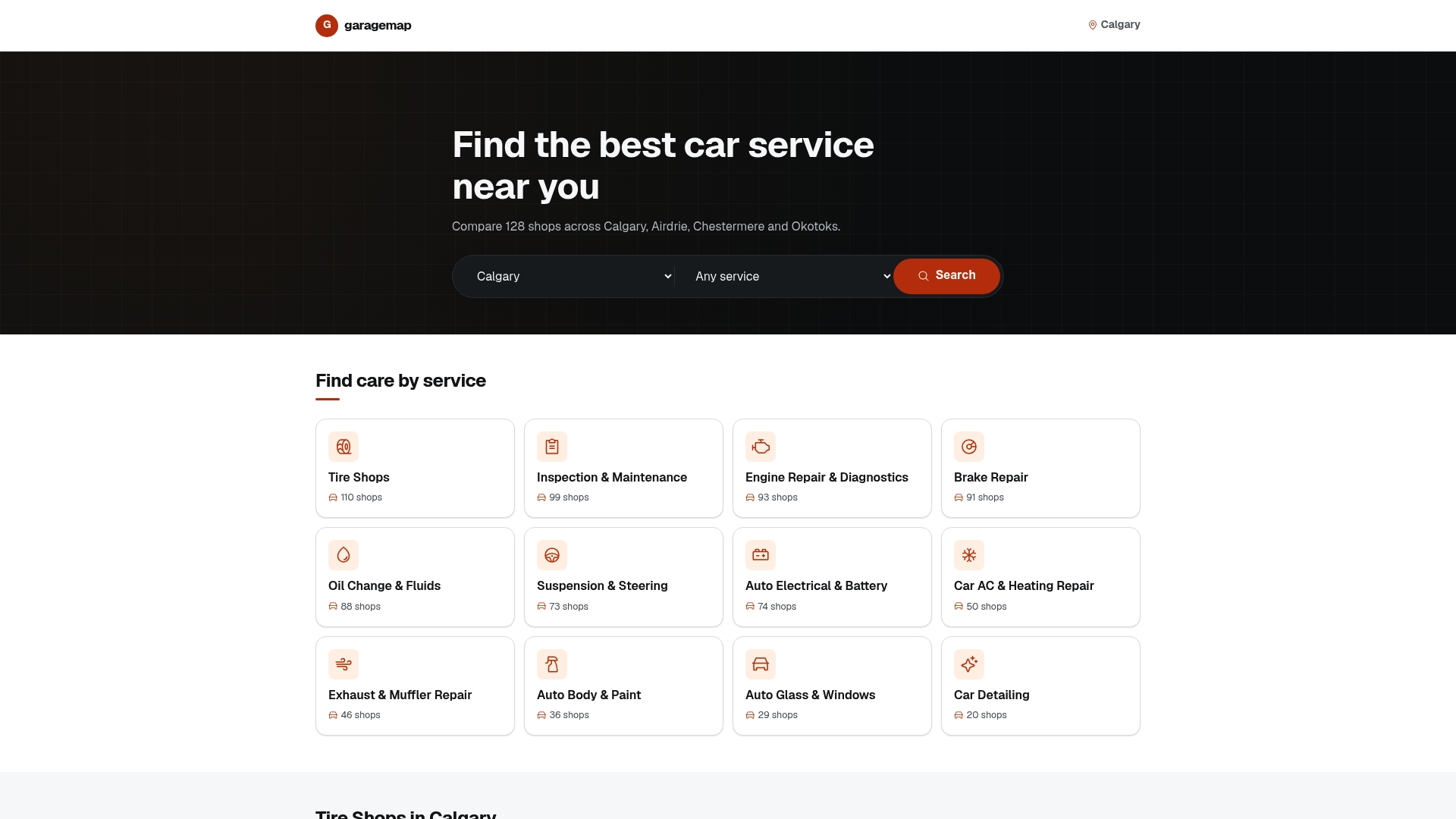
Instead of driving from lot to lot asking who can fit you in, you compare listings, see who specializes in alignment and suspension work, and reach out with one inquiry instead of five phone calls. When you do book, ask the shop upfront whether a road test is part of their alignment process, since that final check is what confirms the job was done right, not just started. Browse suspension and steering repair options near you or start from the main GarageMap search to compare shops in your area today.
Sources
- Why proper alignment is important for your tires | Continental Tire
- Signs your car needs wheel alignment | FastLane Mechanics
- Wheel alignment and tyre balancing: when to do it and what it costs | Vehisales
- What is wheel alignment? Symptoms + cost in Ontario | Guelph Nissan
FAQ
How do I know if my wheel alignment is bad?
Watch for a steady pull to one side on a flat road, a steering wheel that's off-centre while driving straight, and uneven wear concentrated on the inner or outer edge of your tires. Combined vibration and uneven wear together make alignment the likely cause, rather than a balance issue alone.
How much does alignment cost?
Pricing depends on your vehicle, region, and whether you choose a dealer or independent shop, with Ontario examples showing meaningful price variation based on those factors. You can compare current listings and request quotes directly through GarageMap rather than calling around.
Is it okay to drive with a bad wheel alignment?
Short distances at moderate speed are unlikely to cause immediate harm, but ongoing misalignment accelerates tire wear, raises rolling resistance, and can lead to premature tire replacement. Uneven or feathered wear that's already deep is a safety concern and shouldn't wait.
What are signs of alignment issues?
The core signs are a pull to one side, an off-centre steering wheel, uneven or feathering tire wear, scrubbing noise on low-speed turns, and a gradual drop in fuel economy. Vibration can also signal alignment problems when it appears alongside these other symptoms rather than on its own.