
A transmission flush is not necessary for most vehicles on a fixed schedule. Follow your owner's manual first: it tells you the interval and fluid type your manufacturer actually validated. That said, a flush earns its cost in specific situations.
Consider a flush when:
- Your fluid is degraded (dark, burnt smell) but shifting still feels normal
- You tow, haul, or drive stop-and-go traffic regularly
- Service history is long overdue or unknown, and the transmission isn't already slipping
Hold off on a flush when:
- The vehicle has high mileage with no service records and unexplained shifting issues
- You spot metal shavings or a burnt odour suggesting internal wear already underway
Key Takeaways
A transmission flush helps degraded fluid in a healthy transmission but risks harm in high-mileage or unknown-history vehicles, so inspection should always precede the decision.
| Point | Details |
|---|---|
| Manual comes first | Check your owner's manual interval before agreeing to any flush or drain-and-fill service. |
| Inspect before deciding | Ask for fluid colour, odour, and particle checks before booking either service. |
| Flush fits specific cases | Best for degraded fluid, known history, and a transmission still shifting normally. |
| Avoid flushing risky units | Skip flushing high-mileage or unknown-history transmissions showing metal or burnt fluid. |
| Costs run $150 to $450 | Price depends on vehicle type, fluid volume, and whether a flush machine is used. |
Table of Contents
- Transmission flush necessary vs drain-and-fill: what's the difference
- When a transmission flush is worth doing
- When a transmission flush can do more harm than good
- How to check your fluid and read the warning signs
- Flush vs drain-and-fill: which one actually fits your situation
- What a flush or drain-and-fill actually costs, and how often you need one
- Questions to ask before you approve the service
- Finding a shop that inspects before it recommends
- The real problem isn't the flush, it's the blanket recommendation
- Sources
Transmission flush necessary vs drain-and-fill: what's the difference
A drain-and-fill drains the transmission pan and refills it, typically replacing about 30 to 50% of the total fluid in the system. A flush uses a machine to push new fluid through the entire circuit, including the torque converter, cooler lines, and valve body, replacing nearly all of the fluid.
- Drain-and-fill reaches only the pan reservoir, leaving old fluid in the converter and lines.
- Flush cycles fluid through every component, including the torque converter and valve body.
- Shop language varies by shop. Some call any fluid service a "flush," so ask exactly what's being done and which components it reaches before you approve the work.
That last point matters more than it sounds. A quoted "flush" that's really a pan drop with a filter change costs less but does far less.
When a transmission flush is worth doing
Manufacturers occasionally list a full flush in the maintenance schedule itself, particularly for vehicles with severe-use ratings. When that's the case, the decision is already made for you: follow it.
Outside of a scheduled requirement, a flush tends to help in a few clear scenarios. According to HowToGeek, a flush can be genuinely restorative when fluid has degraded but the transmission itself is still shifting normally. It clears out varnish and metal particles and restores the additive package that keeps seals conditioned.
- The fluid is dark or smells burnt, but there's no slipping or hesitation yet
- You regularly tow, haul heavy loads, or drive mostly stop-and-go (courier work, taxi service, hot climates)
- Service history is unclear or the interval has been badly overdue, and a mechanic confirms no internal damage first
Pro Tip: Ask the shop to check fluid condition and perform a basic road test before they book a flush. A five-minute inspection can save you from an unnecessary service, or confirm you genuinely need one.
When a transmission flush can do more harm than good
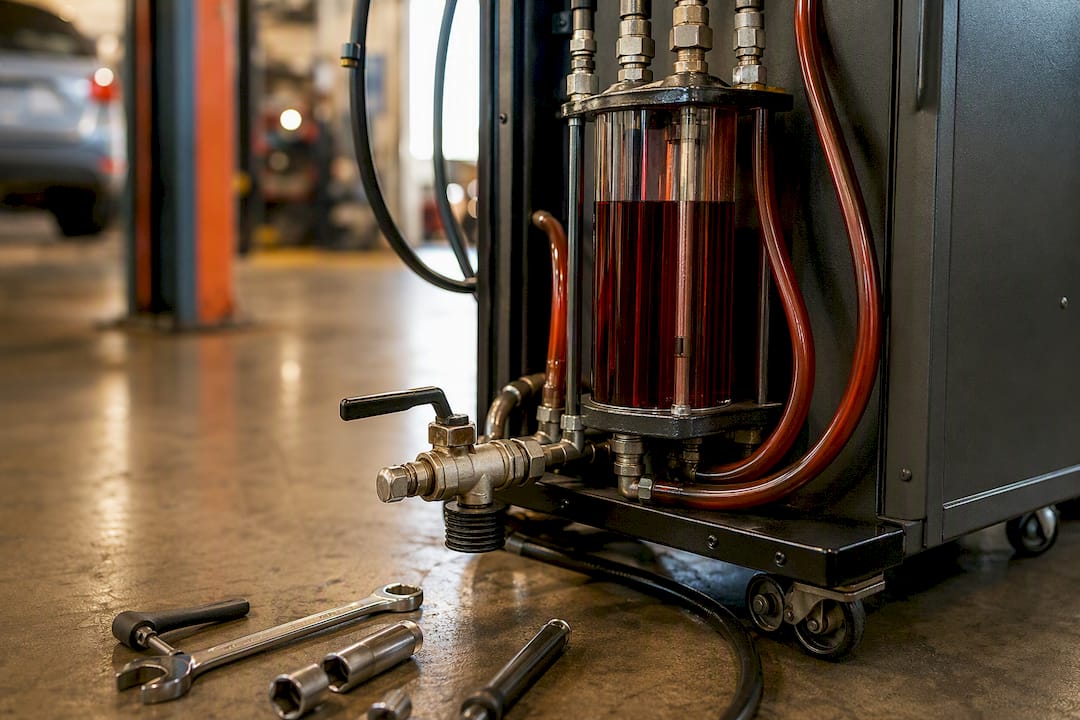
The same force that clears varnish from a healthy transmission can dislodge debris that's been quietly protecting a worn one. Cars.com notes that flushing an older or poorly maintained transmission risks stirring up sediment and stressing seals that have adapted to thicker, degraded fluid, sometimes triggering symptoms that weren't there before.
Watch for these situations before agreeing to a flush:
- High mileage with no documented service history. Old fluid may be masking wear you can't see
- Metal shavings, flakes, or a scorched smell in the fluid. That points to internal component wear, not routine buildup
- Manufacturer-specific sealed or "lifetime fluid" transmission designs, where the system was never engineered for a flush
Many independent shops recommend a gentler drain-and-fill for exactly these cases, according to LubeOilSales, precisely to avoid dislodging debris in a system with unknown history. If your transmission is already showing symptoms, a diagnosis should come before any fluid service, not after.
How to check your fluid and read the warning signs
Most vehicles with a transmission dipstick let you check fluid at home in under five minutes.
- Park on level ground, warm the engine, and pull the transmission dipstick (check your manual for the exact procedure, since some require the engine running).
- Wipe the fluid onto a white paper towel and check colour. Healthy fluid is red or pink; brown or black signals it's overdue.
- Smell it. A burnt odour usually means the fluid has overheated or broken down.
- Check for grit or metal flecks, which point toward internal wear rather than simple aging.
- Note driving behaviour: slipping gears, delayed engagement, hard shifts, or a shudder at certain speeds all warrant a professional look regardless of fluid colour.
Many newer vehicles skip the dipstick entirely and use sealed or "lifetime fluid" systems. If yours does, or you notice any performance symptoms, a shop inspection replaces the DIY check. A capable mechanic should document fluid condition and driving symptoms before ever recommending a flush, not after.
Pro Tip: If a shop can't show you the fluid they drained, or skips straight to quoting a flush without checking colour and smell first, that's a signal to ask more questions.
Flush vs drain-and-fill: which one actually fits your situation
The two services solve different problems, and the right one depends on how much fluid needs replacing versus how much risk your transmission can tolerate.
- Fluid replaced: A drain-and-fill swaps roughly a third to half the fluid; a flush replaces nearly all of it in one visit.
- Risk profile: A drain-and-fill is gentler and lower-risk on older or unknown-history units; a flush applies more pressure through the system and can loosen debris in a worn transmission.
- Best use case: Choose drain-and-fill for routine, scheduled maintenance or when history is uncertain. Choose a flush when fluid is clearly degraded, mileage and service history are known, and the transmission is shifting normally.
- Decision rule: If in doubt, ask for a fluid inspection first. Let what the mechanic finds, not the shop's default upsell, decide which service you book.
Neither option fixes an already-failing transmission. That calls for diagnosis, not a fluid service of either kind.
What a flush or drain-and-fill actually costs, and how often you need one
A typical transmission fluid service runs roughly $150 to $450, with price driven by vehicle type, fluid volume, and whether the shop uses a flush machine or a manual drain. A full transmission replacement runs far higher, which is exactly why staying ahead of fluid condition matters.
- Manufacturer intervals typically fall between 48,000 and 100,000 km, though severe-use schedules cut that significantly for towing or fleet vehicles
- Some sealed "lifetime fluid" transmissions have no listed interval at all. That doesn't mean never; it means shop inspection replaces a mileage number
- Keep every service receipt. Warranty claims on transmission issues can hinge on proof you followed the manufacturer's schedule, not a shop's generic recommendation
Questions to ask before you approve the service
The best defence against an unnecessary flush is a short conversation before the work starts.
- Ask if they'll inspect the fluid's colour, smell, and particle content before recommending anything.
- Confirm which fluid spec they're using; the wrong spec can cause shifting problems even in a healthy transmission.
- Request to see the old fluid once it's drained. A shop with nothing to hide will show you.
- Ask directly whether a drain-and-fill would serve you just as well, given your mileage and history.
Pro Tip: A shop that recommends a flush for every vehicle regardless of mileage or symptoms, without ever pulling a fluid sample first, is a red flag worth walking away from.
If a shop pushes back hard on basic questions like these, or refuses a second opinion, that's reason enough to check elsewhere. For anything beyond routine fluid service, especially shudder, slipping, or delayed engagement, a transmission specialist or diagnostic-capable shop should look at it before any fluid work happens. And for the fluid changes you know are due on schedule, sticking with regular oil change and fluid service intervals keeps small issues from becoming transmission ones.
Finding a shop that inspects before it recommends
Garagemap compares 128 vetted shops across Calgary, Airdrie, Chestermere, and Okotoks, filtered by exactly the service you need instead of a generic mechanic search. That matters here specifically because the right transmission service depends on inspection findings, not a one-size-fits-all recommendation.
A shop worth trusting with this decision typically:
- Checks fluid colour, odour, and particle content before quoting any service
- Shows or photographs the drained fluid so you can see what you're paying to replace
- Documents mileage, symptoms, and findings in your service history, not just the invoice line item
If you're weighing a flush against a drain-and-fill and want a shop that will actually look before recommending, browse vetted shops in Calgary or filter by inspection and maintenance service to compare options near you.
The real problem isn't the flush, it's the blanket recommendation
The debate over whether a transmission flush is necessary misses the actual issue. It's rarely the service itself that causes harm. It's applying it uniformly, without checking what a specific transmission actually needs.
Conventional advice tends to split into two unhelpful camps: "always flush at X kilometres" or "never flush, it's a scam." Both ignore that the right answer depends entirely on fluid condition, mileage, and documented history, three things a shop can determine in minutes but often skips in favour of a standard package.
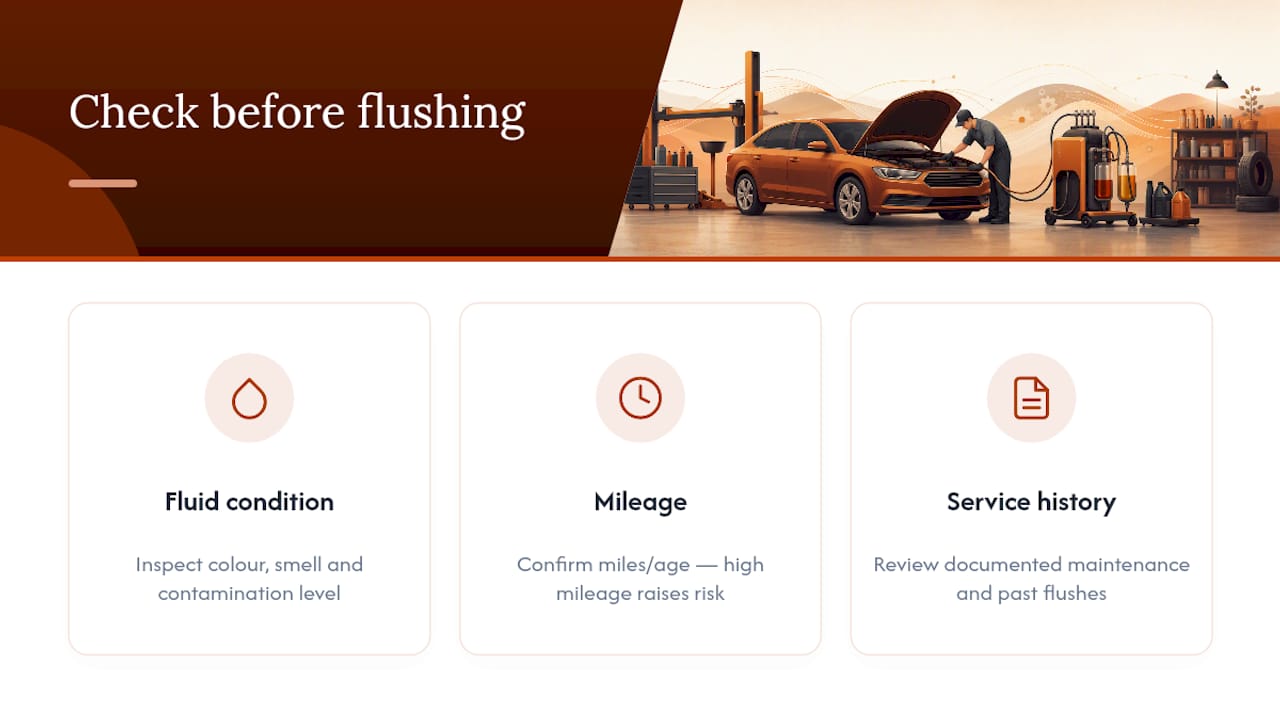
What the evidence actually supports is a sequence, not a rule: check the fluid, note the symptoms, then decide. A flush on a transmission with clean history and degraded fluid is a legitimate preventive step. The same flush on a high-mileage unit with unknown history and no prior inspection is a gamble.
If you take one thing from this, prioritize the inspection over the service name. Ask what they found before you ask what they're quoting. That single habit will save more transmissions, and more money, than memorizing any interval.
— Andrii
Sources
- Cars
- Transmission flushes: When they help and when they hurt | HowToGeek
- Proven Benefits: Is A Transmission Flush Worth It? | LubeOilSales