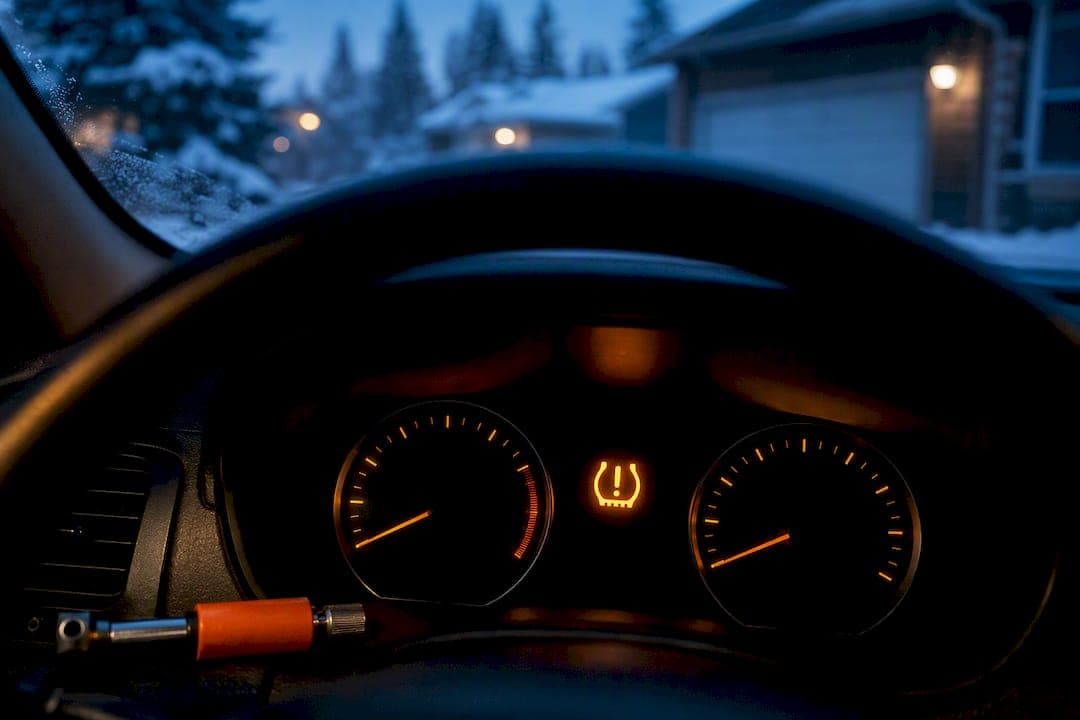
A flashing TPMS light most often means the monitoring system itself has a fault, typically a sensor or communication issue, not just low tyre pressure. Check your tyre pressures right away with a gauge. You can usually drive short distances if pressures look normal, but the system won't warn you about a new leak while it's malfunctioning. If the light keeps flashing after you've checked and corrected pressure, book a diagnostic appointment.
TL;DR:
- A flashing TPMS light indicates a system fault, such as dead sensors, damaged or unseated sensors, or skipped recalibration after tire rotation.
- Most sensor batteries last between five to ten years, and cold weather can reveal failing sensors by causing communication issues.
- Before visiting a shop, check all tires for damage or leaks, verify pressures are correct, and drive 10 to 20 minutes to allow possible system recalibration.
- Diagnostic procedures involve scanning for error codes, confirming sensor signal strength, and replacing faulty sensors, which can be costly beyond just topping up pressure.
- Ignoring the flashing light risks losing early warnings for underinflated tires, which can lead to uneven wear, increased costs, and lower resale value.
Table of Contents
- What does a flashing TPMS light actually mean?
- What causes a flashing TPMS light?
- What should I check before booking a repair?
- How do technicians actually diagnose a flashing TPMS light?
- What should you tell the shop when booking?
- How GarageMap helps you find trusted TPMS and tyre services quickly
- What happens if you ignore a flashing TPMS light?
- Are there legal requirements around TPMS?
- How can you prevent TPMS problems before they start?
- Why quick verification matters
- Find TPMS diagnostics and tyre shops near you with GarageMap
- Sources
- FAQ
What does a flashing TPMS light actually mean?
A flashing TPMS light and a solid one are telling you two completely different things. A solid light means the system detected genuinely low (or occasionally high) pressure in one or more tyres. A flashing light means the system itself can't do its job properly, whether that's a dead sensor battery, a communication dropout, or a control module hiccup.
Most vehicles show this pattern on startup: the light blinks for about 60 to 90 seconds, then either goes out (all clear) or stays solid, which Bridgestone explains signals a TPMS malfunction rather than a pressure problem. Transport Canada describes the same behaviour, noting that a TPMS malfunction indicator blinks for roughly a minute and then remains lit until the fault is fixed.
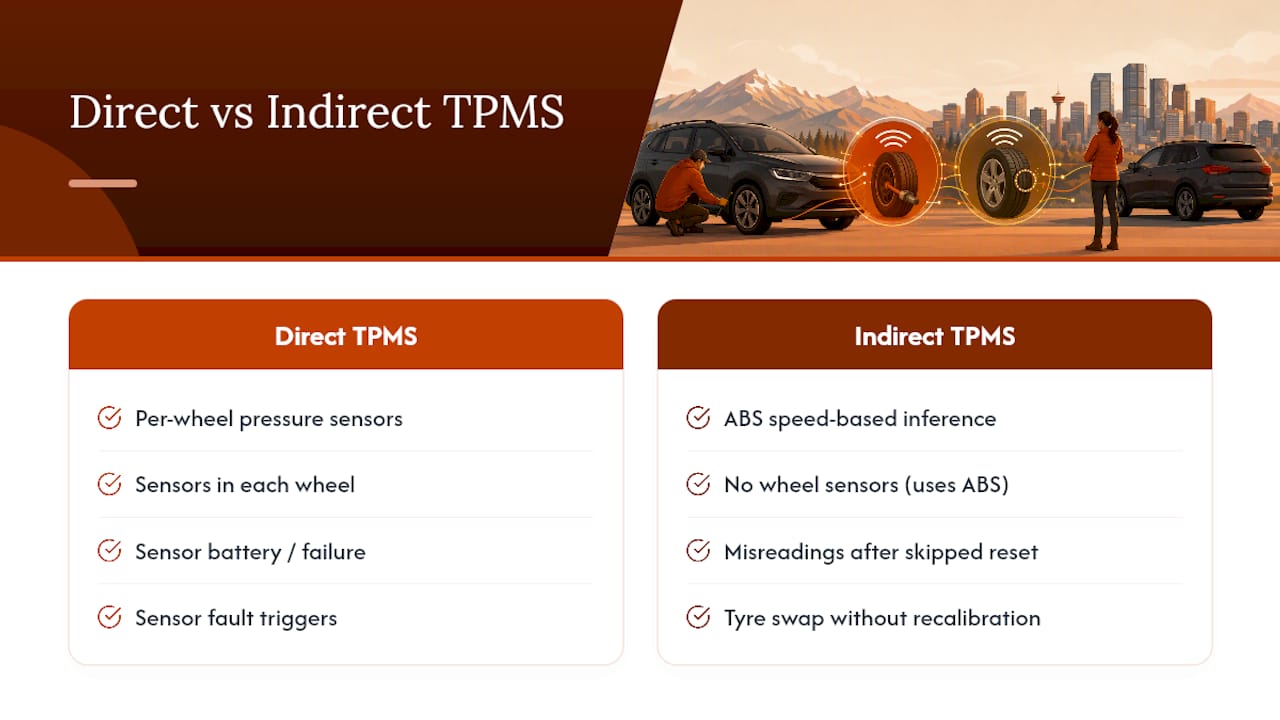
Some dashboards separate these into two distinct icons; others combine pressure and malfunction alerts into a single light with different blink patterns. Direct TPMS systems (which use physical pressure sensors in each wheel) tend to flag sensor faults specifically, while indirect systems (which infer pressure from wheel speed via the ABS sensors) are more likely to flash after a reset is skipped or a tyre is swapped without recalibration.
What causes a flashing TPMS light?
Before you book a shop visit, it helps to know what's actually likely to be wrong. A handful of causes account for the vast majority of flashing TPMS complaints:
- Dead or dying sensor battery. These batteries are sealed and non-serviceable, and they don't last forever.
- Damaged, missing, or badly seated sensor, often from a recent tyre swap where a sensor got knocked or wasn't reinstalled correctly.
- Skipped relearn after rotation. Many vehicles need sensors "married" to their new wheel position, and skipping that step confuses the module.
- Antenna or control module fault, less common but harder to diagnose without a scan tool.
- Signal interference or cold weather, which can push a marginal sensor from "barely working" to "not communicating."
Pro Tip: If your flashing light started right after a tyre rotation or seasonal swap, suspect a missed relearn before anything else. It's the single most common trigger and the cheapest to fix.
Sensor batteries typically last 5 to 10 years before they need replacing, and cold weather often exposes a sensor that was already on its way out. Shops routinely see a spike in TPMS complaints when temperatures drop, since the cold thins battery output right at the moment tyre pressure naturally falls too.
What should I check before booking a repair?
Work through these steps in order before you assume the worst:
- Walk around the car. Look at each tyre, and the spare if you have a full-size one, for obvious damage, punctures, or a tyre that's visibly low.
- Check pressures cold, meaning before you've driven more than a couple of kilometres, using a gauge you trust rather than relying on the gas station pump's built-in one.
- Inflate to the placard number, found on the sticker inside the driver's door jamb, not the number printed on the tyre's sidewall.
- Drive for 10 to 20 minutes at normal speed. Many vehicles will self-recalibrate and clear a flashing light automatically. Some need a specific reset button held for several seconds instead, so check your owner's manual.
If the light was already flashing before you checked anything, and pressures come back within a reasonable range, you're generally safe to drive locally. If a tyre is visibly flat, damaged, or losing air fast, stop and call roadside assistance instead of trying to limp to a shop.
How do technicians actually diagnose a flashing TPMS light?
A shop won't just eyeball your tyres. TPMS diagnostics typically follow the same sequence regardless of make:
- Scan for codes. A TPMS scan tool reads sensor IDs, checks battery voltage on each unit, and pulls diagnostic trouble codes tied to the malfunction.
- Confirm sensor signal strength. Weak or dead sensors show up clearly once the tool queries all four positions.
- Run a relearn/registration procedure if sensors were recently rotated or replaced. Some manufacturers require their own proprietary tool for this step, not a generic scanner.
- Replace faulty sensors as a unit. Since the battery inside is sealed, a dying battery means a full sensor swap, not a battery change.
- Swap the valve service kit (stem, nut, cap) alongside any sensor replacement. It's cheap insurance against future leaks and corrosion.
This is why a flashing TPMS light sometimes costs more to resolve than a simple pressure top-up. You're often paying for a part, not just labour.
What should you tell the shop when booking?
A good diagnosis starts before the technician ever touches your car, so give the shop specifics rather than "the light is on." Mention exactly how the light behaves: does it flash for a minute and go solid, does it flash continuously, or does it come and go?
Tell them about any recent tyre work, including a rotation, new rims, tyre sealant use, or a temporary spell on the spare tyre. Any of those can trigger a communication fault that has nothing to do with your actual air pressure. Ask directly for a TPMS diagnostic that checks sensor signal strength and sensor IDs, not just a visual pressure check. That one request often saves a second visit, since some shops will otherwise just top up your tyres and send you on your way without ever plugging in a scan tool.
How GarageMap helps you find trusted TPMS and tyre services quickly
There are platforms that aggregate local shops across certain Alberta cities to help you find services when a flashing light appears. You can filter by service type to shortlist shops that list tyre work and electronic diagnostics, then compare options before choosing one.
Keep in mind that TPMS problems ultimately need in-person diagnostics. No app can read a sensor's signal strength from your driveway. Such platforms aim to shorten the distance between "my light is flashing" and "I've got a shop lined up that actually handles this."
What happens if you ignore a flashing TPMS light?
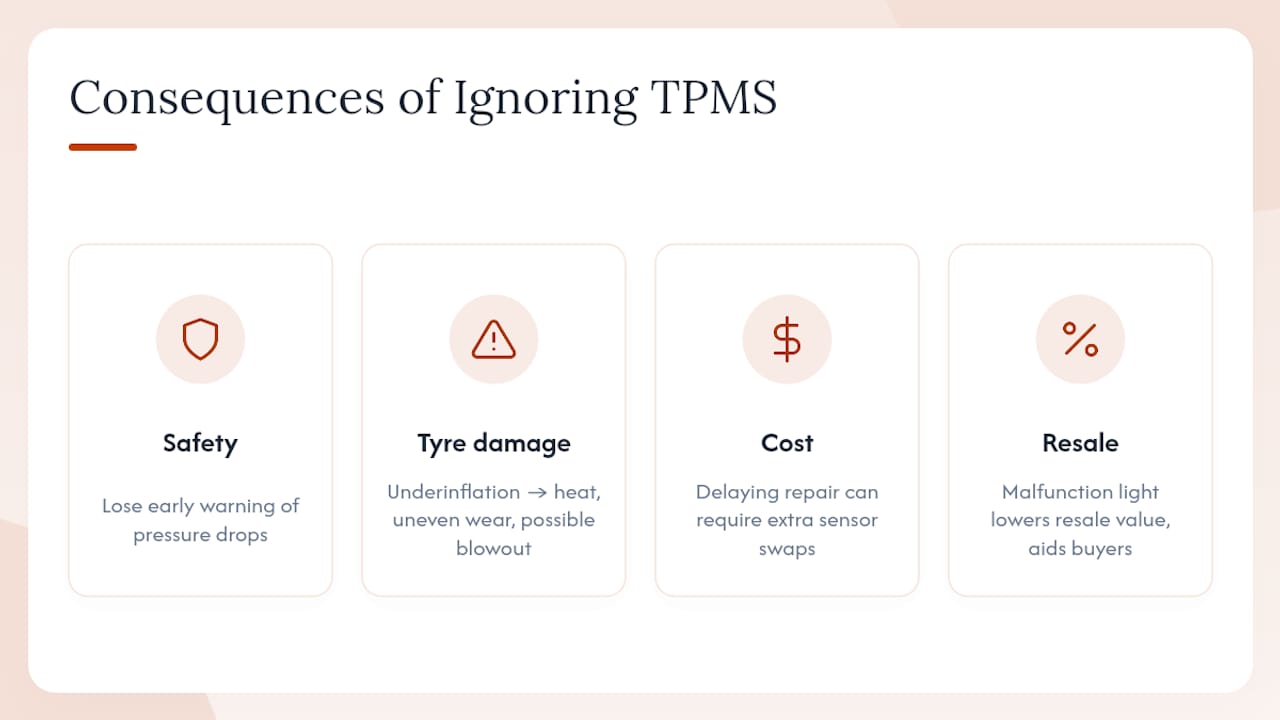
The immediate risk isn't the light itself. It's what it's hiding. While the system is malfunctioning, you lose the early warning for a genuine pressure drop, a slow leak from a nail, or a temperature swing that quietly deflates a tyre overnight. Consumer-tech coverage on the topic points out that driving with a flashing light is usually safe short-term if pressures check out, but you're driving without a safety net until it's fixed.
Underinflated tyres run hotter, wear unevenly along the shoulders, and lose grip in wet or icy conditions well before you'd notice by feel alone. A blowout doesn't usually happen because a tyre was completely flat. It happens because a tyre ran underinflated for weeks without anyone catching it, and the sidewall finally gave out.
There's a cost angle too. A sensor that's already failing rarely fixes itself, and delaying the fix means you're also delaying the eventual relearn or replacement, sometimes for months, while the underlying cause gets worse or a second sensor starts failing alongside it. What could have been a single sensor swap turns into two.
There's also a resale consideration. A flashing TPMS light is one of the first things a used-car inspector or a savvy buyer will notice, and an unresolved malfunction light is an easy negotiating point against you.
Are there legal requirements around TPMS?
TPMS requirements largely target vehicle manufacturers rather than individual drivers. In Canada, Transport Canada's motor vehicle safety standards require TPMS on most light vehicles built from the mid-2000s onward, with the system designed to alert drivers to both low pressure and system malfunctions.
There's no federal law that fines you directly for driving with a flashing TPMS light the way there might be for, say, a missing licence plate. That said, a vehicle inspection, whether for used-car resale, a provincial safety check, or an insurance claim after an incident, can flag an active malfunction light as a deficiency depending on the jurisdiction and inspection standard involved. If a tyre-related incident occurs while your TPMS was known to be malfunctioning and unaddressed, it can also become a factor in an insurance or liability review, since insurers may ask whether known safety warnings were acted on.
The practical takeaway: there's no ticket waiting for you at the next intersection, but there's also no regulatory shield if an ignored fault contributes to a bigger problem down the road.
How can you prevent TPMS problems before they start?
Most TPMS headaches are preventable with a few habits that take minutes, not hours.
Check tyre pressure monthly with your own gauge, not just when a light comes on. TPMS is a backup, not your primary maintenance tool, and by the time it alerts you, the problem has already been developing for a while. Always ask for a TPMS relearn whenever you rotate tyres, swap to winter rims, or have any tyre removed and reinstalled. This one step prevents a huge share of flashing-light callbacks. Replace all four sensors around the same time when one starts approaching its 5 to 10 year lifespan rather than waiting for each one to fail separately, since a shop visit for one sensor costs the same in labour as doing several. Store your spare properly and check its pressure too if it carries its own sensor, since a neglected spare is an easy blind spot. Keep a simple record, even a note in your phone, of when sensors were last serviced or replaced so you're not guessing at your next shop visit.
Why quick verification matters
The biggest mistake drivers make isn't ignoring the light outright. It's trusting TPMS as their only pressure check and then feeling blindsided when a sensor quietly fails. A monthly manual check with a real gauge, noted alongside a rough sense of your sensors' age, catches problems TPMS itself might miss during a malfunction. Keep a short record of recent tyre work, rotations, new rims, sealant, so you're not reconstructing that history from memory at the service counter.
— Andrii
Find TPMS diagnostics and tyre shops near you with GarageMap
Garagemap gets you to a fix faster because you're comparing vetted local options instead of cold-calling every shop in the phone book to ask who actually handles TPMS work. Filter by service across Calgary, Airdrie, Chestermere, and Okotoks to shortlist shops that list tyre and TPMS services, or check who offers engine and electronic diagnostics if you suspect the fault runs deeper than a single sensor.

If you're in Calgary specifically, browse car repair shops near you and compare providers before you book. A flashing light rarely fixes itself on its own timeline, so line up an appointment now rather than waiting for it to go solid.
Sources
- Transport Canada — Tire pressure monitors
- Bridgestone — TPMS light on? What it means and what you need to do
- Lancer Service — Flashing tire pressure light: why it’s blinking and what it means
- SlashGear — TPMS vs tire pressure light differences
FAQ
What does it mean when your TPMS light blinks?
A blinking TPMS light means the system has a malfunction, usually a sensor, battery, or communication fault, rather than a confirmed low-pressure reading in a specific tyre.
Can I fix a TPMS error myself?
Sometimes. Checking and correcting tyre pressure, then driving 10 to 20 minutes, resolves many cases, but a dead sensor or a required relearn after rotation usually needs a scan tool or shop visit.
How do I permanently turn off the TPMS light?
You can't permanently disable it without fixing the underlying fault, since it's a mandated safety feature on most vehicles built from the mid-2000s onward. The light clears once the sensor issue, low pressure, or relearn is properly addressed.
Why is my low tire pressure light flashing but tires have enough air?
A flashing light with adequate air pressure almost always points to a sensor or communication fault rather than an actual pressure problem, meaning the system can't reliably read one or more sensors even though your tyres are fine.