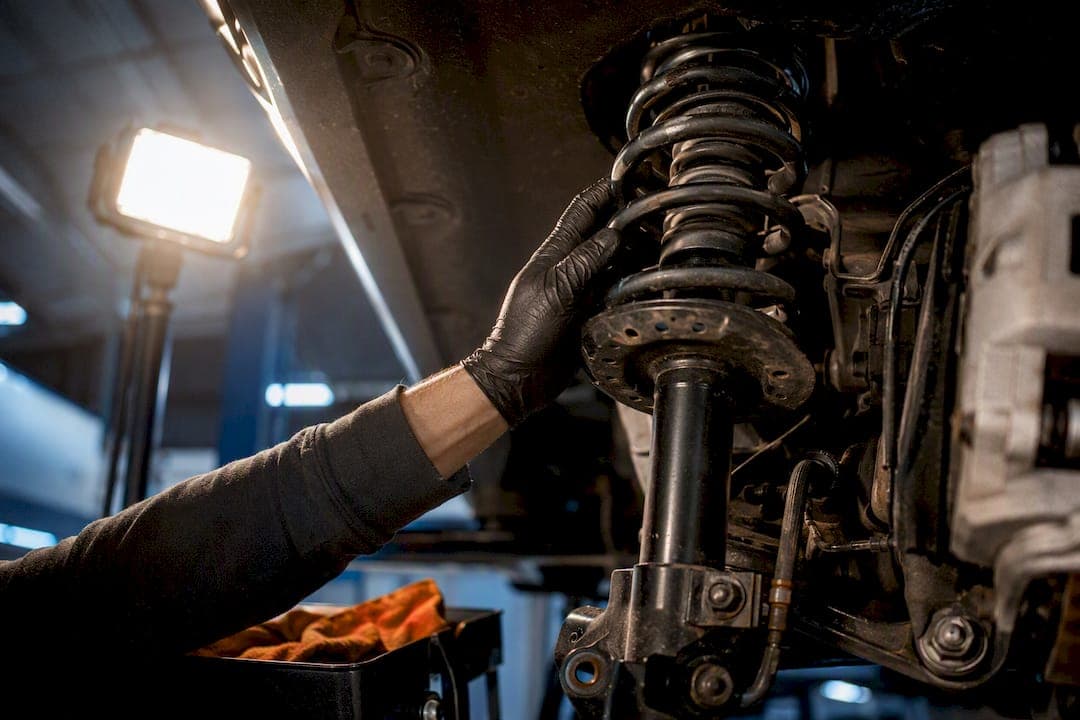
If your car is bouncing, pulling, or clunking on bumps, the suspension or a related front-end part probably needs a look. Most of these symptoms mean worn shocks, struts, or springs rather than an emergency, but a few, like severe steering trouble or bottoming out, mean you should stop driving and get the car inspected right away.
TL;DR:
- Most suspension problems are caused by worn shocks, struts, or springs, but severe issues like steering difficulty or bottoming out require urgent inspection.
- Common warning signs include loose steering, pulling to one side, uneven tire wear, visible fluid leaks, and excessive body roll or bouncing.
- Performing simple tests like the bounce test, leak check, and tread inspection can help diagnose issues before visiting a mechanic.
- Immediate service is necessary if you experience severe steering looseness, a wheel sitting crooked, or significant fluid leaks that cause ride height loss.
- Regular maintenance, such as alignment checks and early replacement of worn components, helps prevent minor issues from becoming major suspension failures.
Table of Contents
- Suspension problems symptoms: the full checklist
- How to diagnose suspension issues yourself
- When to stop driving and what repairs typically cost
- Simple maintenance that prevents most suspension problems
- What drivers usually get wrong about suspension symptoms
- What actually matters when your suspension starts acting up
- Find a vetted suspension and steering shop near you
- Sources
Suspension problems symptoms: the full checklist
Most drivers notice suspension trouble long before a shop confirms it. The trick is knowing which symptom points to which part, and which ones are just annoying versus which ones are dangerous. Here's the list, in roughly the order drivers tend to notice them.
1. Loose, shaky, or notchy steering
If the steering wheel feels vague at highway speed or notchy when you turn it slowly in a parking lot, worn strut bearings or steering linkages are common culprits. A quick check: with the car stopped, turn the wheel slightly and feel for looseness before the tyres actually respond. If there's a noticeable gap, get it looked at.
2. The car pulls to one side
Constant drift toward one lane, even with your hands relaxed on the wheel, often points to alignment trouble, uneven tyre pressure, or a worn control arm. Check tyre pressure and tread depth on both front tyres first. If pressure and tread are even but the pull persists, the issue is likely mechanical, not cosmetic.
3. Cupped or uneven tyre wear
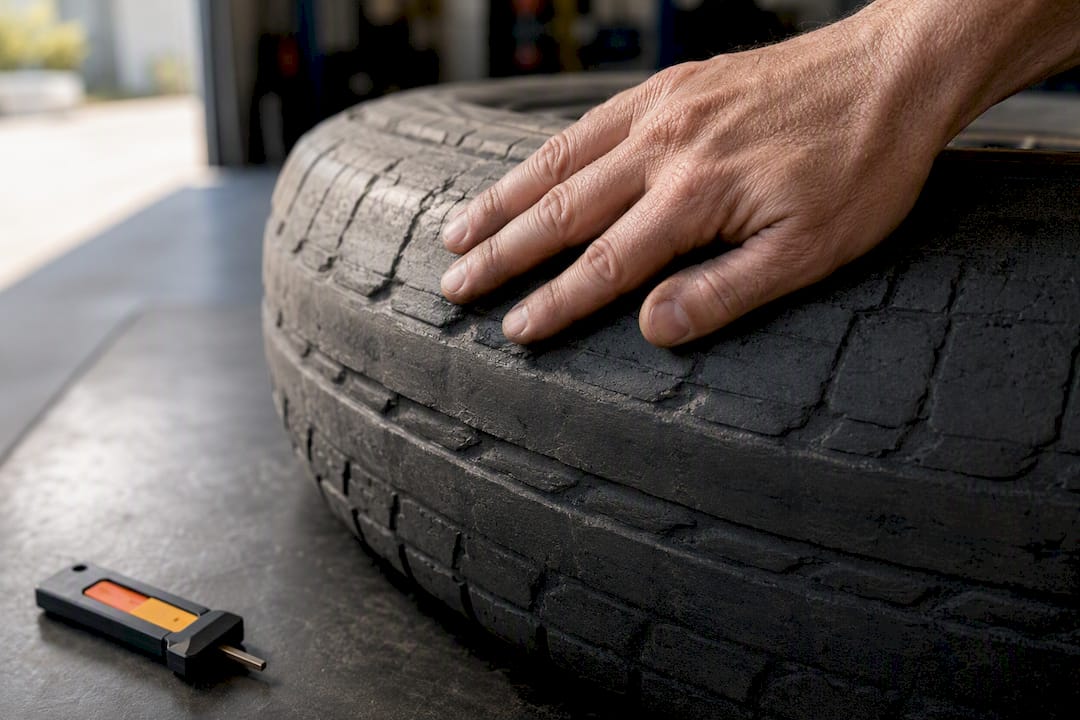
Run your hand across the tread. If you feel a wavy, scalloped pattern instead of smooth wear, that's cupping, and it's a textbook sign of worn shocks or struts failing to control tyre bounce properly. It's easy to blame on a bad wheel balance, but balance problems and cupping look and feel different once you know what to check for.
4. Visible fluid leaks on shocks or struts
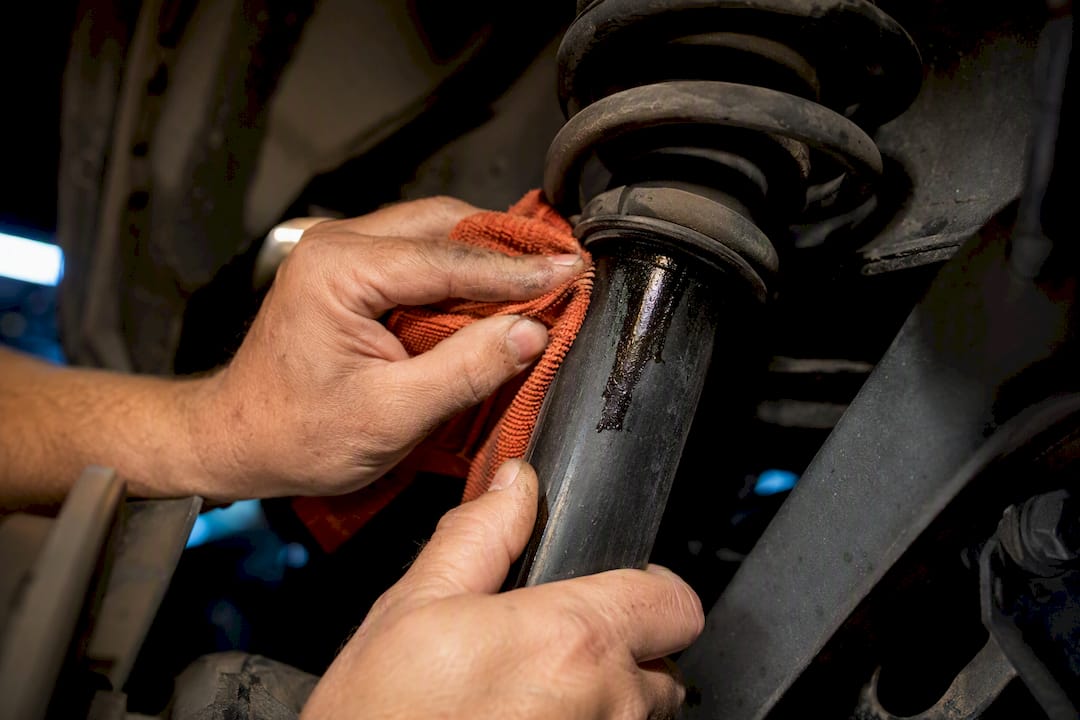
Wipe down the shock body with a rag. Oily residue that wasn't there before means the internal seal has failed, and the shock has lost its damping ability. Don't confuse this with a small amount of road grime; a genuine hydraulic leak looks wet and often has a slight sheen, distinct from engine oil dripping from above.
5. Clunks, knocks, or squeaks over bumps
These noises usually trace back to sway bar links, bushings, ball joints, or a loose mount rather than the shock or strut itself, according to Carparts. The good news: some of these fixes are genuinely inexpensive compared to a full strut replacement.
6. The car keeps bouncing after a bump
Hit a speed bump and count how many times the car bounces before settling. Two or fewer bounces is considered normal. More bounces than this suggests the shocks aren't absorbing energy effectively.
7. One corner or side sits noticeably lower
Park on flat ground and walk around the car. A visibly lower corner usually means a broken or sagging spring, not just uneven tyre pressure.
8. Swaying or excessive body roll in corners
If the car leans hard through turns that used to feel flat, worn sway-bar components or shocks are letting the body roll more than it should, according to Kelley Blue Book's list of suspension warning signs. This isn't just uncomfortable; it reduces how predictably the car handles in an emergency swerve.
9. Nose dives under braking or squats under acceleration
Excessive forward dip when you brake, or rear squat when you accelerate, both point to failing dampers that can no longer control weight transfer.
10. Bottoming out over bumps or dips
If you hear or feel the suspension slam against its stops on ordinary bumps, that's a sign of severely worn components and it should be treated as urgent.
11. The quick DIY bounce test
Push down hard on the front bumper and release. A healthy suspension settles within one bounce. If the car keeps rocking, that's your cue to book an inspection, and it's the same bounce test Les Schwab's technicians recommend as a first check.
12. A visual once-over before you call anyone
Look at tread wear, check for leaks, and note any sounds you've been ignoring. Writing these down before you talk to a mechanic makes the conversation faster and harder to upsell.
How to diagnose suspension issues yourself
Start with the cheap checks before assuming the worst.
- Bounce test on each corner, front and rear.
- Visual leak check on both shocks or struts, wiped clean and rechecked after a short drive.
- Tread inspection for cupping, feathering, or uneven wear across all four tyres.
- Steering play check at low speed, feeling for slack before the wheels respond.
Alignment problems and worn tyres can produce symptoms that look identical to suspension wear, particularly pulling and vibration, which is why a mechanic doesn't just glance at the shocks. A proper inspection puts the car on a lift and checks ball joints, control arms, bushings, sway bar links, and shock or strut mounts by hand, feeling for play that isn't visible from the ground. It usually finishes with a road test to confirm what the lift inspection found.
Pro Tip: Bring your own notes on when the noise happens (over bumps, only when turning, only at speed). It narrows the diagnosis faster than describing the symptom from memory in the service bay.
When to stop driving and what repairs typically cost
Some symptoms are inconvenient. Others are dangerous enough to warrant pulling over and calling for a tow rather than driving to a shop.
Stop driving immediately if you notice:
- Severe steering looseness or a wheel that feels disconnected from the road
- Metal scraping the ground or a wheel sitting visibly crooked
- A major fluid leak accompanied by a sudden drop in ride height
- Steering that won't respond properly at low speed
Worn suspension components extend stopping distance, reduce stability during sudden lane changes, and increase rollover risk on uneven surfaces. That's not a reason to panic over every squeak, but it is a reason to take bottoming out or steering looseness seriously.
Repair cost swings on a few factors: whether you're replacing shocks and struts, springs, or a full control-arm assembly, how labour-intensive the specific vehicle is to access, and whether an alignment is needed afterward. Shops commonly replace shocks or struts in pairs, both fronts or both rears together, since mismatched damping on one axle creates uneven handling. That pairing, plus the near-automatic alignment check that follows suspension work, is usually the biggest swing factor in a final quote.
Simple maintenance that prevents most suspension problems
A little routine attention catches problems long before they become bounce-test failures.
- Get an alignment check whenever you buy new tyres or after hitting a significant pothole or curb.
- Rotate tyres on schedule and replace them before wear gets severe enough to mask suspension symptoms.
- Avoid repeated heavy impacts (potholes at speed, overloaded trunks) that accelerate wear on bushings and links.
- Replace a worn sway-bar link early. It's one of the cheaper fixes on this list and delaying it rarely saves money.
Pro Tip: Schedule a quick visual inspection after any pothole season or a hard curb strike, even if nothing feels wrong yet. Suspension wear from an impact is sometimes silent for weeks before it shows up as a noise or pull.
What drivers usually get wrong about suspension symptoms
The most common mistake isn't ignoring symptoms. It's assuming tyres alone explain everything, then replacing tyres twice before anyone checks the shocks.
Ask any shop quoting a full strut and control-arm replacement to show you the worn part first. A legitimate diagnosis points to a specific failed component, not a blanket "replace everything" estimate.
The second mistake is waiting too long on slow-onset symptoms, like a car that's felt slightly bouncier for months. Slow decline doesn't feel urgent, so it gets ignored until a pothole turns a minor wear issue into a sudden failure.
What actually matters when your suspension starts acting up
Most suspension advice online treats every symptom as equally serious, which isn't true and isn't useful. A slightly noisy sway-bar link and a car that bottoms out on every dip are not the same emergency, and treating them that way just trains drivers to either panic unnecessarily or ignore real warning signs out of fatigue.
The conventional advice, "get your suspension checked regularly," is technically correct but practically useless. What actually helps is knowing the specific tests: the bounce test, the tread check, the leak check. Those three take under five minutes combined and tell you more than a vague sense that something feels off.
If there's one priority worth pushing back on, it's this: don't let a mechanic's diagnosis be your only diagnosis. Do the bounce test yourself first. Walk around the car and check ride height yourself first. Then bring that information to a shop, so you're confirming a suspicion instead of hoping a stranger tells you the truth about your own car.
— Andrii
Find a vetted suspension and steering shop near you
Once you've narrowed down the symptom, GarageMap turns "which shop do I even call" into a five-minute comparison instead of a weekend of phone tag. GarageMap lists vetted shops across Calgary, Airdrie, Chestermere, and Okotoks under specific service categories, including suspension and steering repair and general inspection and maintenance, so you're comparing shops that actually handle your issue instead of scrolling past tire shops and oil-change chains that don't.

Filter by service type, read the notes on each listing, and pick a shop based on what they specialize in rather than whichever name comes up first in a general search. If you're in Calgary, start with the local shop directory for Calgary, pick two or three shops that list suspension work, and book an inspection before that clunk turns into a much bigger bill.
Sources
- Car Suspension: 10 Signs Something Is Off
- Symptoms worn shock struts | Monroe
- How to tell if your shocks or struts are bad | Les Schwab
- Symptoms of bad shocks and struts | AutoZone