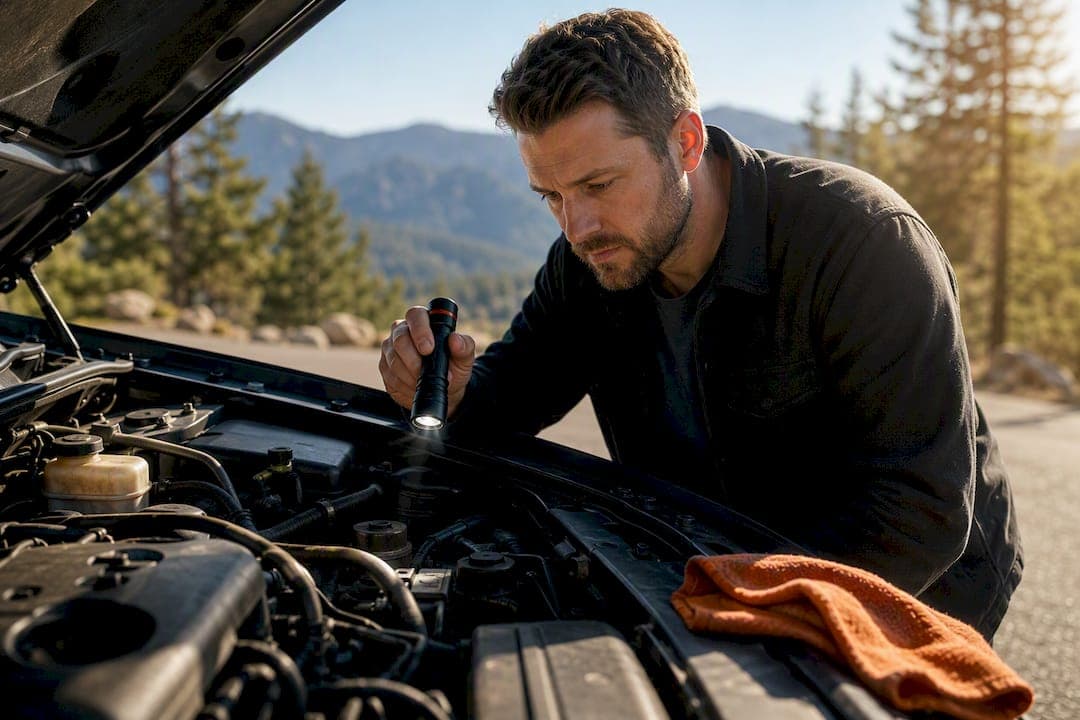
Use this checklist to screen a used car in a parking lot and catch deal-breakers before you pay a deposit. The plan is simple: run the zone-by-zone checks yourself first, then pay a mechanic for a pre-purchase inspection (PPI) on whichever car survives. Verify the VIN against the title and door jamb, run a Transport Canada recall check, and pull a vehicle history report. Walk away from anything with a VIN mismatch, structural damage, or flood evidence, no matter how good the price looks.
TL;DR:
- Verify the VIN across the dashboard, door jamb, and title to avoid title issues or fraud before inspecting the car further.
- Confirm there are no open recall notices by checking the VIN with both Transport Canada and the NHTSA database, as recalls are free to fix.
- Focus on structural problems such as frame damage, rust, or welding, which are often unrepairable and severely impact safety and resale value.
- Use a thorough DIY inspection to identify leaks, rust, or suspension issues, then book a mechanic's pre-purchase inspection only if the car passes your initial screening.
- Walk away immediately from cars with a mismatched VIN, branded titles, structural welding, or signs of flooding, regardless of the asking price.
Table of Contents
- Pre purchase inspection checklist: the full zone-by-zone walkthrough
- How do you verify a car's VIN, recalls, and history?
- Test drive checklist: what to listen for on the road
- Reading the engine bay: fluids that tell you the real story
- What to check under the vehicle without a lift
- Red flags that should end the deal immediately
- DIY inspection or a paid mechanic PPI: when do you need both?
- What to bring and when to schedule the inspection
- Prioritize the paperwork, then the mechanics
- An editor's take on where buyers waste their effort
- Book a vetted mechanic once your DIY screen clears
- Sources
Pre purchase inspection checklist: the full zone-by-zone walkthrough
Pick a dry day and inspect in daylight, ideally with the engine cold. A cold engine reveals leaks and rough starts that a warm one can mask, and shade or poor light hides paint mismatches and rust that direct sun exposes instantly. Ask the seller not to drive or warm up the car for at least an hour before you arrive. If they've already got it running when you show up, that's your first small red flag.
Work through the car in a fixed order so you don't miss anything. This mirrors how the strongest buyer-advice resources structure the job: exterior, tires and wheels, interior, engine bay, undercarriage, then the test drive.
Exterior
- Stand back ten feet and sight down each body panel. Ripples, waves, or colour shifts between panels point to prior collision repair.
- Check panel gaps around doors, hood, and trunk. Uneven gaps on one side often mean a replaced panel or frame damage.
- Run a magnet wrapped in cloth along the fenders and doors. It won't stick where body filler has been used.
- Open and close every door, the hood, and the trunk. Listen for grinding hinges and check that latches catch cleanly.
- Inspect glass for chips, cracks, and pitting, and confirm all lights, including turn signals and reverse lights, actually work.
- Look at door and trunk seals for cracking, and check under rubber trim for hidden rust.
Tires and wheels
Tread depth should be even across each tire's width. Uneven wear on the inside or outside edge usually points to alignment or suspension problems, while wear on just one tire suggests it's not the original set. Check that all four tires match in brand and size, confirm a spare and jack are present, and look at the sidewalls for cracking or bulges that signal age or impact damage.
Interior
Sit in the car with the doors closed and take a slow breath in. Musty or mildew smells, along with water stains on the carpet or under floor mats, point to leaks or flood exposure. Try every seat adjustment, power window, lock, and infotainment function. Check that the airbag warning light comes on and then turns off after a few seconds. If it stays lit, or the seller mentions the airbags were "already dealt with," that's worth investigating before you go further.
Engine bay
With the engine cold, check the oil dipstick, coolant reservoir, and transmission fluid where accessible. Look at hoses and belts for cracking, and inspect the battery terminals for corrosion. Scan the whole bay for fluid trails, wet spots, or a fresh oil smell, since a leak that's been recently wiped away often reappears within a few minutes of the engine running.
Undercarriage
Get down with a flashlight, or better, drive over a curb edge to see more of the underside. Look for active leak stains, rust that's flaking rather than surface-level, and any welding on frame rails that shouldn't be there on a car that's never been in an accident.
Test drive and documents
Drive on varied roads with the radio off, then check the VIN on the dash, door jamb, and title all match, and confirm the odometer reading lines up with service records.
Pro Tip: Bring a printed copy of this checklist and check items off as you go. A structured, 60-plus point walkthrough catches most visible and paperwork problems, even if it can't replace a scan tool or a lift.
- Exterior panels, gaps, and glass
- Tire tread and wheel condition
- Interior smell, stains, and electronics
- Engine bay fluids and leaks
- Undercarriage rust and welds
- Test drive behaviour
- VIN, title, and service records
How do you verify a car's VIN, recalls, and history?
Every vehicle carries a 17-character VIN, stamped on the dashboard (visible through the windshield), the driver's door jamb, and printed on the title. All three must match exactly. A mismatch, even by one character, is not a paperwork error to shrug off. It's the single clearest sign of a title problem, a swapped VIN plate, or a car that's been through a fraud scheme.
Once the VIN checks out, use it to search for open recalls. Manufacturers are required to fix recall-related defects for free at authorized dealers, so an open recall costs you nothing but time, but it's still worth confirming before you buy. Run the number through NHTSA's recall database and cross-reference it with Transport Canada's defect and recall lookup, which tracks Canadian-specific notices the U.S. database sometimes misses.
A vehicle history report adds another layer, showing past accidents, ownership changes, and odometer readings over time. It's a useful screening tool, but it's not a substitute for the physical inspection above. History reports rely on reported data, and unreported accidents, DIY repairs, or private-sale damage never make it into the file.
A recall check takes under two minutes and costs nothing — there's no reason to skip it on any used car you're seriously considering.
Watch for these paperwork red flags:
- Branded titles marked salvage, rebuilt, or flood, which affect resale value and sometimes insurability.
- Liens still attached to the vehicle, which can leave you responsible for a debt that isn't yours.
- Mismatched names between the titleholder and the person selling the car.
- Altered or photocopied titles, which are far easier to fake than most buyers assume.
Test drive checklist: what to listen for on the road
The test drive is where mechanical problems that hide at idle finally show themselves. Start with the engine cold if you can, since a rough cold start tells you things a fully warmed-up engine will never reveal. Turn the radio off for the entire drive. You need to hear the car, not the playlist.
Plan a route that covers a mix of conditions: a stretch of highway for higher speeds, some stop-and-go city driving, a few tight turns, and at least one rough patch of pavement if you can find one.
- Listen for knocks, clunks, or grinding over bumps and during turns, which often point to worn suspension components or CV joints.
- Pay attention to how the transmission shifts. Hesitation, harsh clunks between gears, or slipping under acceleration are expensive to fix on both automatics and manuals.
- Test the clutch on a manual for engagement point and any slipping under load.
- Brake hard from a moderate speed on an empty stretch of road, checking for pulling to one side, pedal vibration, or a pedal that feels soft or sinks toward the floor.
- Check steering feel at low speed for looseness or wandering, and at highway speed for vibration through the wheel.
- Run the HVAC through every setting, including defrost and air conditioning, and test every electronic feature you can reach while stopped safely.
Aim for at least 20 minutes behind the wheel, longer if the seller allows it. A five-minute loop around the block almost never surfaces the kind of intermittent problem that shows up after the engine's fully warmed.
Pro Tip: Right after you park, pop the hood again while the engine's still running and listen for ticking, hissing, or belt squeal you might have missed while driving. Problems that hide under road noise often become obvious the moment the car goes back to idle.
Write down everything you noticed, even small things, while it's fresh. That list becomes exactly what you hand a mechanic if the car makes it to a paid inspection.
Reading the engine bay: fluids that tell you the real story
Fluid condition tells you more about a car's real history than almost anything else under the hood, and it takes less than five minutes to check.
Pull the oil dipstick and look at both colour and texture. Oil that looks gritty or has a burnt smell suggests overdue maintenance or engine wear. Oil with a milky, frothy appearance is a far more serious sign: it usually means coolant is mixing with the oil, which points to a failing head gasket or a cracked engine component. That's a repair that can run into thousands of dollars, not a minor fix.
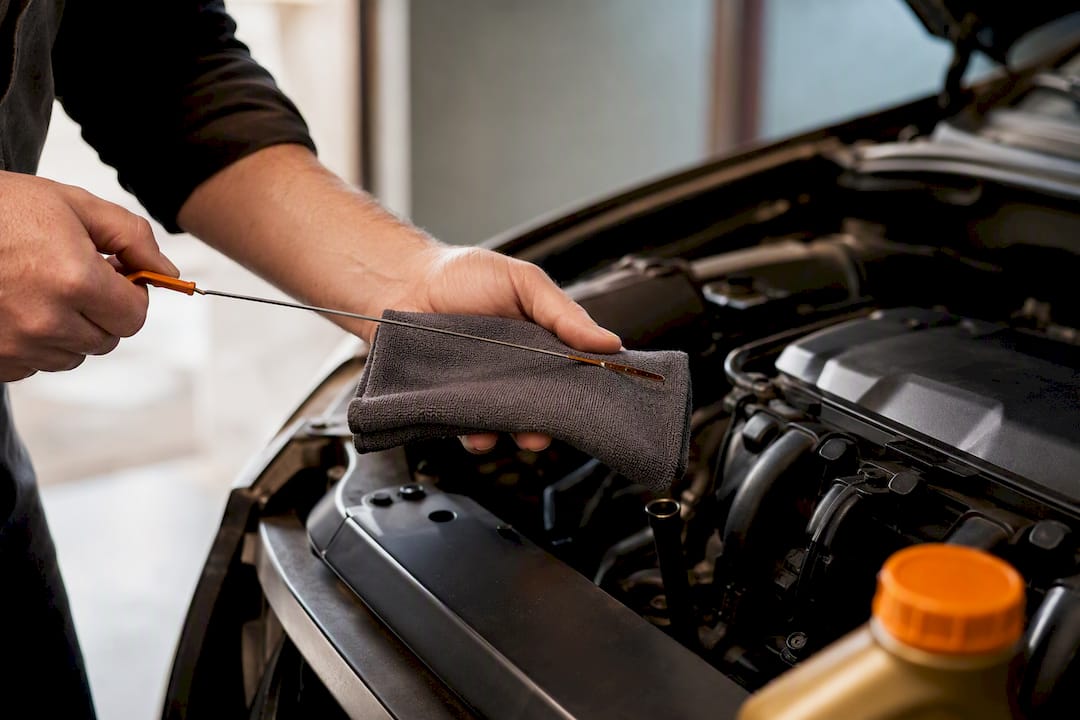
Check the coolant reservoir. Healthy coolant runs clear, green, orange, or pink depending on the type used; a rusty or muddy colour means it hasn't been serviced in a long time, which can lead to overheating problems down the road. Transmission fluid should be a clear reddish colour on most vehicles. Fluid that looks dark brown or smells burnt often signals internal transmission wear.
One overlooked check: run your hand along visible belts and hoses, feeling for cracking, glazing, or soft spots, and take a close look at wiring connectors near the battery for corrosion or rodent damage, which is more common than most buyers expect on cars that have sat outdoors.
- Oil: check colour, texture, and smell.
- Coolant: check colour and clarity in the reservoir.
- Transmission fluid: check colour on the dipstick or via the transmission dipstick tube.
- Belts and hoses: check for cracking, glazing, and soft spots.
- Wiring and connectors: check for corrosion or animal damage near the battery.
If you're looking at a hybrid or EV, the checks shift slightly. Confirm the dashboard shows no active battery warning lights, check the state of charge and whether it holds steady after a short drive, and ask for any battery health report the dealer or previous owner might have from a diagnostic scan. A cleaner engine bay is easier to inspect properly. Aggressive degreasing right before a sale can also hide leaks, so if the bay looks suspiciously spotless, that's worth a second look rather than a compliment. Guides on safely cleaning an engine bay explain what a normal, well-maintained bay should actually look like.
What to check under the vehicle without a lift
You don't need a shop lift to catch the biggest underbody problems. A flashlight, a curb, and ten minutes will surface most of what matters.
Get down and look along the frame rails and rocker panels for fresh undercoating. Undercoating itself is a normal rust-prevention product, but a patchy or brand-new coating applied only in one section, rather than evenly across the whole underside, is sometimes used to hide recent welding or structural repair. Look for overspray on suspension components nearby, and check for weld marks that look inconsistent with the factory seams elsewhere on the car.
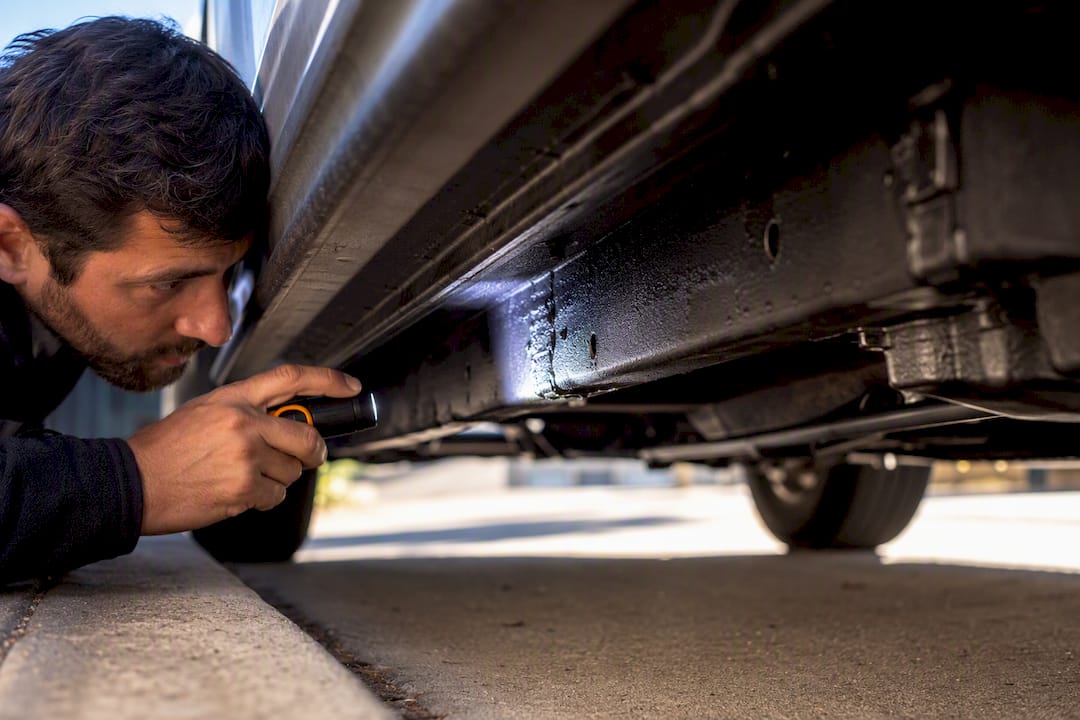
Scan for active leak stains on the ground where the car's been parked, and check the fuel and brake lines for rust perforation rather than just surface corrosion.
Two quick mechanical tests round this out:
- Bounce test: push down hard on each corner of the car and release. It should settle back down within one bounce; continued bouncing points to worn shocks or struts.
- Wheel-play check: grab the top and bottom of each front tire and rock it. Looseness or a clunk can indicate worn wheel bearings or tie rod ends.
How you weigh what you find matters. Worn shocks or a wheel bearing are negotiable repairs; you can quote them, deduct the cost, and move forward with confidence. Frame welding, kinked frame members, or a persistent structural leak are a different category entirely. Those point to prior accident damage that affects safety and resale value permanently, and no amount of price negotiation makes that a good buy.
Red flags that should end the deal immediately
Some problems are worth negotiating around. Others mean you get up and leave, no matter how much the seller wants to talk you out of it.
Walk away from any of these:
- A VIN that doesn't match across the dash, door jamb, and title.
- A branded title marked salvage, rebuilt, or flood damage.
- Welding, kinks, or inconsistent repairs on frame rails.
- Milky or frothy oil, which points to coolant mixing with lubricant.
- An odometer reading that doesn't match service records or history report data.
- A seller who won't let you take the car for an independent inspection.
Plenty of other issues are simply part of buying a used car and belong in a price negotiation instead of a walkout. Worn tires, a needed brake job, an aging battery, or a suspension component nearing the end of its life are all things you can quote and deduct from your offer. Get an actual repair estimate from a shop rather than guessing, and use that number, not a vague "it needs some work," when you go back to the seller.
Pro Tip: Seller behaviour is its own red flag category. A seller who rushes you through the inspection, refuses to let you drive the car cold, or gets defensive when you ask for service records is telling you something. Trust that reaction as much as anything you find under the hood.
DIY inspection or a paid mechanic PPI: when do you need both?
A thorough DIY walkthrough catches most of what actually matters: exterior damage, fluid problems, obvious leaks, interior condition, and document mismatches. What it can't catch is anything that needs a lift, a compression test, or a diagnostic scan tool plugged into the car's computer. That's the gap a mechanic's pre-purchase inspection is built to close.
A typical independent PPI runs somewhere in the $100 to $250 range in most Canadian markets, depending on the shop and how thorough the inspection is, and it usually includes a written report covering fluid analysis, brake and suspension measurements, and any fault codes stored in the vehicle's computer. That written report is worth more than the inspection itself in some ways, since it gives you a documented list you can hand straight back to the seller for a price adjustment.
- Book the PPI only for cars that pass your own DIY screen. There's no point paying for one on a car with a VIN mismatch.
- Ask the mechanic to check specifically for anything unusual you flagged during your own walkthrough or test drive.
- Request the estimate in writing, itemized by repair, not just a verbal summary.
- If the seller refuses to let an independent mechanic inspect the car, treat that as a decision, not an inconvenience: a private seller or dealer confident in the car's condition has no real reason to say no.
What to bring and when to schedule the inspection
Timing matters almost as much as the checklist itself. Book the appointment for a dry day with good daylight, and insist the seller leave the engine cold and untouched before you arrive.
Pack a small kit before you go:
- A flashlight, even during daytime, for underbody and dark corners of the engine bay.
- Paper towels or a rag for checking fluid colour and wiping dipsticks.
- A small magnet wrapped in cloth for detecting body filler.
- Your smartphone camera to photograph anything questionable for later reference.
- Disposable gloves, especially useful when checking fluids or the underbody.
- A small mirror on a stick for looking behind components you can't easily see.
Photograph or write down every issue as you find it, even minor ones. That running list becomes your negotiation notes and, for any car that clears your DIY screen, the exact brief you hand to a mechanic before the paid inspection begins.
Prioritize the paperwork, then the mechanics
Structural and title problems are almost never fixable in a way that protects your investment, while most mechanical faults are negotiable if you catch them early and price them accurately. That ordering matters more than most buyers realize: it's tempting to obsess over engine noises while glossing over a title that doesn't quite add up, when it should be the other way around.
Once a car clears your legal and structural screen, the mechanical side becomes a matter of finding the right hands to look under it. A vetted local service directory shortens that search considerably, since booking a PPI with an unknown shop from a generic search result is its own gamble. GarageMap aggregates shops specifically for jobs like this, letting you compare inspection and diagnostic providers by service type rather than sorting through listings that don't specialize in pre-purchase work at all.
An editor's take on where buyers waste their effort
Most buyers spend their energy in the wrong place. They'll interrogate a used car's tire wear and haggle over a worn belt while glossing over a title discrepancy that should have ended the conversation in the driveway. The research backs this up clearly: structural and legal problems are close to unfixable in any way that protects your money, while nearly everything mechanical can be quoted, negotiated, or scheduled for repair after the sale.
The conventional advice on this topic tends to bury the VIN check and recall lookup somewhere near the bottom of a long list, treating them as paperwork chores rather than the first filter they should be. Flip that order. Confirm the VIN matches across the dash, door jamb, and title before you even open the hood. If it doesn't match, nothing else about the car matters.
What the checklist actually buys you is speed. A structured, ordered walkthrough means you're not standing in a driveway trying to remember what to check next while a seller hovers nearby. Do the DIY screen first, save the money you'd spend on a PPI for cars worth that expense, and treat the mechanic's report as a negotiating document, not a formality.
— Andrii
Book a vetted mechanic once your DIY screen clears
A local online directory helps you avoid the guesswork of picking a shop for the mechanical half of this process. Once a car survives your own walkthrough, you still need someone qualified to run the compression test, scan tool check, and lift inspection a driveway can't replicate, and searching blind for that shop wastes the time you just spent on the checklist.
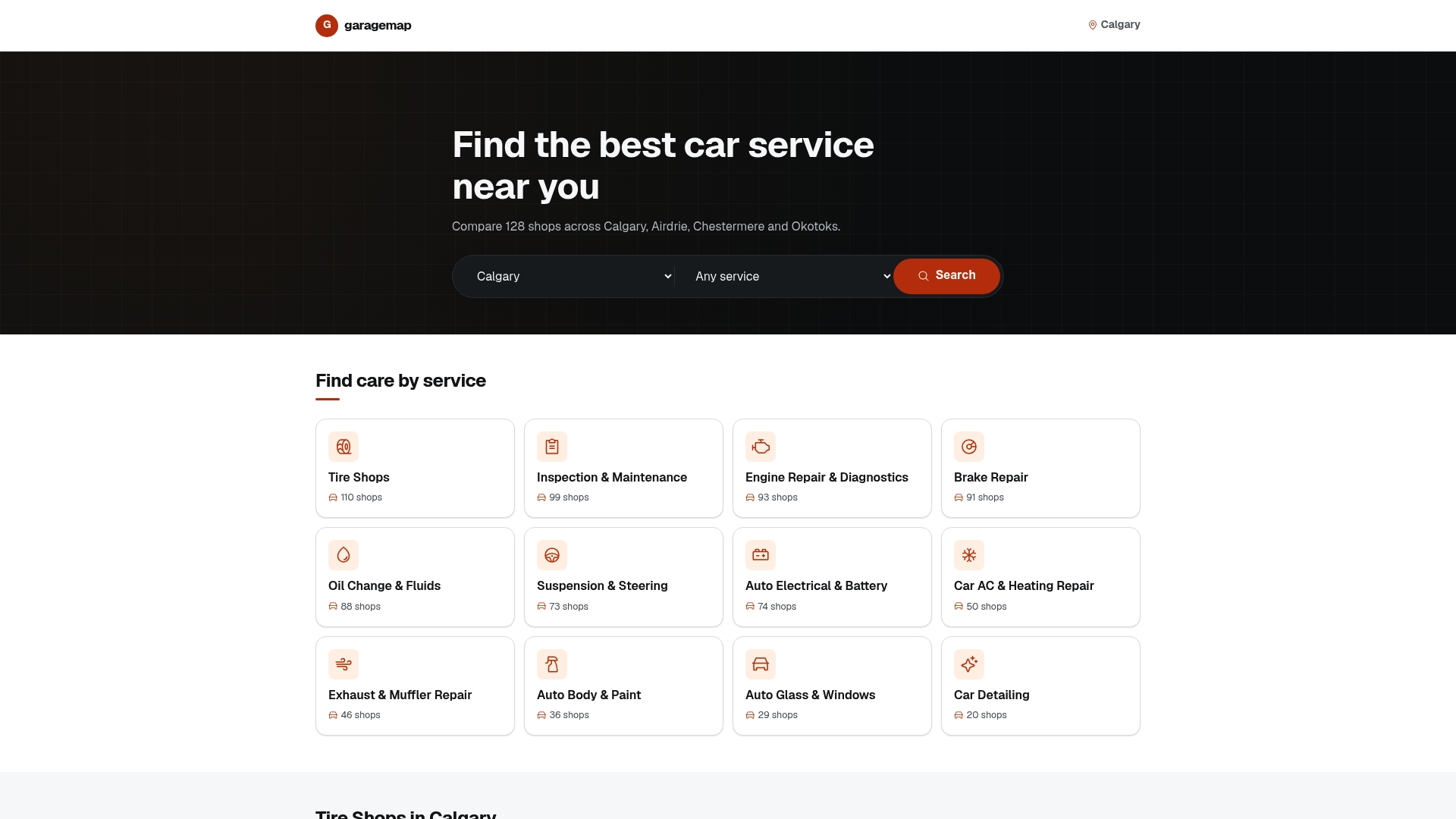
An online platform compares numerous vetted automotive shops filtered by the exact service you need instead of a generic list of every mechanic in the city. For a pre-purchase inspection specifically, that means finding a shop that offers diagnostic scans and written PPI reports, not just oil changes, without calling around to check. Search the inspection and maintenance category to see shops near you that handle this exact job, or start from the Calgary listings if you're buying in that market. Either way, you'll have a shortlist of options quickly instead of an afternoon lost to phone calls.
Sources
For recall status, cross-check the VIN against Transport Canada's defect and recall lookup and NHTSA's recall database for U.S.-market notices that sometimes apply to imported vehicles. Consumer Reports offers a detailed inspection walkthrough and realistic PPI cost expectations, while the FTC's used car buying guide explains buyer rights and the value of documenting seller promises in writing.
- NHTSA recalls
- How to inspect a used car to avoid costly repairs — Consumer Reports
- What to look for when buying a used car — NerdWallet