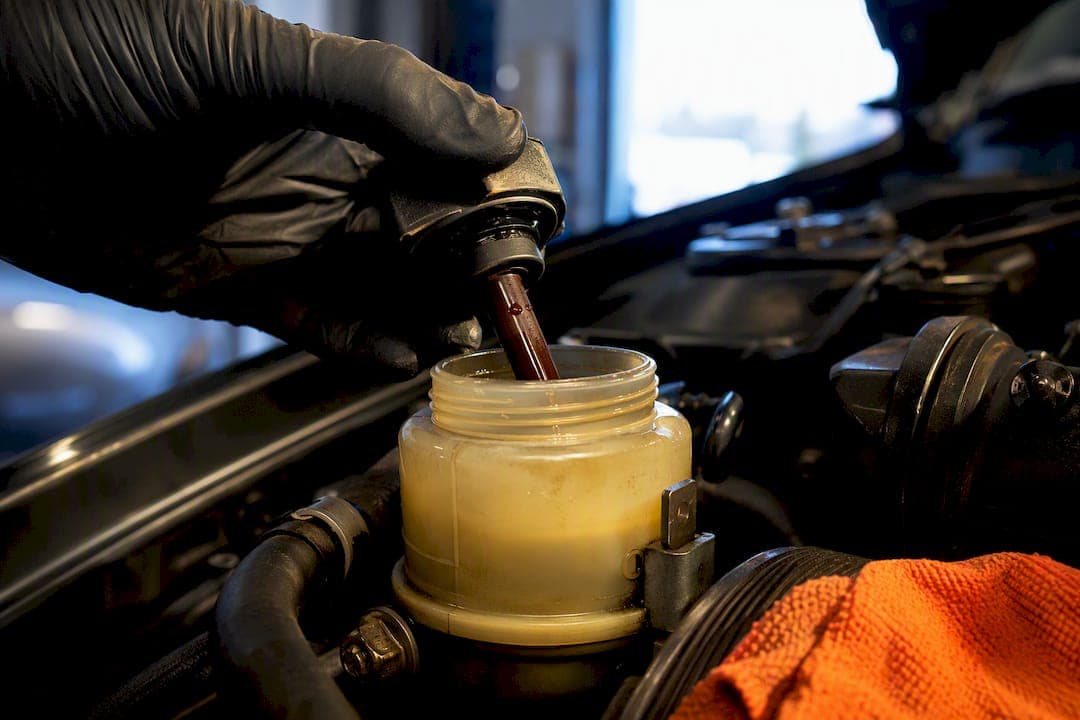
Check power steering fluid at every oil change and give it a quick visual glance monthly. Most vehicles need a full replacement somewhere between 2 and 5 years, or roughly 30,000 to 80,000 miles, though your owner's manual always has the final word. Electric power steering systems skip hydraulic fluid entirely. If the wheel feels heavy, you hear whining when turning, or the fluid looks dark and foamy, get it checked immediately rather than waiting for the next scheduled visit.
TL;DR:
- Power steering fluid should be checked monthly and replaced every 2 to 5 years or 30,000 to 80,000 miles, depending on vehicle, fluid type, and driving conditions.
- Symptoms like whining noises, heavier steering, dark or foamy fluid, and fluid leaks indicate the need for immediate inspection.
- Electric power steering systems do not use hydraulic fluid, so replacement intervals do not apply, but confirming with the owner’s manual is essential.
- DIY topping up is easy and inexpensive, but full flushes require professional service to prevent damage from trapped air or incorrect fluid use.
- Regular maintenance alongside oil changes and using vetted shops help prevent costly repairs and ensure proper steering system operation.
Table of Contents
- How often should you replace power steering fluid?
- What signs mean you should check your fluid right now?
- How do you check and top up power steering fluid yourself?
- When do you need a flush instead of a top-up?
- What does power steering service typically cost?
- How Garagemap helps you find the right technician
- What actually matters with power steering maintenance
- Sources
- FAQ
How often should you replace power steering fluid?
There's no single number that fits every vehicle, and that's the honest answer. Reputable guides put the replacement window anywhere from 2 to 5 years, or between 30,000 and 50,000 miles on the conservative end, stretching up to 75,000 miles in some independent-shop recommendations. A few things drive that spread:
- Fluid type matters. Some vehicles use standard hydraulic fluid, others use specific synthetic blends that resist heat breakdown longer.
- Driving conditions matter. Stop-and-go city driving, towing, and hot climates all stress the pump and seals faster than steady highway commuting.
- Manufacturer philosophy differs. Some automakers simply say "as needed," leaving the call to visual inspection rather than a mileage number, as Toyota does in its own support guidance.
Here's where a lot of owners get tripped up: electric power steering, standard on most new vehicles built in the last decade, doesn't use hydraulic fluid at all. If your car has EPS, none of these intervals apply to your steering system, though it's worth confirming with your manual since some vehicles still run a hybrid hydraulic assist.
The owner's manual should always outrank a generic number pulled off the internet. If your manual lists a severe-service schedule and you tow trailers or drive mostly in stop-and-go traffic, follow that shorter interval instead of the standard one.
What signs mean you should check your fluid right now?
Your steering system talks to you before it fails. The problem is most drivers don't know what to listen for until something's already wrong.
- Whining or groaning when you turn the wheel, especially at low speeds or when parking.
- Steering that suddenly feels heavier or slower to respond, particularly noticeable at parking-lot speeds.
- Fluid that's turned dark brown or black, foamy, or smells burnt instead of clear to light amber.
- A level that keeps dropping between checks, or a visible puddle under the front of the vehicle.
- Metallic flecks or grit visible in the fluid on the dipstick or in the reservoir.
Quick fact: checking your fluid's level and colour takes about 60 seconds, yet it's one of the most skipped items on a DIY maintenance list. Pair that 60 second check with every oil change, and do a faster monthly glance in between. Healthy fluid looks clear to light amber; anything darker or cloudy is your cue to act, not to wait for the next scheduled service.
How do you check and top up power steering fluid yourself?
This is one of the easiest jobs in the engine bay, and you don't need a lift or a scan tool to do it right.
- Find the reservoir. It's usually a small plastic tank near the front of the engine, often marked with a steering wheel icon.
- Warm the engine and turn the wheel. Run the engine for a minute or two and turn the steering wheel lock to lock a few times so the fluid circulates before you take a reading.
- Read the level. Most reservoirs have a dipstick built into the cap or "hot" and "cold" fill lines on the side.
- Check the colour and smell. Clear to light amber is normal. Dark, cloudy, or burnt-smelling fluid signals contamination or heat damage.
- Add the correct fluid slowly. Confirm the exact spec in your owner's manual, add a small amount, recheck, and repeat until you hit the fill line. Overfilling can cause foaming and seal damage just as easily as running low.
Pro Tip: Keep a small funnel and a shop rag in your glovebox. Power steering fluid drips make a mess on drive belts, and a stray splash on a hot exhaust manifold will smoke and smell alarming even though it's harmless.
Stop and call a shop if you don't know which fluid your vehicle takes, you spot metal particles, or the level keeps dropping after repeated top ups. That last one usually means a leak somewhere in the system, not a fluid problem.
When do you need a flush instead of a top-up?
Topping up and flushing solve two completely different problems, and mixing them up wastes money or risks damage.
- Topping up simply replaces fluid that's low, without addressing what's already in the system. It's the right move when the level has dropped slightly but the fluid still looks clean.
- Drain-and-fill removes and replaces most of the reservoir fluid but leaves some old fluid in the lines and pump.
- A full flush cycles new fluid through the entire system, including the rack, pump, and hoses, and is the right call when fluid is contaminated, contains metal particles, or smells burnt.
DIY flushing carries real risk, so many owners prefer to rely on professionals who specialize in pre-sale detailing to maximize your car's value in Singapore. Getting air trapped in the lines or using the wrong fluid type can leave you with a noisier, less responsive system than before you started, which is why most experienced owners leave flushing to a shop with the right bleeding equipment. A professional flush typically restores full clarity to the fluid, clears out the metal particles that grind away at pump seals, and buys the system several more years of quiet operation.
What does power steering service typically cost?
Pairing a fluid check with your regular oil change is the cheapest insurance you'll ever buy for your steering rack. Technicians commonly check power steering fluid as part of a routine oil change, so ask for it explicitly if it's not already on the checklist.
- DIY top-up: a bottle of the correct fluid runs a modest amount, and the job takes 10 to 15 minutes with tools you likely already own.
- Professional drain-and-fill or flush: expect a service window rather than a fixed price, since labour time and fluid type both affect the final bill.
- Ask the shop: which fluid spec they're using, whether the service is a flush or a simple drain-and-fill, and what warranty covers the work.
City driving with lots of hard turns wears the pump faster than highway cruising, so drivers doing mostly urban commuting should lean toward the shorter end of any recommended interval. Booking the check alongside a routine oil change means one fewer trip to the shop and one less thing to forget.
How Garagemap helps you find the right technician
Choosing the wrong shop for a power steering flush can mean trapped air in the lines or the wrong fluid going into your reservoir, both of which cause more damage than the problem you started with. A specialized platform connects vehicle owners with vetted automotive service shops, letting you filter specifically for steering, diagnostics, or maintenance work instead of scrolling through unrelated listings. Comparing multiple shops side by side makes it easier to find a technician who actually specializes in the job you need done, rather than gambling on whoever's closest.

What actually matters with power steering maintenance
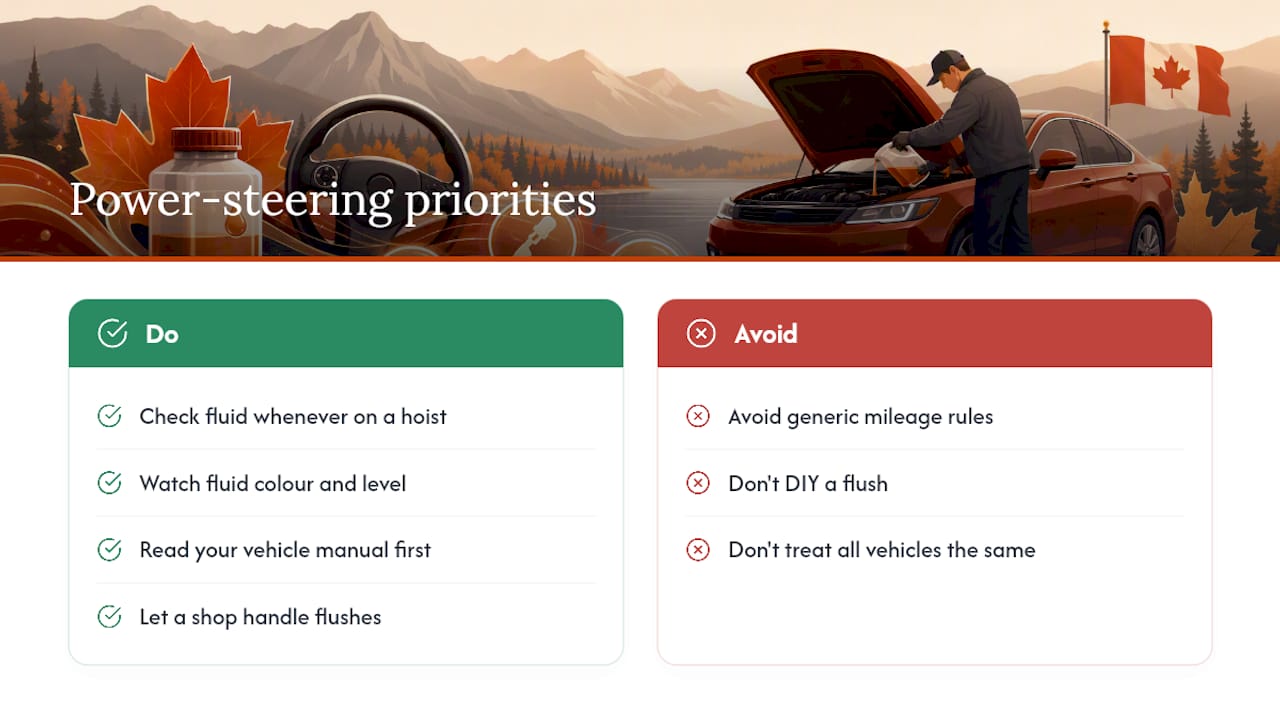
Most advice on this topic buries the useful part under vague mileage numbers that don't apply to half the cars on the road. The real priority isn't memorizing a number. It's building the habit of looking at your fluid every time your car's up on a hoist for an oil change, because that's the moment you'll actually notice a colour change or a dropping level before it becomes a whining pump or a seized rack.
Where conventional advice falls short is treating every vehicle the same. A tow-heavy truck in stop-and-go traffic and a lightly driven sedan doing highway commutes aren't on the same clock, even if a chart says otherwise. And with electric power steering now standard on so many new vehicles, a chunk of the "change your fluid every X years" advice floating around simply doesn't apply anymore. Read your own manual before you read another article, this one included. Then let a shop handle the flush. That's the one job where DIY confidence costs more than it saves.
— Andrii
Sources
- STP — power steering system (Canada)
- Autotrainingcentre — power steering fluid warning signs & service basics
- Cars
- AutoZone DIY — when to change your power steering fluid
- J.D. Power — guide to proper power steering maintenance
FAQ
How often should power steering fluid be replaced?
Most guidance points to a replacement window of 2 to 5 years, or roughly 30,000 to 80,000 miles, but your owner's manual takes priority over any general range.
How long should my power steering fluid last?
Under normal driving conditions, fluid typically holds up for several years before it needs full replacement, though heavy towing, hot climates, and stop-and-go city driving all shorten that lifespan.
Is replacing power steering fluid necessary?
Yes, if the fluid looks dark, smells burnt, or contains particles, since contaminated fluid can damage the pump and rack-and-pinion assembly over time; some manufacturers only require replacement based on inspection rather than a fixed mileage.
Is it okay to mix old power steering fluid with new?
Topping up with the same correct fluid type is fine, but mixing incompatible fluid types can cause seal damage or foaming, so always confirm the spec in your owner's manual before adding anything.
Ready to get your steering system checked properly? Compare vetted repair shops in Calgary through Garagemap and book a fluid inspection with a technician who knows exactly what to look for.