
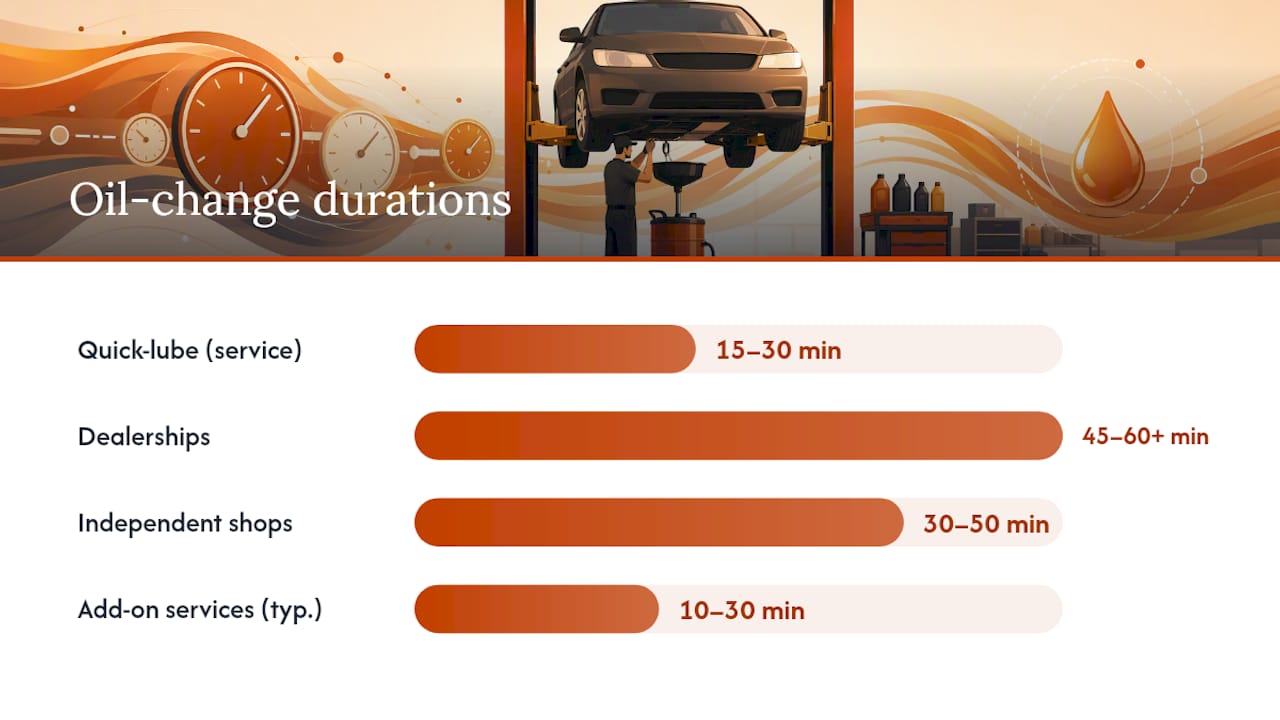
A professional oil change usually takes 15 to 60 minutes, depending on where you go. Quick-lube chains often get you out the door in 15 to 30 minutes, independent shops run 30 to 50 minutes, and dealerships frequently take 45 minutes or more because they tack on inspections and paperwork. Doing it yourself takes longer: first-timers should budget 60 to 120 minutes, while experienced DIYers can wrap it up in 30 to 60 minutes once the driveway setup is dialled in.
Why such a wide spread? A few things drive it:
- Whether you booked an appointment or walked in
- Whether you added tire rotation or a multi-point inspection
- How easy (or annoying) your vehicle's oil filter is to reach
The rest of this guide breaks down each provider type, walks through the DIY timeline minute by minute, and covers the variables that can stretch or shrink your oil change time on any given day.
Key Takeaways
Professional oil changes typically run 15 to 60 minutes depending on the provider, while DIY jobs take 30 to 120 minutes depending on experience and preparation.
| Point | Details |
|---|---|
| Pick your provider by schedule | Quick-lubes suit tight windows; dealerships suit those who want a full inspection done at once. |
| DIY time hides in prep and cleanup | Staging tools and planning oil disposal ahead cuts total DIY time noticeably. |
| Book instead of walking in | Appointments avoid the queue that builds during weekend and holiday rushes. |
| Add-ons stretch the visit | Tire rotations and multi-point inspections typically add 10 to 30 minutes to any oil change. |
Table of Contents
- How long a professional oil change takes: quick-lube, dealership, or independent shop
- How long a DIY oil change takes, step by step
- What actually changes your oil change time
- What happens during a professional oil change
- Finding a shop that respects your time
- Why the "quick" in quick-lube deserves some skepticism
- Sources
How long a professional oil change takes: quick-lube, dealership, or independent shop
Not all oil change appointments are created equal, and the provider you pick has more effect on your wait than almost anything else.
-
Quick-lube and express chains. These operations are built around speed. Most quote 15 to 30 minutes of actual service time, and many let you stay in the car while a technician works underneath on a lift bay designed for fast turnaround. The tradeoff is that walk-in wait during busy hours can eat up more time than the service itself, and some chains limit which makes or models they'll service, particularly newer vehicles with unusual filter housings.
-
Dealerships. Expect 45 to 60 minutes or longer. Part of that is mechanical, dealership techs often run a fuller multi-point inspection alongside the oil change, but part of it is administrative: checking service history, updating software, and processing warranty paperwork all add time before you ever see a receipt. Industry reporting on service durations confirms dealerships sit at the slower end of the professional range.
-
Independent shops. Usually the middle ground at 30 to 50 minutes. A straightforward oil and filter swap on a common vehicle can move fast, but if the shop is juggling multiple bays or you've asked for extra checks, it stretches toward the high end.
Add-on services change the math too. Tire rotation, brake inspections, or a full multi-point check typically add another 10 to 30 minutes on top of the base oil change, regardless of provider.
Pro Tip: Book your slot for the first appointment of the day. Shops run closest to their quoted times before backlogs build, and you avoid the ripple effect from a delayed customer ahead of you.
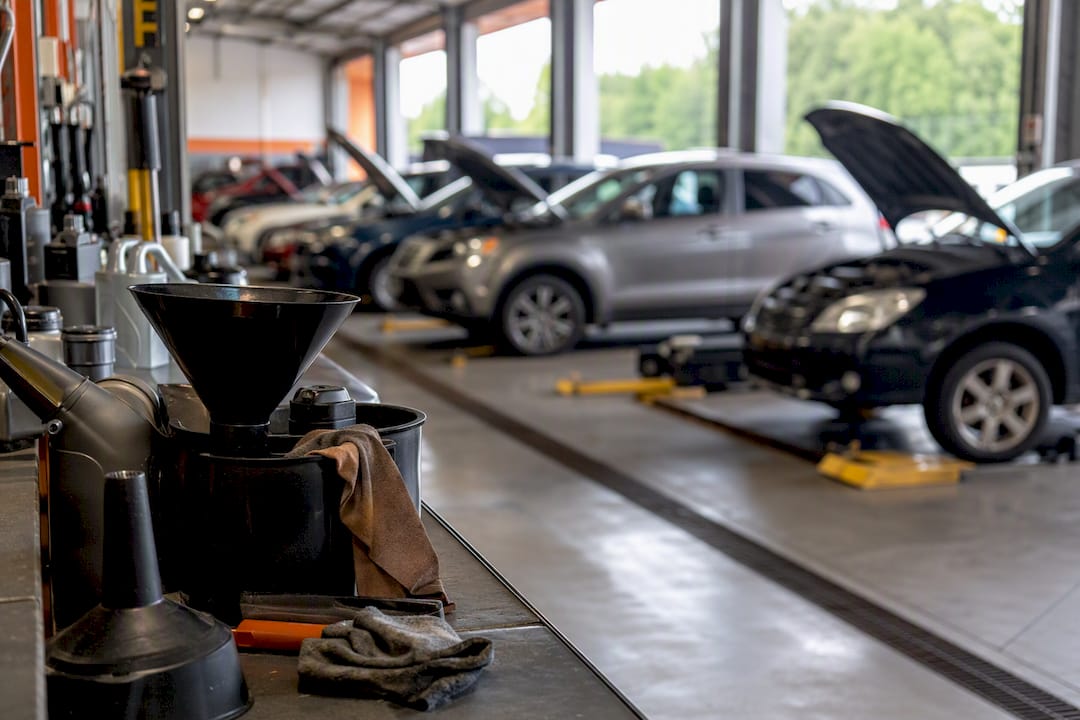
Appointment versus drop-in matters more than most people think. A booked slot means the bay and parts are ready when you arrive. Walking in during a Saturday morning rush, historically the busiest window for quick-lube services, can turn a 20-minute job into an hour-plus wait before a technician even touches your car.
How long a DIY oil change takes, step by step
Doing your own oil change costs less in cash but more in time, and knowing where that time actually goes helps you plan a Saturday around it instead of losing an afternoon by surprise.
- Prep and setup: 10 to 25 minutes. Gathering tools, positioning ramps or a jack, and letting the engine warm slightly (warm oil drains faster and carries more contaminants with it) all happen before you touch a wrench. First-timers hunting for the right socket size eat up most of this window.
- Draining oil and removing the filter: 15 to 30 minutes. This is usually the fastest part, unless the drain plug is stripped or the filter is jammed on tight, which happens more often than owners expect on vehicles that have gone a few years without a change.
- Installing the new filter, refilling, and checking for leaks: 10 to 25 minutes. You want to run the engine briefly and recheck the dipstick here rather than skip straight to cleanup. A rushed leak check is how oil ends up on your driveway a week later.
- Cleanup and disposal: 10 to 30 minutes. Used oil needs to go to a recycling depot or a participating shop rather than down a drain, and how far that depot is from your house directly affects this step.
Add it up and you get:
- First-time DIY: 60 to 120 minutes total
- Experienced DIY: 30 to 60 minutes total
The gap between those two numbers rarely comes from the mechanical work itself. It comes from prep and cleanup, the parts that experience genuinely speeds up.
What actually changes your oil change time
A handful of variables explain almost every delay, and most of them are predictable if you know what to look for before you book.
- Vehicle access. Some engines tuck the oil filter behind a shield or wedge it against the frame, adding real time regardless of who's doing the work.
- Oil and filter type. Full synthetic oil and larger-capacity filters sometimes need extra steps, and oil life monitoring systems on newer vehicles may flag additional service items the technician needs to address.
- Service scope. Every inspection, top-up, or minor repair requested during the visit adds to the clock.
- Shop staffing and timing. A shop running short-staffed during a Saturday rush moves slower than the same shop on a quiet Tuesday morning.
- Driving history. Vehicles used for towing, short trips, or stop-and-go city driving often qualify for "severe service," which can mean a closer inspection and a longer visit.
Most oil changes at professional shops land somewhere between 15 and 60 minutes total, and the factors above are usually what push a visit toward one end of that range or the other. None of them are things you can't plan around once you know they exist.
What happens during a professional oil change
The visible part, oil going in and out, is only one piece of what a technician actually does during your appointment.
- Check-in. The service writer confirms your oil type, filter, and any add-ons before a technician ever lifts the hood.
- Drain and replace. Old oil drains out, the filter comes off, and the tech checks the area for existing leaks before installing the new one.
- Multi-point inspection. Many shops fold in a quick check of other fluids, belts, hoses, and tire pressure. This step alone can add 5 to 20 minutes depending on how thorough the shop's process is.
- Refill and recheck. New oil goes in, the engine runs briefly, and the technician rechecks the dipstick and looks underneath for drips.
- Wrap-up. The visit ends with a service record, a reminder sticker on your windshield, payment, and often a suggestion for when to book your next visit.
Knowing this sequence helps explain why a "quick" oil change at a full-service shop still runs closer to 45 minutes than 15.
Finding a shop that respects your time
Booking ahead is the single biggest lever you control over your total oil change time, and that's exactly where comparing shops before you commit pays off. GarageMap aggregates 128 vetted repair shops across Calgary, Airdrie, Chestermere, and Okotoks, letting you filter specifically for oil-change providers instead of scrolling through unrelated listings.
- Compare service pages side by side before you call anyone
- See which nearby shops offer the service you actually need
- Book ahead instead of gambling on a walk-in slot
If you'd rather skip the guesswork entirely, the oil change service page on GarageMap is the fastest way to line up a vetted shop near you.
Why the "quick" in quick-lube deserves some skepticism
The conventional advice treats oil change time like a fixed number you can plan around to the minute. It isn't. The real variable isn't the mechanical work, draining oil and swapping a filter is genuinely fast everywhere, it's everything wrapped around it: whether you booked ahead, whether the shop upsells an inspection you didn't ask for, and whether your particular engine hides its filter somewhere annoying.
What gets underestimated is how much control the vehicle owner actually has here. Booking during off-peak hours, confirming your filter type ahead of time, and choosing a shop based on your actual vehicle rather than the nearest sign on the highway all shave real minutes off a visit. The owner's manual and your oil life monitor still decide when you need the service. But how long it takes once you're there comes down to preparation on your end, not luck. Treat scheduling as part of the maintenance task, not an afterthought to it.
— Andrii
Sources
- How Often Should You Change Your Oil | HowStuffWorks
- How Long Does an Oil Change Take? 2026 Time Guide