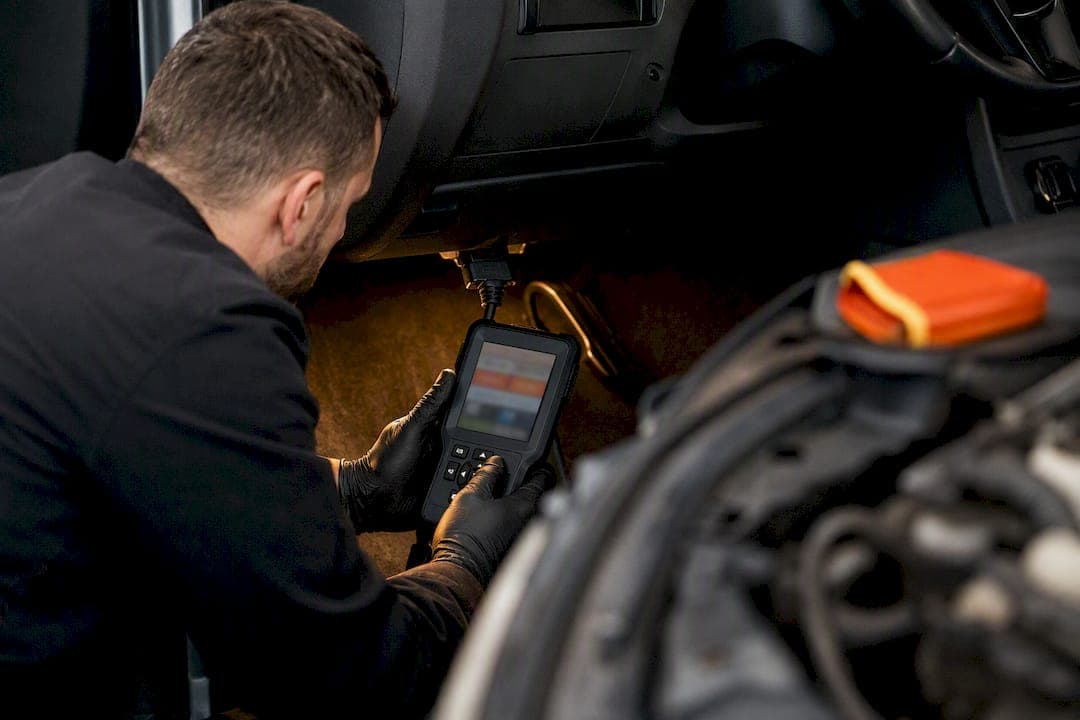
An engine misfire means a cylinder is failing to combust properly, and the fastest way into a real diagnosis is pulling OBD-II misfire codes and misfire counts before you touch a single part. That first scan tells you which cylinder is acting up and how often. Ignore it long enough and a misfire can cook your catalytic converter, so treat a flashing check engine light as a reason to stop driving, not a reason to guess.
TL;DR:
- Accurate misfire diagnosis begins with reading OBD-II codes and live misfire counts to identify the affected cylinder and assess severity.
- Ignition faults, such as fouled plugs or faulty coils, are the most common cause and can usually be fixed quickly through simple inspections and swaps.
- Fuel system issues, including clogged injectors or pressure problems, are indicated by inconsistent fuel delivery and may require pressure testing or injector checks.
- Mechanical problems like low compression or head gasket failure need more in-depth testing, such as leak-down and compression tests, often requiring professional repair.
- Stop driving immediately if the check engine light flashes, fuel smells are present, or the engine struggles to run, to prevent catalytic converter damage and costly repairs.
Table of Contents
- What are the symptoms of an engine misfire?
- How do you use OBD-II codes to diagnose a misfire?
- Ignition checks: plugs, coils, and wiring
- Fuel checks: injectors, pressure, and intake leaks
- Mechanical checks: compression, leak-down, and valvetrain issues
- Advanced diagnostics: oscilloscope and exhaust pressure testing
- When should you stop driving with a misfire?
- How GarageMap turns your diagnosis into a booked repair
- Common DIY pitfalls and how to prioritize testing
- Book engine diagnostics with GarageMap
- Sources
- FAQ
What are the symptoms of an engine misfire?
A misfire rarely hides. The engine tells on itself, usually through a rough idle that shakes the whole car at a stoplight or a stumble the moment you hit the gas.
Watch for these signs:
- Rough or uneven idle, sometimes with the whole vehicle shaking
- A stutter or hesitation under acceleration, especially climbing a hill or merging
- Noticeable loss of power or RPM that fluctuates on its own
- A fuel smell from the exhaust, which points to unburned fuel passing through
- A steady or flashing check engine light
Misfires also come in different flavours. An intermittent misfire shows up occasionally, often under specific load or temperature conditions. A partial misfire means a cylinder is firing weak, not dead. A dead miss means one cylinder has stopped contributing entirely, and you'll usually feel that one immediately. Left unaddressed, any of these can damage the catalytic converter, hurt fuel economy, and accelerate wear on other components working overtime to compensate.
How do you use OBD-II codes to diagnose a misfire?
Every cylinder needs three things to fire correctly: proper air-fuel ratio, adequate compression, and a well-timed spark. Diagnosing a misfire is really about figuring out which of those three is missing, and that's exactly what the codes and live data are built to help you narrow down.
The P0300 code means a random or multiple-cylinder misfire, while P0301 through P0308 point at a specific cylinder. Cylinder-specific misfire codes let a scan tool tell you precisely which cylinder is struggling, based on tiny variations in crankshaft speed the powertrain control module picks up in real time.
Before assuming the code is gospel, check freeze-frame data and live misfire counters if your scanner supports them. A cylinder throwing a high, climbing count under load is a different problem than one that spiked once and stopped.
Basic tools worth having on hand:
- An OBD-II reader, ideally one that displays live misfire counters
- A multimeter for checking voltage and resistance
- A spark tester to confirm you're getting usable spark at the plug
- A noid light for checking injector pulse
Ignition checks: plugs, coils, and wiring
Ignition faults cause a huge share of misfires, and they're also the cheapest and fastest thing to rule out. Work through this sequence before assuming anything else is wrong:
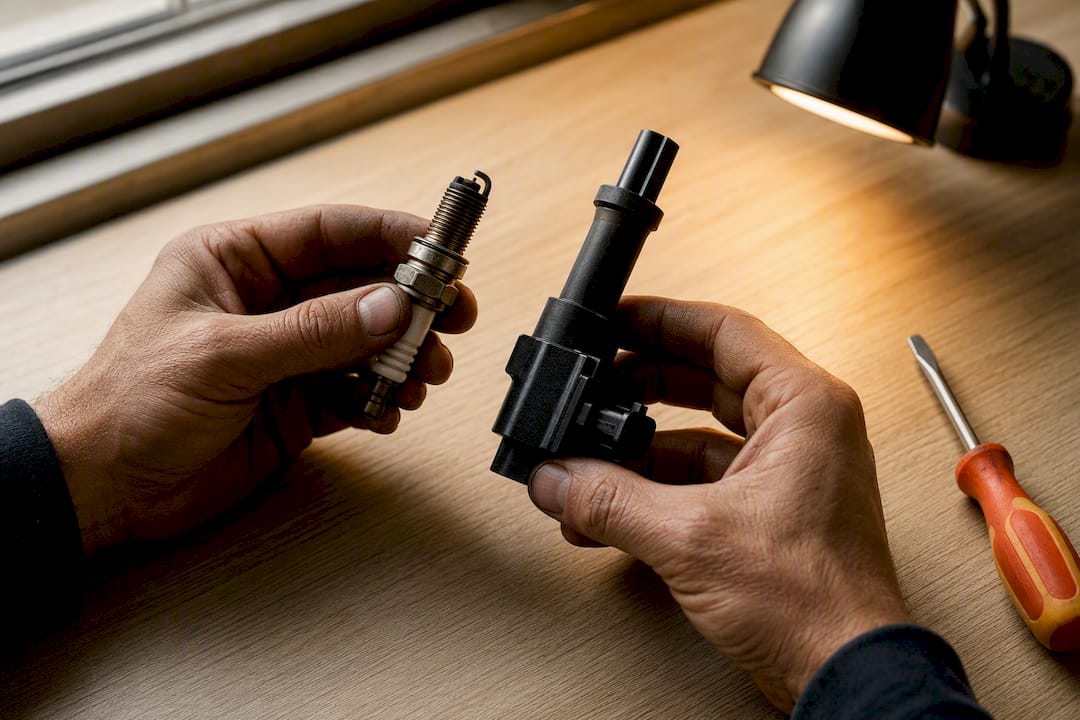
- Pull the spark plugs and inspect them for fouling, excessive gap wear, or oil contamination, which often signals a leaking valve cover gasket or worn valve seals.
- Run a coil-swap test: move the coil from the misfiring cylinder to another cylinder and see if the code follows it. If cylinder 2's misfire becomes cylinder 4's misfire, you've found your coil.
- Use a spark tester on the suspect cylinder, and check the boot for carbon tracking, which shows up as a black, branching burn mark.
- Inspect the coil's wiring harness and ground connections for corrosion or looseness.
Pro Tip: A coil-swap test is fast and convincing, but it isn't infallible. The swap test can miss wiring, plug, or PCM-side issues that only show up under specific load conditions, so a misfire that doesn't follow the coil doesn't automatically mean the coil is innocent.
Fouled plugs and a confirmed bad coil are easy DIY replacements. If the wiring harness itself is damaged or the misfire persists after new coils and plugs, that's when a shop's diagnostic equipment starts paying for itself.
Fuel checks: injectors, pressure, and intake leaks
If ignition checks out clean, fuel delivery is next on the list. Start simple and work toward the more involved tests.
- Listen for an audible click at each injector, or use a mechanic's stethoscope; a silent injector needs a noid light to confirm it's actually getting a pulse signal
- Watch for signs of a clogged or leaking injector, like a rough idle that improves with an on-car fuel system cleaner, though hard clogs usually need off-car flow testing to fully resolve
- Check fuel pressure with a gauge if multiple cylinders are misfiring together; low or unstable pressure points to a failing pump, a bad regulator, or a clogged filter
- Inspect the mass airflow sensor, air filter, and vacuum hoses for cracks or disconnections, since an unmetered air leak throws off the air-fuel ratio at idle
A single injector issue usually means a single misfiring cylinder. Multiple cylinders misfiring at once, especially under load, points more toward pressure, a vacuum leak, or something upstream of the injectors entirely.
Mechanical checks: compression, leak-down, and valvetrain issues
When ignition and fuel both check out, the problem is likely mechanical, and this is where testing gets more involved.
- Run a compression test across all cylinders and compare the numbers. A single cylinder reading 20% or more below the others is a strong sign of a mechanical fault in that cylinder specifically.
- Follow up with a leak-down test, which is often more useful than compression alone because it tells you where the air is escaping: a hiss from the intake points to a leaking valve, a hiss from the exhaust points to another valve issue, and bubbles in the coolant reservoir point to a head gasket breach.
- If you find coolant contamination in the oil, milky residue on the dipstick, or a cylinder that shares leak-down air with a coolant passage, that's head gasket failure territory.
Low compression or a confirmed leak-down fault on one or more cylinders generally means the engine needs to come apart, at least partially, for inspection or repair. That's a job for a shop with a lift and the right tooling, not a driveway fix.
Advanced diagnostics: oscilloscope and exhaust pressure testing
Intermittent misfires are the frustrating ones. They hide during a five-minute test drive and reappear on the highway an hour later. Intermittent misfires are often load or temperature dependent, which is exactly why basic tools sometimes come up empty.
This is where shop-grade diagnostics earn their keep:
- An oscilloscope can capture ignition and injector waveforms in real time, catching a weak spark event or an irregular injector pulse that a multimeter would never see
- Exhaust delta pressure testing measures pressure pulses at each cylinder's exhaust port, which can pinpoint the misfiring cylinder non-intrusively without disabling any injectors
- Manufacturer-specific measuring blocks and active tests on advanced scan tools let a technician run targeted diagnostics matched to your exact engine
These tools cost real money to own, and most DIYers won't buy an oscilloscope for one misfire. But when a shop offers this testing for an hour's labour, it's often cheaper than a weekend spent swapping parts that turn out not to be the problem.
When should you stop driving with a misfire?
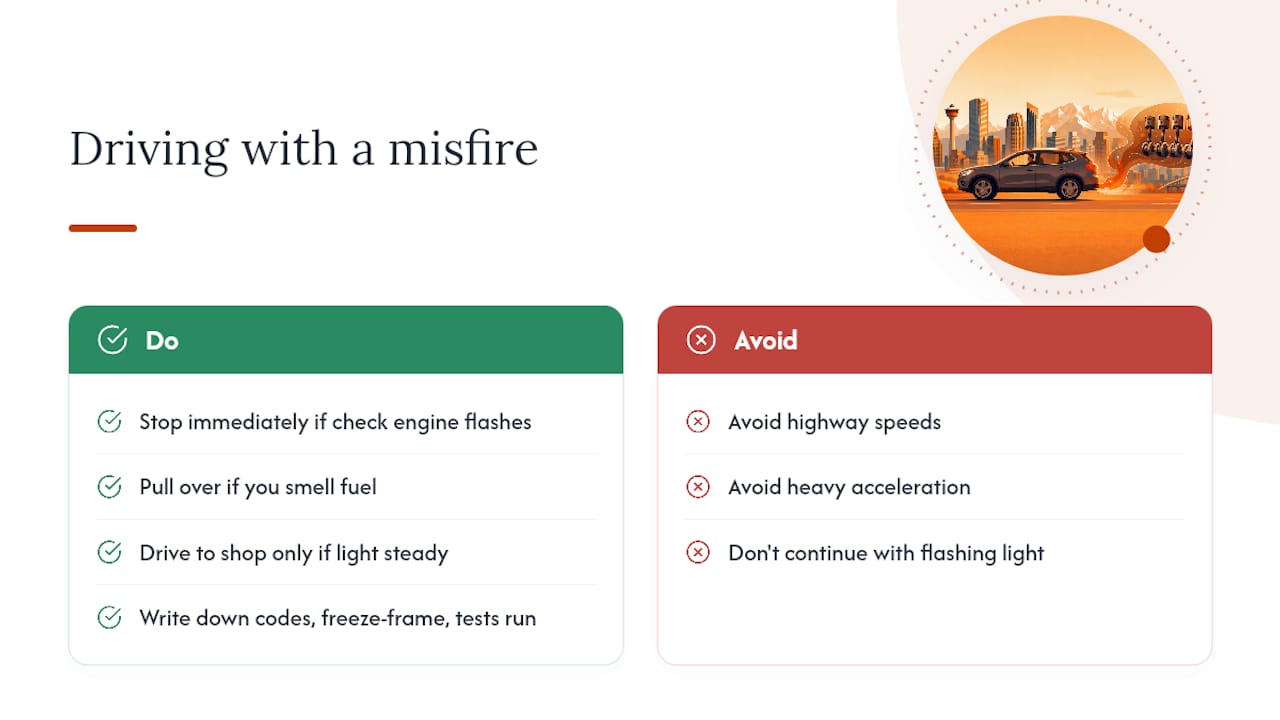
Stop driving immediately if the check engine light is flashing, you smell fuel, or the misfire is severe enough that the car struggles to maintain speed. A flashing light specifically signals risk to the catalytic converter, and continuing to drive can turn a $200 fix into a $2,000 one.
A mild, intermittent misfire with a steady (not flashing) light is sometimes safe for a short, cautious drive straight to a shop. Avoid highway speeds and heavy acceleration if you go that route.
Before you hand the car over, write down every code, the freeze-frame data, and every test you've already run. That single page of notes can save a shop an hour of labour they'd otherwise bill you for repeating your own diagnostic work.
How GarageMap turns your diagnosis into a booked repair
Once you've narrowed things down, whether it's a confirmed bad coil or a compression problem needing a real teardown, GarageMap connects you with vetted shops across Calgary, Airdrie, Chestermere, and Okotoks that handle engine diagnostics and repair. When you book, include your OBD-II codes, symptoms, and which tests you've already completed. It saves the shop time and gets you a more accurate quote before the car even arrives.
Common DIY pitfalls and how to prioritize testing
The biggest mistake I see is what mechanics call the "parts cannon": swapping coils, then plugs, then an injector, hoping something sticks, without confirming anything with a test first. It's expensive and it rarely fixes an intermittent problem, because you never actually learn what was wrong.
DIY testing pays off for ignition and basic fuel checks, where the tools are cheap and the tests are conclusive. Once you're looking at compression, leak-down, or an intermittent fault that needs an oscilloscope, paying a shop for an hour of proper diagnosis is almost always the better value.
— Andrii
Book engine diagnostics with GarageMap
GarageMap offers a way to compare vetted automotive service providers and book a technician who can run proper diagnostics like scans, compression tests, or oscilloscope checks in one visit.
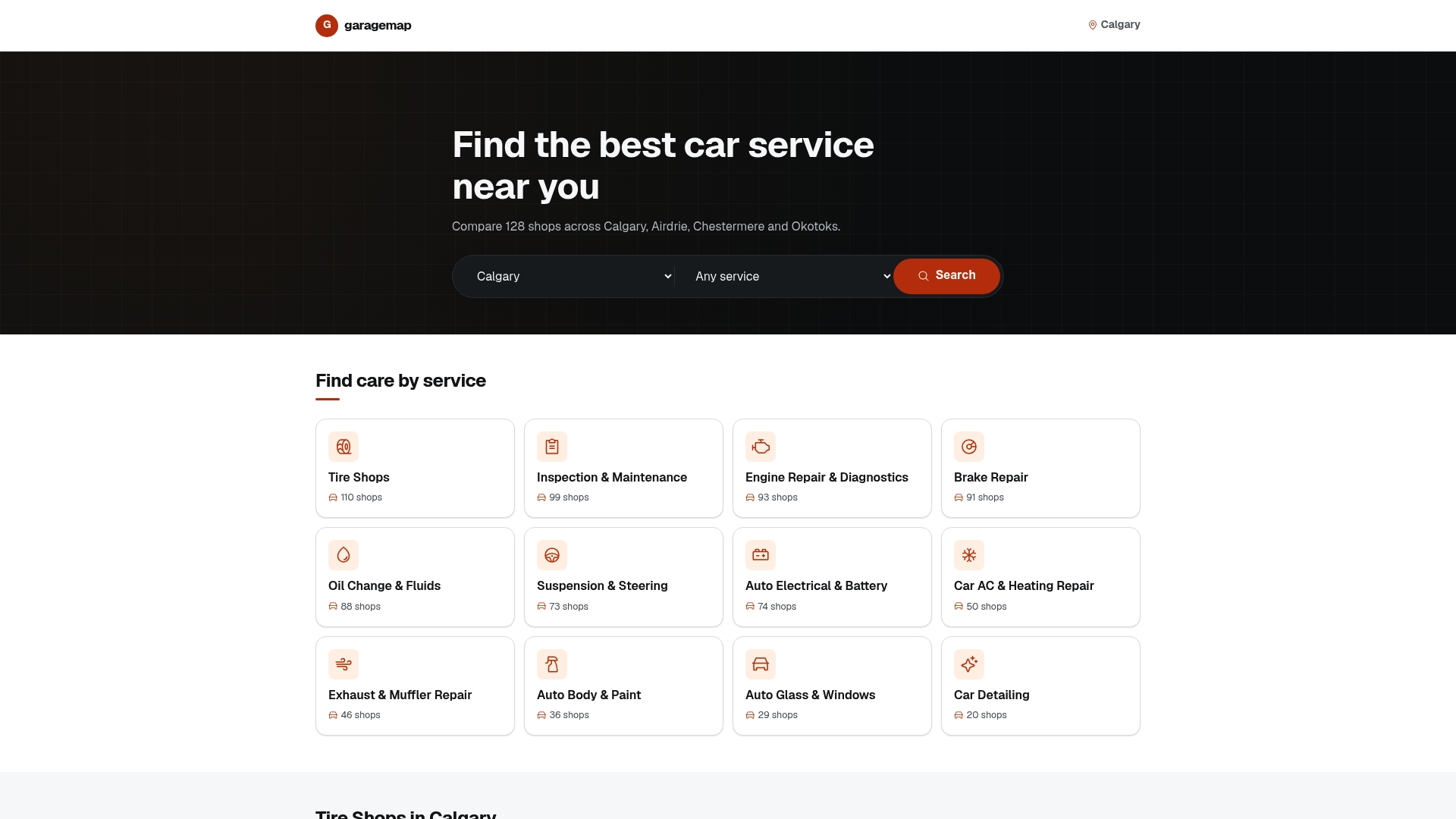
When you book, list your misfire codes, the symptoms you've noticed, and any tests you've already run, whether that's a coil swap or a compression check. That context alone can shave real time off the shop's diagnosis. Start with engine diagnostics and repair near you, or browse car repair shops in Calgary if you want to compare a few options side by side before you commit.
Sources
For deeper technical reading on misfire testing methods, see Diagnosing Misfires, Misfire Diagnosis at AA1Car, and Misfire Diagnosis on the Ross-Tech Wiki for OBD-II logic and cylinder-specific code behaviour.
FAQ
How do you diagnose what's causing a misfire?
Start by scanning for OBD-II misfire codes and live misfire counts, then work through ignition, fuel, and mechanical tests in that order since ignition faults are the cheapest to rule out first.
Can you drive if your engine is misfiring?
Stop driving if the check engine light is flashing, you smell fuel, or the car struggles to maintain speed, since a sustained misfire can damage the catalytic converter. A mild, steady-light misfire may allow a short, cautious drive to a shop.
Is a misfire expensive to fix?
It depends entirely on the cause. A fouled spark plug or bad coil is a low-cost fix, while a head gasket or internal mechanical fault found through a leak-down test can mean significant teardown labour.
Can a misfire fix itself?
Rarely. Some intermittent misfires seem to disappear because they're load or temperature dependent, but the underlying fault, whether a weak coil or a failing injector, is still there and will typically return.