
A lit engine light means your car's computer detected a fault in the engine, emissions, or fuel system and stored a trouble code to explain why. A steady light means check it soon, ideally within a week or two. A flashing light means stop driving as soon as it's safe. The most common culprits are a loose gas cap, a failing oxygen sensor, worn spark plugs, or an active misfire.
TL;DR:
- A flashing check engine light indicates an active misfire that can quickly damage the catalytic converter and requires immediate stopping.
- The most common causes include worn spark plugs, ignition coils, fuel pressure issues, or active misfires, with diagnostics needed within days for most faults.
- A loose or faulty gas cap is the cheapest and most frequent reason for a trigger, but it takes multiple drive cycles to clear the warning after fixing.
- Upstream oxygen sensors and the mass airflow sensor are frequent culprits, with cleaning often enough to fix issues related to these components.
- Costs for repairs vary from minimal for a gas cap to several thousand dollars for catalytic converter replacement, emphasizing the importance of early diagnosis.
Table of Contents
- What are the most common engine light causes?
- Loose gas caps, EVAP leaks, and fuel system triggers
- Ignition problems and misfires: the ones that can't wait
- O2 and mass airflow sensor failures explained
- Catalytic converter and exhaust system issues
- Vacuum leaks, electrical faults, and coolant sensor problems
- How do you read and interpret engine light codes?
- What do repairs typically cost, and when does it get expensive?
- How GarageMap helps once the light comes on
- Why most drivers get engine light triage backwards
- Book an engine diagnostic through GarageMap
- Sources
What are the most common engine light causes?
Most dashboard warnings trace back to a short list of repeat offenders. Here's how they rank by frequency and how urgently each one needs attention.
- Loose or faulty gas cap — low severity. Tighten it securely and drive for several cycles to allow the system to reset.
- EVAP system leak — low to medium severity. Inspect hoses and the fuel filler neck.
- Oxygen (O2) sensor failure — medium severity. Get codes read within a week.
- Mass airflow (MAF) sensor fault — medium severity. Try cleaning before replacing.
- Worn spark plugs or coils — medium to high severity. Rough idle needs prompt attention.
- Active misfire — high severity, especially if flashing. Stop driving.
- Catalytic converter trouble — medium to high severity. Diagnose the root cause first.
- Vacuum leak or electrical fault — medium severity. Watch for rough idle or stalling.
Loose gas caps, EVAP leaks, and fuel system triggers
A gas cap that's cracked, loose, or missing its seal lets fuel vapour escape instead of cycling back through the EVAP system, and that pressure loss is exactly what trips codes P0456 and P0457. It's the cheapest fix on this entire list, and often the first thing worth ruling out.
- Check the cap is clicked fully into place, not just resting on the filler neck.
- Look for cracks in the rubber gasket around the cap's rim.
- If it's more than a few years old, a $15 to $25 replacement often solves it outright.
- Bad fuel from an old or contaminated tank can also trigger rich or lean codes; running the tank low and refilling at a busy, reputable station usually clears it.
Pro Tip: Tightening or replacing the cap doesn't clear the light instantly. The EVAP monitor needs several complete drive cycles of starts, stops, and highway speed to re-test itself and turn the light off, so give it a few days before assuming the fix didn't work.
Ignition problems and misfires: the ones that can't wait
A misfire feels like a stumble under acceleration, a rough idle at a stoplight, or a faint shudder through the steering wheel. It's caused by an engine cylinder not burning fuel properly, and it shows up as codes in the P0300 range, with the last digit identifying which cylinder is misfiring.
Worn spark plugs, failing ignition coils, and weak fuel pressure are the usual suspects. A shop diagnosing a misfire will typically pull codes, check spark and fuel delivery at the affected cylinder, and inspect for vacuum leaks feeding that cylinder too much air.
- Rough idle or a noticeable vibration at stop lights.
- Hesitation or a stumble when you press the gas.
- A distinct smell of unburned fuel from the exhaust.
- The check engine light flashing rather than staying steady.
Here's where severity changes fast; if you need professional module resets to clear crash data effectively, services like Airbag Reset UK can help. A steady light tied to a minor misfire can usually wait a few days. But once the light starts flashing, that's an active misfire dumping unburned fuel into a red hot exhaust system, and continued driving can destroy the catalytic converter in as little as 15 to 30 minutes. Pull over, shut the engine off, and arrange a tow rather than risk turning a $200 ignition repair into a $2,000 converter replacement.
O2 and mass airflow sensor failures explained
Your engine relies on a network of sensors to keep the air fuel mixture correct, and two of them cause a disproportionate share of check engine lights: oxygen sensors and the mass airflow sensor.
Upstream O2 sensors sit before the catalytic converter and measure how much oxygen is left in the exhaust, feeding that data back so the computer can adjust fuel delivery. Downstream sensors, positioned after the converter, monitor how well it's scrubbing emissions. A failing upstream sensor commonly triggers codes like P0130 to P0135, while downstream failures often point toward P0136 to P0141.
The MAF sensor measures incoming air volume, and a dirty or failing one causes stumbling, poor idle, or hesitation on acceleration. Cleaning it with proper MAF sensor cleaner solves the issue often enough that it's worth trying before spending on a replacement.
- Upstream O2 sensor faults skew the fuel mixture rich or lean, hurting fuel economy immediately.
- Downstream O2 sensor faults usually don't affect drivability but still trigger the light.
- MAF sensor buildup from a dirty air filter is a common, preventable cause.
- Ignoring either sensor for months tends to drag down fuel economy and can accelerate catalytic converter wear.
Catalytic converter and exhaust system issues
A code in the P0420 family, generally labelled as catalyst efficiency below threshold, almost never means the converter failed on its own. According to Wyotech, converters usually fail because of an upstream problem rather than spontaneously, which means replacing the converter without fixing what damaged it just leads to a repeat failure.
- A prolonged misfire that overheats and clogs the catalyst.
- Oil or coolant contamination reaching the exhaust from an internal engine leak.
- Simple age and mileage wear, especially past 150,000 kilometres.
- A failing upstream O2 sensor feeding the computer bad data about converter performance.
Any competent shop should scan for related codes and inspect upstream systems before quoting converter replacement, since parts and labour on that repair frequently run into four figures.
Vacuum leaks, electrical faults, and coolant sensor problems
Beyond the usual suspects, a handful of less obvious faults show up constantly in real-world diagnostics. A cracked vacuum hose or a loose intake boot lets unmetered air into the engine, throwing off the air fuel ratio and setting lean codes, often alongside a rough or surging idle.
- Vacuum leaks commonly trigger P0171 or P0174, both indicating a lean condition.
- A weak battery or failing alternator can set unrelated codes because low voltage confuses sensor readings.
- Corroded wiring or a loose connector to any sensor mimics that sensor's own failure symptoms.
- The engine coolant temperature sensor, when faulty, sets code P0128 and can cause poor fuel economy or a cooling fan that runs constantly.
Electrical gremlins are notoriously hard to self-diagnose, which is why a shop offering dedicated auto electrical and battery service is often the faster route than guessing at wiring by hand.
How do you read and interpret engine light codes?
Getting the actual trouble code is the single most useful thing you can do before spending a dollar on repairs.
- Head to most auto parts stores, which read OBD-II codes for free using a handheld scanner.
- Buy your own OBD-II scanner or a Bluetooth adapter that pairs with a smartphone app, both inexpensive and reusable.
- Treat the code as a starting point, not a verdict. A P0420 code points to the catalytic converter circuit, but the real fault might be a misfire two systems upstream.
- If the light is flashing, or you notice knocking, grinding, or a burning smell, stop driving and arrange a tow instead of continuing to a shop.
Pro Tip: Write down the exact code before clearing it. Once you disconnect the battery or reset the code, that diagnostic history disappears, and a technician starting from scratch costs you more in labour time.
What do repairs typically cost, and when does it get expensive?
Costs vary enormously depending on which system failed and whether you caught it early. A loose gas cap costs nothing to fix; a neglected misfire that took out a catalytic converter can run into the thousands.
| Repair | Typical cost range | Urgency |
|---|---|---|
| Gas cap replacement | $15 to $25 | Low |
| Spark plug set replacement | $80 to $150 | Medium |
| O2 sensor replacement | $80 to $150 | Medium |
| Ignition coil replacement | several hundred dollars | Medium to high |
| Catalytic converter replacement | often run into four figures | High |
A paid diagnostic, usually $80 to $150, is worth it the moment you're facing a vague or recurring code, since it isolates the actual cause instead of guessing your way through parts.
How GarageMap helps once the light comes on
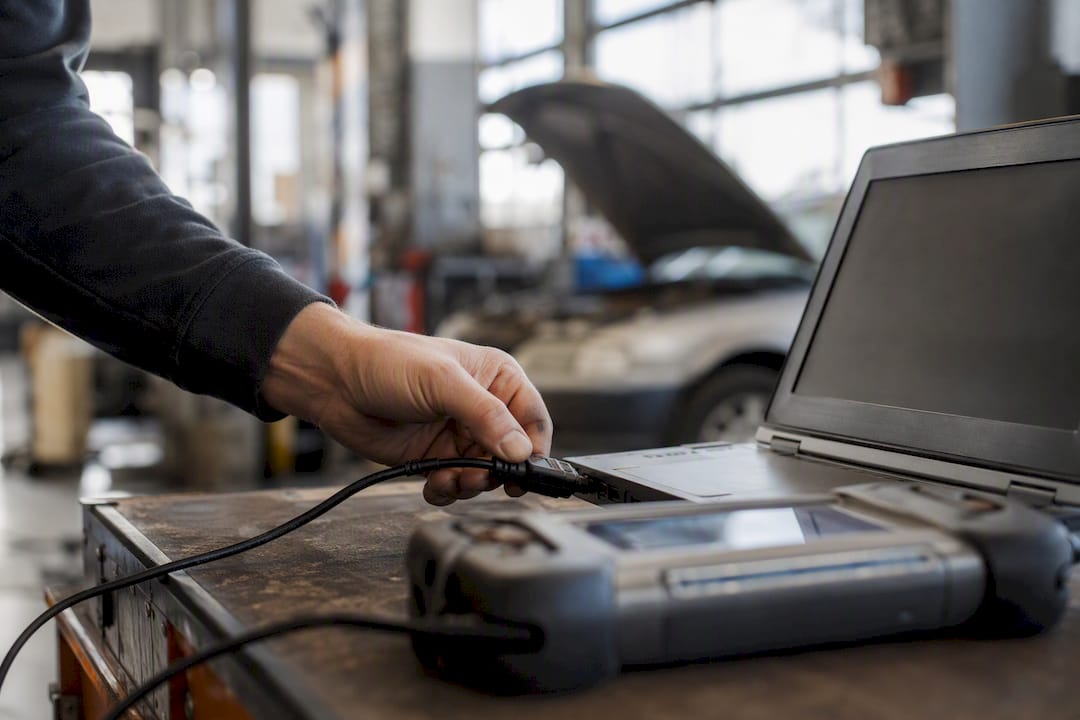
Finding a shop with the right diagnostic equipment shouldn't take an afternoon of cold calls. GarageMap lets you compare vetted providers across Calgary, Airdrie, Chestermere, and Okotoks by the exact service you need, whether that's a code scan or full engine diagnostics and repair. Check each listing for equipment details, verified reviews, and turnaround time before booking.
Why most drivers get engine light triage backwards
The instinct most drivers have is to either panic and rush to a shop the moment the light appears, or ignore it entirely because the car "still drives fine." Both reactions miss the point. The light itself isn't the diagnosis. It's a prompt to gather fifteen minutes of information before you spend a dime.
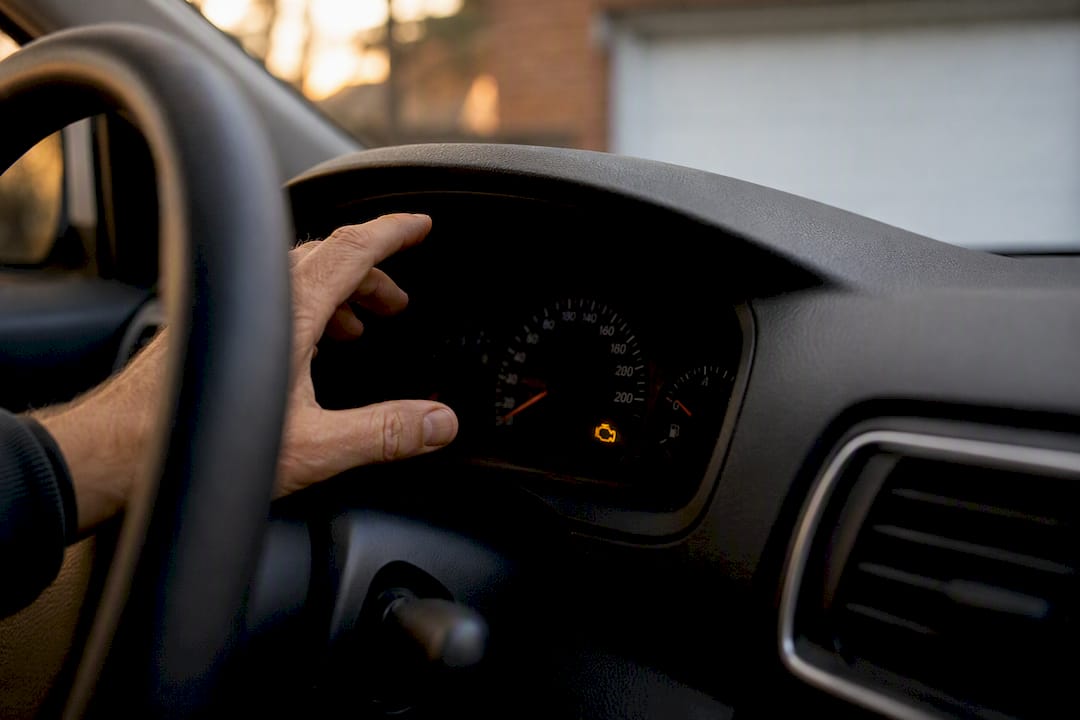
The overlooked detail in most advice on this topic is timing. A steady light tied to a gas cap or a minor O2 sensor drift can genuinely wait a week without consequence. A flashing light tied to an active misfire cannot wait an hour without risking real damage to the catalytic converter. Treating every illuminated dashboard icon with the same urgency, or the same indifference, is where owners lose money.
What I'd prioritize first: read the code before anything else. It costs nothing at most parts stores and turns a guessing game into a targeted repair conversation. Second, learn to tell steady from flashing, because that single distinction decides whether you drive to a shop tomorrow or pull over right now. Everything else, including which shop you choose, matters less than getting those two things right.
— Andrii
Book an engine diagnostic through GarageMap
Guesswork gets expensive fast when a code points in one direction and the real fault sits somewhere else entirely. GarageMap gives Calgary-area drivers a faster path than cold-calling shops one by one: compare vetted providers by the exact service you need, see what diagnostic equipment they run, and check verified reviews before you commit a cent.
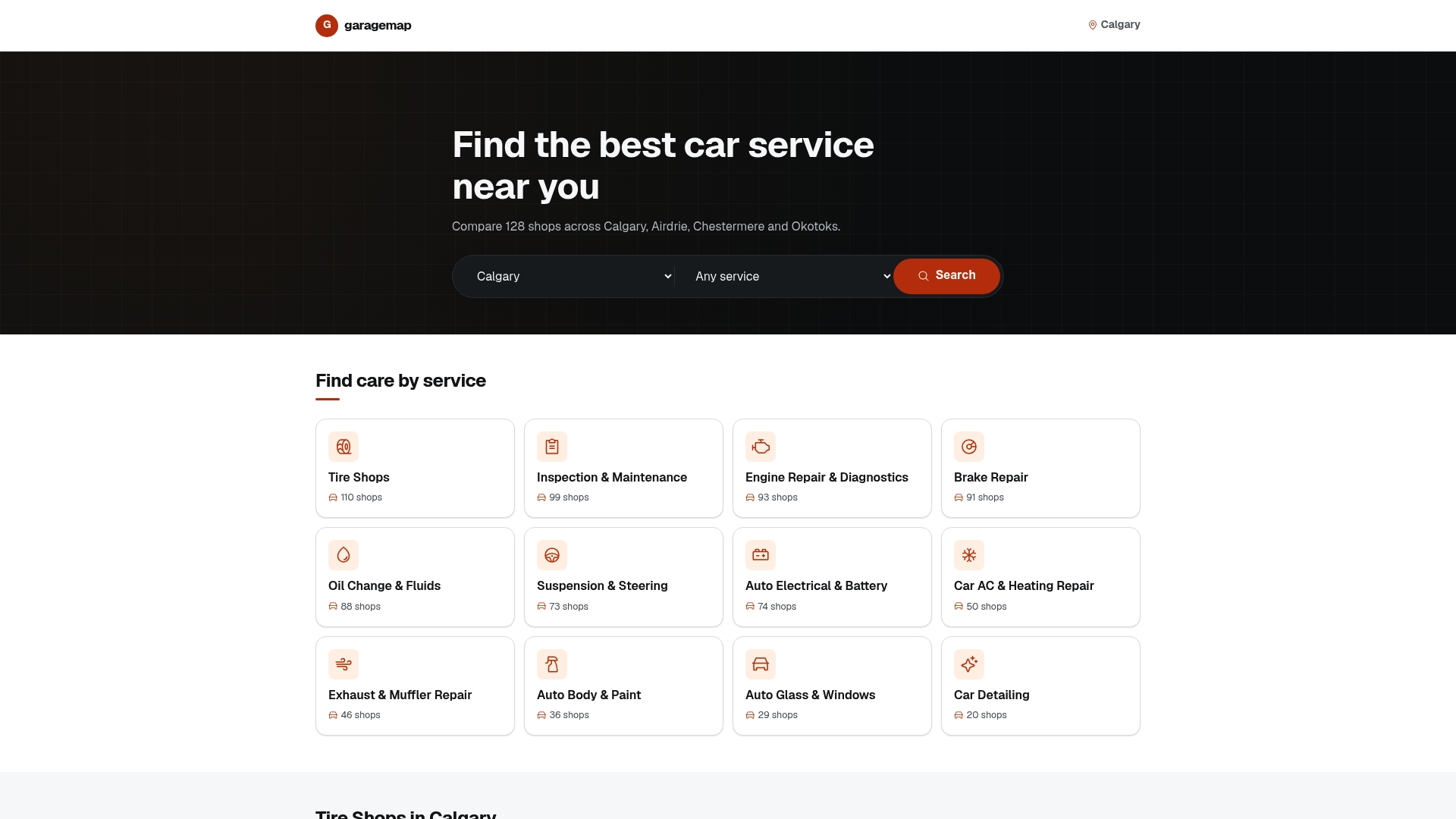
When you're scanning listings, look for shops that specify OBD-II diagnostic capability, list warranty terms on parts and labour, and carry a track record of verified customer reviews rather than a handful of unverifiable testimonials. Head to the engine diagnostics and repair category to compare shops near you, or browse car repair options in Calgary if you'd rather start with location first. Either way, get your code read, then get a quote before that steady light turns into something worse.
Sources
Consumer Reports covers steady versus flashing urgency. KBB explains code interpretation and converter risk. OBD2Beginner groups common fault categories. Wyotech details converter failure causes.
- Why Is My Check Engine Light On? | KBB
- Why is my check engine light on? | OBD2Beginner
- What does a check engine light mean? | Wyotech