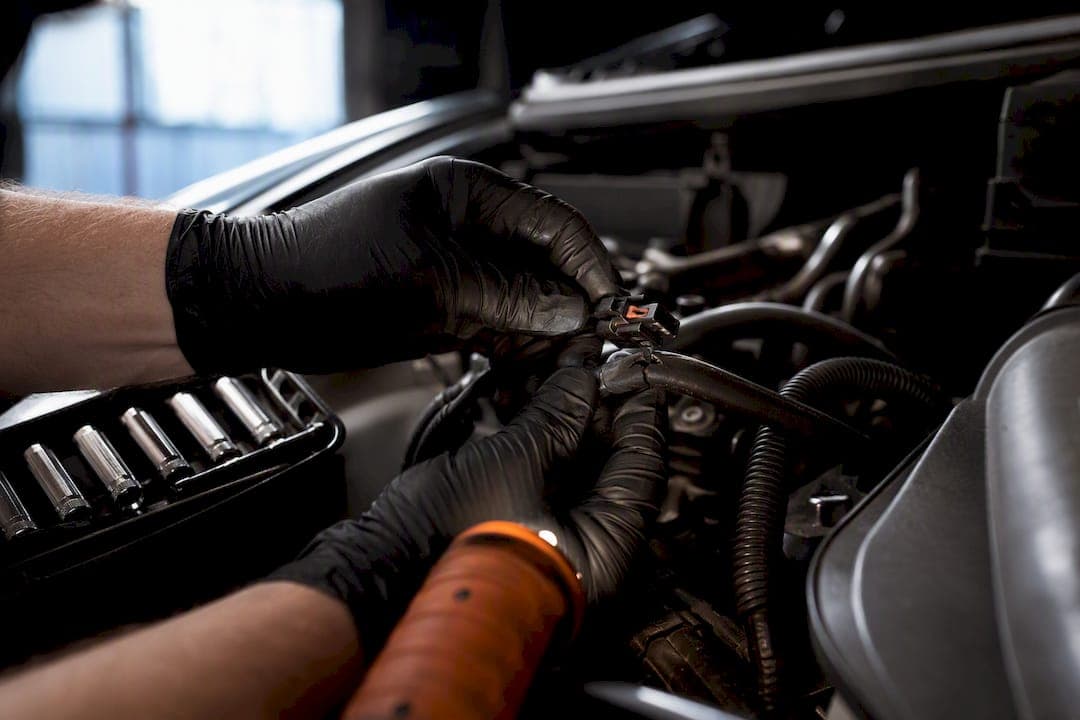
Engine diagnostics is the structured process that uses your vehicle's OBD‑II data, live sensor readings, and targeted mechanical tests to find the root cause of an engine problem. It matters because a warning light alone rarely tells you what's actually broken. It only points toward a system. Book diagnostics right away if the check engine light flashes, the engine stalls, or you smell fuel; a steady light or new fuel economy drop can usually wait a few days.
TL;DR:
- Proper engine diagnostics involve multiple stages, including code retrieval, live-data review, physical inspection, and targeted testing, not just reading codes.
- A code alone does not confirm the root cause; technicians must analyze live-data and inspection findings before recommending repairs.
- Urgent symptoms like a flashing check engine light, stalling, or fuel leaks require immediate diagnostics, while steady lights or economy drops can usually wait a few days.
- Diagnostic reports should include current or historical codes, live-data values, and confirmation tests to ensure an accurate diagnosis.
- Choosing a shop that performs comprehensive diagnostics can save money and prevent unnecessary part replacements by accurately identifying the problem.
Table of Contents
- Understanding engine diagnostics: how the process actually works
- Common symptoms that mean it's time for engine diagnostics
- What a professional engine diagnostic actually includes, step by step
- The technology behind it: OBD‑II, DTCs, and the data that matters
- How to read your diagnostic report without a mechanic translating for you
- What happens if you ignore engine warning signs
- When to book diagnostics and what to expect for time and cost
- Finding a shop that actually does this right
- Why disciplined diagnostics beats part-chasing every time
- Get quotes from vetted local shops through GarageMap
- Sources
- FAQ
Understanding engine diagnostics: how the process actually works
Understanding engine diagnostics means understanding that it's never a single step. A proper diagnostic appointment moves through a sequence, and skipping stages is exactly how shops end up replacing parts that were never broken.
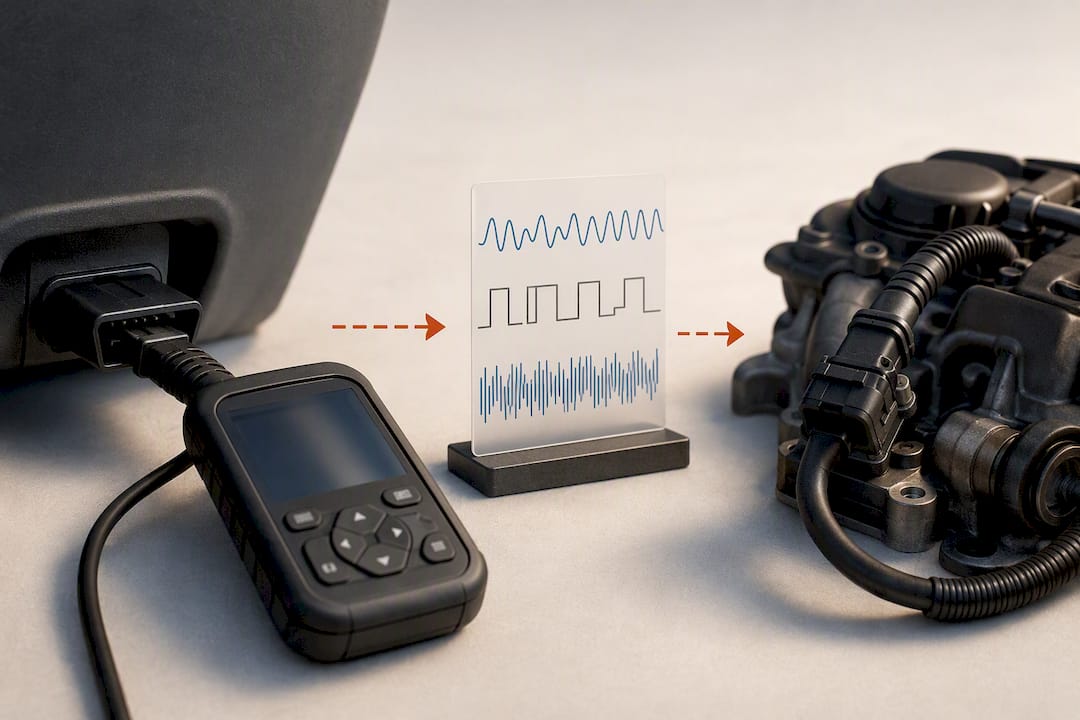
It starts with an electronic scan. A technician plugs a scan tool into the OBD‑II port and pulls whatever Diagnostic Trouble Codes are stored in the engine control module. That's stage one, and it's the part most people picture when they hear "engine diagnostics." But a code by itself is a clue, not a verdict. Multiple independent shop explainers make the same point: a stored code often identifies a system rather than a specific failed part, which is why a P0300 misfire code can mean a bad spark plug in one car and a clogged fuel injector in another.
Stage two is live-data review. The technician watches real-time sensor values while the engine runs: fuel trims, oxygen sensor voltage, engine RPM, coolant temperature. This is where the diagnosis actually starts taking shape.
Stage three is the visual and physical inspection; following safe procedures to clean and inspect the engine bay helps identify issues without causing damage, as outlined in clean engine bay: safe steps and ceramic protection. Cracked vacuum lines, corroded connectors, oil-soaked wiring, a loose ground strap. None of that shows up as a code, but all of it causes symptoms that look electronic.
Stage four is targeted testing based on what stages one through three suggest. That might mean a fuel pressure test, a compression check, an ignition coil swap test, or an electrical continuity check on a specific circuit.
A thorough diagnostic report should walk through:
- Which codes were stored, and whether they're current or historical
- What the live data showed under idle and under load
- What the visual inspection found, including any obvious wear or damage
- Which specific tests were run to confirm the suspected cause
- The recommended repair and why it addresses the root cause rather than a symptom
Documentation matters here more than most drivers realize. A shop that hands you a printout with the code and nothing else has done a quarter of the job. A shop that shows you the live-data trace and explains why a specific sensor reading confirmed their suspicion has actually diagnosed the car.
Pro Tip: Ask your technician one question before you approve any repair: "What data confirmed this, beyond the code?" If the answer is just the code itself, ask them to run the live-data and inspection steps before you authorize parts.
Common symptoms that mean it's time for engine diagnostics
Your car talks to you constantly. Most people just aren't fluent in the language until something goes wrong. Here's how to read the signals and know how urgent they are.
- A steady check engine light. This usually signals an emissions-related fault, a sensor drifting out of range, or something not immediately damaging. It deserves attention within a week or two, not a 3 a.m. panic.
- A flashing check engine light. This is different, and it's serious. A flashing light almost always means an active misfire that's dumping unburned fuel into the exhaust, which can cook a catalytic converter in a matter of minutes. Stop driving and get it looked at.
- Rough idle or shaking at a stop. Often points to ignition (a failing spark plug or coil), a vacuum leak, or a dirty throttle body. It can also be an early misfire before the light even comes on.
- Loss of power or hesitation under acceleration. This can be fuel delivery, clogged air intake components, a failing sensor feeding bad data to the engine computer, or a transmission issue mimicking an engine problem.
- Stalling, especially at idle or low speed. A fuel delivery or ignition problem serious enough to actually kill the engine. Treat this as urgent.
- A sudden drop in fuel economy. Frequently traced to a stuck-open fuel injector, a failing oxygen sensor, or a thermostat stuck in the wrong position, none of which necessarily trigger a light right away.
- Fuel smell in or around the vehicle. Could mean a leaking fuel line, a bad injector seal, or a cracked fuel rail. This is a safety issue as much as a mechanical one.
- Unusual engine noises, like ticking, knocking, or a high-pitched whine. Ticking often means valvetrain wear; knocking under load can mean detonation; a whine can point to a failing belt-driven component like the power steering pump or alternator.
Notice how these symptoms cluster into broader systems: ignition, fuel delivery, emissions, and electrical. A technician doing engine performance troubleshooting is essentially working backward from your symptom to the system, then from the system to the specific component. That's why describing your symptoms accurately, when they happen, how often, under what conditions, genuinely speeds up the diagnosis and can lower your labour cost.
What a professional engine diagnostic actually includes, step by step
Here's the sequence a thorough shop follows, and what you should expect to see or hear about at each stage.
- Code retrieval and freeze‑frame review. The scan tool pulls stored, pending, and permanent codes, along with freeze‑frame data, a snapshot of engine conditions (RPM, load, vehicle speed, fuel trims, coolant temperature) captured the instant the fault was recorded. Freeze‑frame data is what allows a technician to reproduce the exact condition that triggered the fault rather than guessing at when it happens.
- Live-data streaming. With the engine running, the technician watches real-time values instead of just the stored snapshot, comparing idle behaviour against load behaviour to see whether the fault is constant or condition-dependent.
- Physical inspection. Hoses, wiring harnesses, connectors, mounts, and vacuum lines get a visual and manual check for cracks, corrosion, or looseness that a scan tool simply can't see.
- Electrical testing. Multimeter and oscilloscope checks on suspect circuits confirm whether a sensor or actuator is actually sending the signal the computer expects, or whether the wiring between them is the real problem.
- Smoke testing, when a vacuum or intake leak is suspected. Smoke is pumped into the intake system under low pressure, and any leak point becomes visible immediately, saving hours of manual line-by-line inspection.
- Fuel, ignition, and airflow checks. Fuel pressure tests, spark output tests, and mass airflow sensor readings confirm whether the engine is getting the right mixture at the right time.
- Compression or leak-down testing, if internal engine wear is suspected. This distinguishes a worn ring or valve from an electrical or fuel problem that only looks like a mechanical failure.
- Road verification. A test drive under real conditions confirms the fault reproduces and that the diagnosis holds up outside the shop bay, not just on the lift.
Good technicians work this like a hypothesis test, not a checklist to blindly complete top to bottom. A combination of electronic scanning, live-data evaluation, and mechanical testing is how root causes get isolated rather than assumed. They form a working theory from the code and freeze‑frame, run the cheapest test that could confirm or kill that theory, and only move to the next stage once they have an answer. That's also why two shops can charge different diagnostic fees for what looks like "the same job": one is running four confirming tests, the other is reading a code and quoting a part.
Pro Tip: If a shop quotes a repair based on a code alone, with no live-data or inspection mentioned, ask what specifically confirmed the diagnosis. A confirmed diagnosis should reference at least one physical or live-data finding, not just the code number.
The technology behind it: OBD‑II, DTCs, and the data that matters
OBD‑II is the standard that made modern engine diagnostics possible. On‑board diagnostics is the vehicle's built‑in self‑diagnostic capability, and OBD‑II became the mandated standard across North American vehicles starting with the 1996 model year, giving every scan tool a common port and a common basic language regardless of make.
That standardization is why a $40 code reader from a parts store can pull the same generic codes as a $10,000 dealership scan tool. The difference between them is depth, not access.
Diagnostic Trouble Codes follow a fixed format that's worth actually learning:
- The first letter identifies the system: P for powertrain, B for body, C for chassis, U for network/communication
- The first digit after the letter separates generic from manufacturer-specific: P0 codes are generic, standardized across every manufacturer, while P1 codes are manufacturer-specific, defined by each automaker for conditions the generic code set doesn't cover
- The remaining three digits pinpoint the specific fault area, like the cylinder number in a misfire code
Beyond the basic code, technicians pull Parameter IDs (PIDs), the individual live-data channels like throttle position, coolant temperature, or fuel trim percentage, and increasingly rely on Mode $06 and Mode $09 data for enhanced test results and vehicle information the basic code list doesn't show. Manufacturer-enhanced PIDs and bi-directional controls (which let a technician command a component to activate for testing) require current tool subscriptions and firmware, which is one reason diagnostic quality varies so much between shops.
Newer protocols like UDS (Unified Diagnostic Services) are expanding what's accessible on newer vehicles, particularly hybrids and EVs with more complex control modules. A shop running outdated software may see the code but miss the enhanced data that actually explains it.
How to read your diagnostic report without a mechanic translating for you
A diagnostic report has three code categories that get lumped together far too often. Stored codes are confirmed faults the system has flagged as real and repeatable. Pending codes are faults detected once but not yet confirmed across a full drive cycle, worth watching, not necessarily acting on immediately. Permanent codes can't be cleared by disconnecting the battery or using a generic scan tool; they clear only once the vehicle's own monitor confirms the fix worked over several drive cycles. Reports combine this code information with live-data readings and readiness monitor status to guide the technician's next step.
The live-data section is where the real story usually is. A few figures worth asking about specifically:
- Short-term and long-term fuel trim (STFT/LTFT): how much the computer is adjusting fuel delivery from baseline; large adjustments suggest a leak, a sensor problem, or a fuel delivery issue
- Oxygen sensor cycling: a healthy O2 sensor swings rapidly between rich and lean; a flat or slow-cycling signal suggests a failing sensor or an exhaust leak
- Misfire counts per cylinder: shows exactly which cylinder is struggling, narrowing the search from "the engine" to one specific spark plug, coil, or injector
- Mass airflow (MAF) readings: confirms whether the engine is getting the air volume it expects at a given RPM
- Coolant temperature at idle vs. under load: flags cooling system problems that can cause knock, poor fuel economy, or emissions failures
Readiness monitors matter more than most drivers realize, especially if your vehicle needs to pass an emissions test. These are internal checks the vehicle's computer runs on its own over normal driving to confirm each emissions-related system is working. A repair that clears a code but doesn't let the readiness monitors reset and pass can still fail an emissions test even though the original problem is fixed.
What happens if you ignore engine warning signs
Small problems rarely stay small in an engine. A vacuum leak that starts as a slightly rough idle can, over weeks, throw off fuel trims enough to cause a misfire, and a sustained misfire dumps raw fuel into the exhaust where it can overheat and destroy a catalytic converter, turning a $20 hose repair into a $1,500 exhaust system replacement.
Sensor drift follows a similar pattern. An oxygen sensor that's slowly degrading doesn't usually cause a dramatic symptom at first, just a gradual fuel economy drop. Left alone, it pushes the fuel mixture out of range long enough to foul spark plugs or damage the catalytic converter it was supposed to help protect.
Some faults are genuinely urgent and some can reasonably wait:
- Urgent: flashing check engine light, stalling, visible smoke, fuel smell, sudden loss of power on the highway
- Deferrable, but not indefinitely: a steady check engine light with no drivability change, a gradual fuel economy decline, a minor rattle that isn't getting worse
The consequences of delay stack up in three directions at once. Safety risk grows if the fault affects braking assist, power steering, or the ability to accelerate reliably. Emissions performance degrades, which matters at inspection time. And repair cost almost always climbs, because a sensor or hose replacement job left unaddressed tends to take a more expensive downstream component with it.
When to book diagnostics and what to expect for time and cost
Book immediately if you see a flashing check engine light, the engine stalls, you notice smoke from the exhaust or hood, or you smell fuel anywhere near the vehicle. These aren't "get to it this week" situations.
Book routinely, within the next week or two, for a new steady check engine light, a fuel economy drop that's lasted more than a few fill-ups, or a follow-up check after a recent repair to confirm the fix held.
A standard diagnostic appointment for a single, reproducible fault typically runs shorter than one involving an intermittent problem that only shows up under specific conditions. Time and cost climb when:
- The fault is intermittent and requires a road test to reproduce
- Multiple systems show overlapping symptoms, requiring more targeted tests to isolate the actual cause
- The vehicle needs enhanced manufacturer-specific PIDs or bi-directional tests beyond the generic OBD‑II code set
- A smoke test or compression test is needed on top of the basic scan and inspection
Ask for a time estimate upfront. A shop that can't ballpark how long a diagnostic will take probably hasn't looked closely enough at your symptoms yet to know what they're dealing with.
Finding a shop that actually does this right
Not every shop that advertises "engine diagnostics" runs the full process. Some stop at the code. That gap is exactly why GarageMap exists as a comparison tool for vehicle owners across Calgary, Airdrie, Chestermere, and Okotoks.
A platform aggregates and compares local shops, letting you filter specifically for engine repair and diagnostics rather than scrolling through listings for tire shops or oil changes that have nothing to do with your problem. The focused search means you can compare shops that actually specialize in thorough diagnostic work: live-data review, freeze‑frame analysis, and targeted testing, rather than settling for whichever shop happens to be closest.
If your symptoms point toward an electrical fault, a failing alternator, or a charging system issue, GarageMap's auto electrical and battery service listings narrow the search even further. The goal is the same either way: get you in front of a shop that documents its diagnostic process instead of one that just clears a code and hopes the part swap works.
Why disciplined diagnostics beats part-chasing every time
The biggest mistake I see drivers and even some shops make is treating a code as an answer instead of a starting point. It's tempting, because it's fast and it feels decisive. Swap the part the code seems to point at, hope it fixes the symptom, move on.
The problem is that engines don't work that way. A code tells you where the computer noticed a discrepancy, not why the discrepancy exists. Skip the live-data review and the physical inspection, and you're gambling parts money on a guess dressed up as a diagnosis.
Use the checklist in this article the next time you book a diagnostic appointment. Ask what stages the shop actually runs, ask to see the freeze‑frame data, and ask what confirmed the diagnosis beyond the code itself. A shop that welcomes those questions is one worth trusting with the repair.
— Andrii
Get quotes from vetted local shops through GarageMap
Once you know what a proper diagnostic should include, the harder part is finding a shop nearby that actually runs the full process instead of a quick code pull. GarageMap solves that specific problem: instead of calling five different shops around Calgary and repeating your symptoms five times, you search once, filter for engine repair and diagnostics, and compare real quotes from shops that already showed up as relevant to your exact issue.
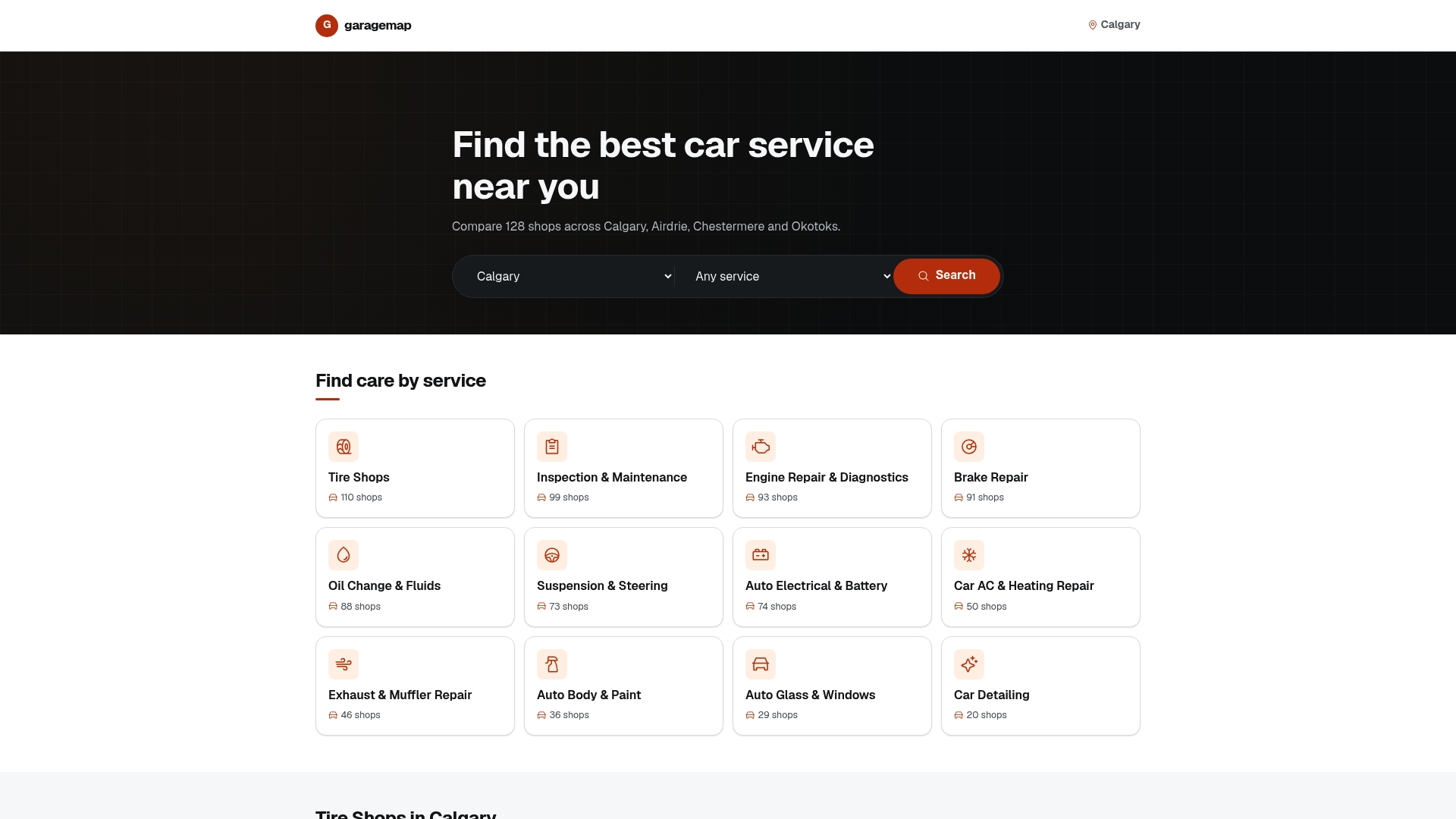
The filtering is the whole point. Rather than sifting through general listings, you narrow straight to shops that list engine diagnostics as a service, see what's nearby in Calgary, Airdrie, or Okotoks, and request quotes directly from garages instead of relying on a generic online estimate that has no idea what's actually wrong with your car. If your symptoms also touch a broader inspection need, the vehicle inspection and maintenance category covers that too. Open GarageMap, search your city, and filter for engine diagnostics to see which local shops match your symptoms before you book anything.
Sources
- Automotive Industries Canada — submission (standards & diagnostics overview)
- Diagnostic trouble code (DTC) for cars — CarHub
- On‑board diagnostics — Wikipedia
- Freeze‑frame data and OBD‑II scanners — Ancel blog
FAQ
Can you explain what OBD2 is and how it works?
OBD‑II is your vehicle's built-in self-diagnostic system, standardized across virtually all cars since the 1996 model year. A scan tool plugs into a standard port and reads data directly from the engine control module, pulling stored trouble codes and live sensor readings without needing to disassemble anything.
What are the worst check engine light codes?
The most urgent situation isn't a specific code, it's a flashing check engine light, which almost always signals an active misfire that can destroy your catalytic converter within minutes if you keep driving. Misfire codes (the P0300 series) and codes tied to fuel delivery or overheating tend to carry the highest risk of quickly escalating into expensive repairs if ignored.
Does the car have to be running to run a diagnostic scan?
A basic code scan can be pulled with the ignition on and the engine off. But a full diagnostic needs the engine running so the technician can review live data, like fuel trims and oxygen sensor cycling, under actual operating conditions, and some faults only reproduce during a road test.
How do I read a vehicle diagnostic report?
Look at three things: the code status (stored, pending, or permanent), the live-data values like fuel trims and misfire counts, and the readiness monitor status if your vehicle needs an emissions test. Combining code data with live readings and monitor status is how a technician turns a report into an actual diagnosis rather than a guess.
How can GarageMap help me find a shop for engine diagnostics?
GarageMap lets you filter its listings of vetted shops across Calgary, Airdrie, Chestermere, and Okotoks specifically for engine repair and diagnostics, so you can request real quotes from garages that already match your issue instead of contacting shops one by one.