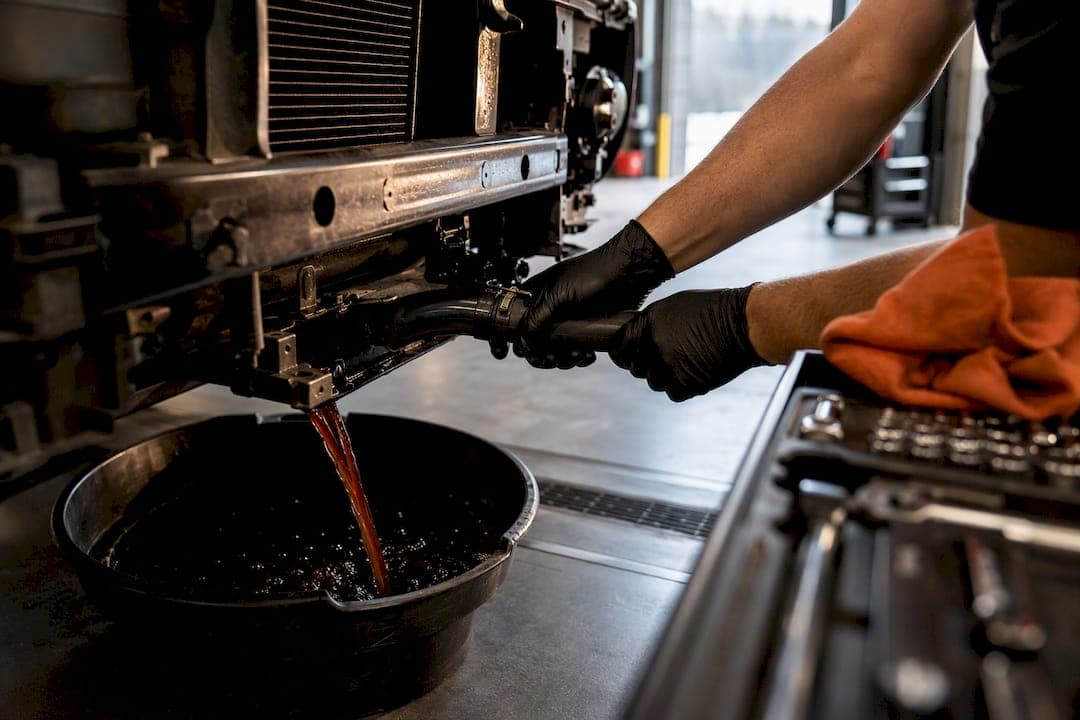
A coolant flush in Calgary typically runs within the range charged at independent shops, and full flush-and-fill service costs more for larger engines or European vehicles with bigger cooling systems. Taxes and shop supplies usually add a bit more. Before you approve any work, get a written scope and a quick inspection first, since overheating symptoms often point to a repair, not a flush.
TL;DR:
- A full coolant drain and refill in Calgary typically costs between $120 and $180 for standard vehicles, with larger or European models potentially reaching $350.
- Proper flush procedures should include inspection, coolant testing, thorough draining from the radiator, hoses, and heater core, and system pressure testing.
- Quotes often vary based on coolant type, volume, and equipment fees; ask for detailed, itemized estimates before approval.
- Disposal of used antifreeze is strictly regulated and usually included in the price; shops that cannot explain their disposal process should be avoided.
- Booking ahead and comparing scope details across shops saves money and ensures the service includes all necessary steps for a truly effective flush.
Table of Contents
- What drives coolant flush cost Calgary prices up or down
- What should a proper coolant flush include?
- How do I compare coolant flush quotes properly?
- Calgary's rules on disposing of used antifreeze
- How long does a coolant flush actually take in Calgary?
- Where to get a coolant flush done in Calgary
- Common upsells to watch for during a coolant flush
- A local perspective on booking your coolant flush
- Find and compare Calgary coolant flush quotes with GarageMap
- Sources
- FAQ
What drives coolant flush cost Calgary prices up or down
Prices swing more than most owners expect, and the reason usually comes down to what "flush" actually means at that shop. A basic top up, where a technician just adds coolant to bring the reservoir back to level, might run $40 to $80. That is not a flush. It is a patch job, and if your coolant is low because of a slow leak, a top up buys you a few weeks at best.
A genuine drain-and-refill service, where old coolant is drained from the radiator and block and replaced with fresh fluid, sits closer to $120 to $180 for a typical Calgary shop working on a four or six cylinder vehicle. Full machine-exchange service, which uses pressurized equipment to push old coolant out and pull fresh fluid through the entire system including the heater core, generally lands between $150 and $250.
Vehicles with larger cooling systems change the math. A V8 truck or SUV can need six to eight litres of coolant instead of four, and that extra volume shows up directly on the invoice. European vehicles often complicate things further: many BMW, Mercedes-Benz, and Audi models require specific long-life coolant formulations that cost more per litre than standard ethylene glycol mixes, and some need special bleed procedures to clear air pockets from the system. That is where you start seeing quotes in the $250 to $350 range, sometimes higher if the shop needs specialty equipment.
A few concrete cost drivers show up on almost every invoice:
- Labour, typically 0.5 to 1.5 hours depending on access to the radiator and whether the vehicle needs to be lifted
- Coolant type and volume, since OEM-spec or long-life formulas cost more than generic ethylene glycol
- Machine or exchange equipment fees, charged separately from labour at shops using pressurized flush systems
- Pressure testing, sometimes bundled in, sometimes billed as an add-on
- Disposal and environmental fees, which responsible shops charge to cover legal handling of used antifreeze
Pro Tip: If a quote comes in noticeably below the local range, ask directly whether it includes a full drain of the radiator, block, and heater core, or just a reservoir top up. The gap between those two services is often the entire reason for the price difference.
What should a proper coolant flush include?
A coolant flush that is worth paying for starts with inspection, not the flush itself. Local shop service pages describe checking the radiator, hoses, thermostat, water pump, and coolant condition before any fluid gets touched, and that order matters. A flush cannot fix a cracked hose or a failing water pump. It just delays the moment you find out about them.
Here is what a properly scoped service actually covers, step by step:
- Visual and pressure inspection of the radiator, hoses, radiator cap, and visible leak points around the engine bay
- Coolant condition check, testing pH and freeze protection to confirm the existing fluid has actually degraded
- Drain of old coolant from the radiator, engine block, and heater core, not just the overflow reservoir
- Flush cycle, either gravity drain or machine-assisted exchange, to clear rust particles and old additive residue
- Refill with spec-correct coolant, mixed to the manufacturer's recommended ratio
- Air bleed and pressure test to confirm there are no leaks and the system holds proper pressure once running
Your invoice should itemize each piece: coolant type and litres used, labour hours, any machine or flush-equipment fee, the pressure test, and disposal charges for the old fluid. If a shop hands you a single flat number with no breakdown, ask for the itemized version before you approve anything.
Watch for two red flags. First, a shop that skips inspection entirely and just wants to run the flush machine. Second, a "complete radiator flush" pitch tacked onto an oil change with no explanation of why your coolant needs attention right now. Neither is automatically dishonest, but neither gives you enough information to know if you actually need the work.
How do I compare coolant flush quotes properly?
The headline number on a quote tells you almost nothing until you know what is inside it. Two shops both quoting $180 can mean very different things: one includes OEM coolant, disposal, and a pressure test, the other covers labour only and bills everything else separately once the car is on the hoist.
Ask for these four things in writing before you say yes:
- A full scope listing coolant specification, litres included, labour cost, machine fee, and disposal charge separately
- An authorization limit, meaning the shop calls you before doing anything beyond the quoted work
- Confirmation of coolant type: OEM long-life, universal, or propylene versus ethylene glycol base
- Whether extra coolant beyond the standard fill volume gets billed separately if your vehicle needs more
That last point catches a lot of people off guard. A cheap quoted flush sometimes excludes exactly the coolant specification and extra litres a larger vehicle actually needs, so the number you agreed to on the phone isn't the number on the final bill.
Pro Tip: Compare quotes by scope, not by the dollar figure alone. A $220 quote that includes OEM coolant, disposal, and a pressure test usually beats a $150 quote that leaves all three off the invoice.
Shops that run a pre-service diagnostic, even a quick one, before quoting a flush tend to give more accurate numbers upfront. It costs them a few extra minutes and saves you from a surprise repair bill halfway through the job.
Calgary's rules on disposing of used antifreeze
Used antifreeze is not something a shop can pour down a drain, and this isn't optional guidance. The City of Calgary is explicit that antifreeze must never go into a drain or storm sewer, and it has to move through approved disposal channels instead. Municipal automotive wastewater compliance rules go further, requiring shops to prevent automotive waste of any kind from entering the wastewater system, with reporting and interceptor requirements attached.
That means a legitimate Calgary shop is already budgeting for lawful disposal, and it is fair to ask whether that cost sits inside your quote or gets added afterward. A few practical points worth knowing:
- Ask directly: "Is disposal of the old coolant included in this price?"
- Residents handling their own coolant change can drop used antifreeze at Calgary's Eco Centres or household hazardous waste depots
- A shop that cannot explain its disposal process is a shop worth skipping
How long does a coolant flush actually take in Calgary?
Book expecting 45 minutes to 2 hours of actual shop time for a standard flush and refill, though the full appointment window often runs longer once you account for scheduling and wait times.
The mechanical work itself is fairly quick. Drain, flush cycle, refill, and a pressure test on a straightforward four or six cylinder vehicle typically takes under an hour once the car is on the hoist. Larger engines, harder to reach radiators, or a machine-exchange service that runs multiple flush cycles push that closer to 90 minutes to two hours.
What extends the day is everything around the mechanical work. Most Calgary shops book flush services alongside other maintenance, so if you drop the vehicle off in the morning without a set appointment, you're competing with brake jobs, oil changes, and inspections already on the schedule. Same-day drop-off without a booking can mean a half-day wait even though the actual service takes an hour.
Booking ahead is the easiest fix. Shops that schedule the flush as a dedicated appointment, rather than a walk-in add-on, tend to get you in and out closer to the true service time. If the vehicle also needs diagnostic work because of overheating symptoms, add time for the technician to trace the actual cause before touching the coolant at all. That diagnostic step can add 30 minutes to an hour, but it's the difference between fixing the real problem and flushing a system that will overheat again next week.
Where to get a coolant flush done in Calgary
Calgary's coolant flush market splits into a few practical categories, and each fits a different kind of vehicle owner. Independent general repair shops, spread across neighbourhoods from the northeast industrial areas to the southwest, tend to offer the most competitive pricing on standard drain-and-refill service, usually in that $120 to $220 range, and many bundle a basic inspection into the price without charging extra for it.
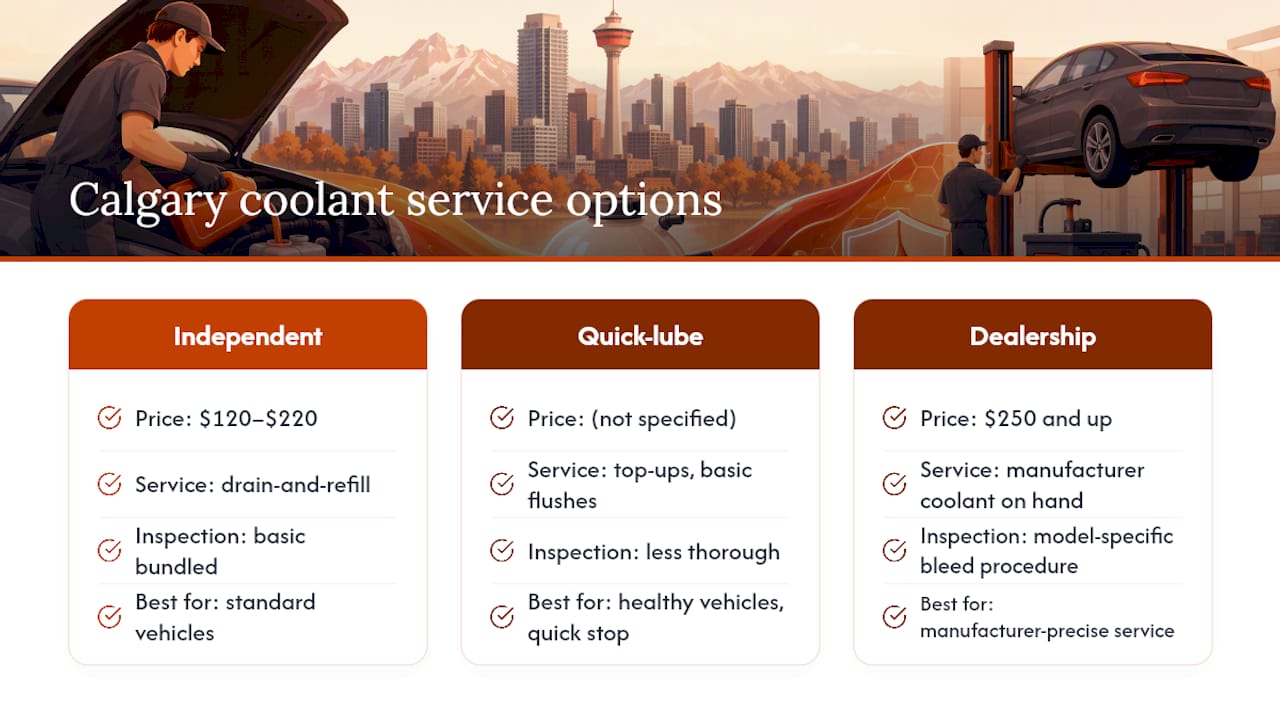
Quick-lube style chains handle coolant top-ups and basic flushes fast, often within the same visit as an oil change, but the tradeoff is less thorough inspection. They're a reasonable choice if your vehicle is healthy and you just need scheduled maintenance, less so if you're chasing an overheating issue.
Dealership service centres charge more, frequently $250 and up, but they carry manufacturer-specific coolant on hand and know the exact bleed procedure for that model. For a European vehicle with a finicky cooling system, specialty shops that focus on European makes understand those quirks in ways a general shop sometimes doesn't, which can matter more than the sticker price if it means avoiding a redo.
Rather than calling six shops one by one, a Calgary shop directory that lets you filter by service type and compare written scopes side by side saves a genuine amount of phone time, especially when you're trying to match coolant specification and disposal fees across quotes.
Common upsells to watch for during a coolant flush
The flush itself is rarely where extra costs sneak in. It's everything a technician finds once the old coolant drains out and they can actually see the system.
Radiator cap replacement is the most common add-on, usually $15 to $40 for the part plus a few minutes of labour. A weak cap fails to hold pressure properly, and a good technician will flag it during inspection rather than let you leave with a system that can't seal.
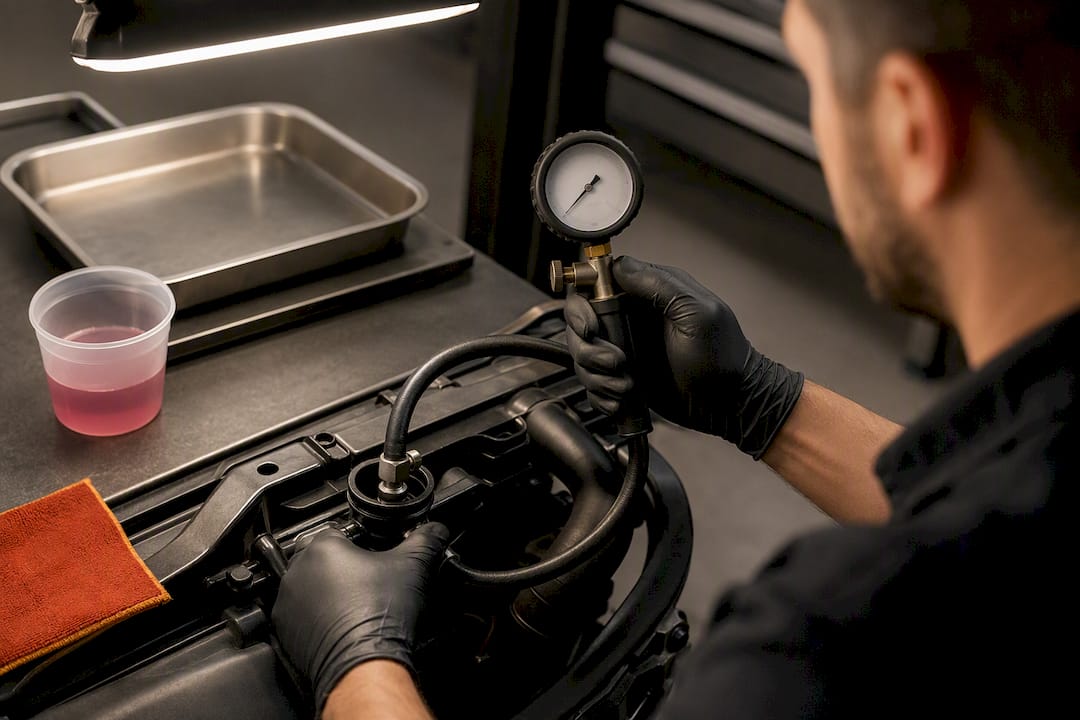
System pressure testing sometimes comes bundled with the flush and sometimes gets billed separately, often $20 to $50. It's a legitimate check, not padding, since it confirms the system holds pressure after the refill and catches slow leaks before they become a tow call.
Thermostat replacement is a bigger jump, typically $80 to $150 with labour, and worth doing if the old coolant showed signs the thermostat was sticking. Hose replacement, if a hose looks cracked or soft during inspection, adds parts and labour on top of the base flush.
The line between a fair upsell and a padded invoice comes down to explanation. A shop that shows you the failing part or explains the reading from a pressure test is doing its job. A shop that adds line items with no explanation and expects you to just pay deserves a follow up question before you sign off.
A local perspective on booking your coolant flush
If your temperature gauge has been creeping up or you've noticed coolant on the driveway, skip straight to a diagnostic appointment instead of booking a flush. A flush doesn't fix a leak or a failing thermostat, it just delays the moment you find out about it the hard way.
For routine maintenance, get the scope in writing, set an authorization limit before the car goes on the hoist, and compare quotes on what's included, not the number on the phone. Using a local finder to pull quotes side by side beats six separate phone calls trying to remember which shop said what.
— Andrii
Find and compare Calgary coolant flush quotes with GarageMap
Calling around Calgary for coolant flush quotes eats an afternoon you probably don't have. GarageMap gives you a faster route: search across 128 vetted shops in Calgary, Airdrie, Chestermere, and Okotoks, filter by the exact service you need, and request quotes directly from shops instead of guessing which ones actually do full flush-and-fill work versus a quick top up.
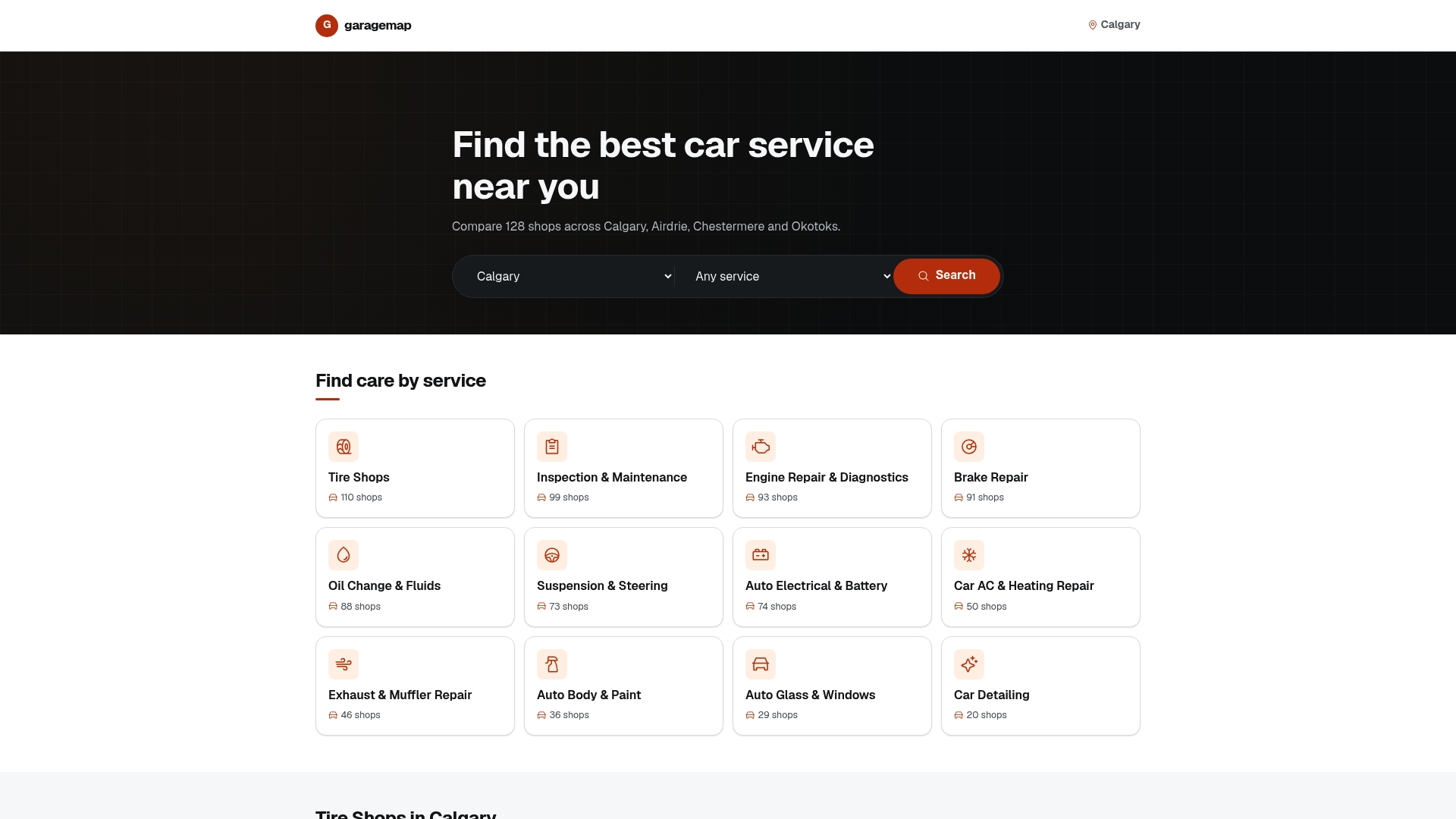
Search "coolant flush" or "coolant system service" through GarageMap's Calgary shop directory to pull written scopes from multiple local shops at once, so you can compare coolant type, litres included, and disposal fees side by side before committing to anyone. If your vehicle is also showing overheating symptoms, GarageMap's engine diagnostics listings connect you with shops that can trace the actual cause first. Start your search today and get real quotes from shops that already know what a proper coolant flush should include.
Sources
FAQ
How much do coolant flushes cost in Calgary?
Most Calgary shops charge $120 to $220 for a standard drain-and-refill coolant flush, with full machine-exchange service and larger or European vehicles running $250 to $350. Basic top ups without a full drain cost less but don't deliver the same result.
Are coolant flushes worth it?
Yes, on a manufacturer's recommended schedule, because old coolant loses its corrosion protection and can lead to radiator or water pump damage over time. It's not worth paying for if your vehicle is actively overheating or leaking, since those symptoms need diagnosis first, not a flush.
How much should a coolant flush cost in Canada generally?
Pricing across Canada tracks fairly close to Calgary's range, with most shops charging $120 to $250 depending on vehicle size and coolant type. Dealerships and specialty European shops typically sit at the higher end of that band.
Why are coolant flushes so expensive at some shops?
The price often reflects what's actually included: OEM-spec coolant, machine-exchange equipment, pressure testing, and lawful disposal all add cost that a bare-bones top up skips. A shop quoting less isn't necessarily cheaper once you compare what's left off the invoice.