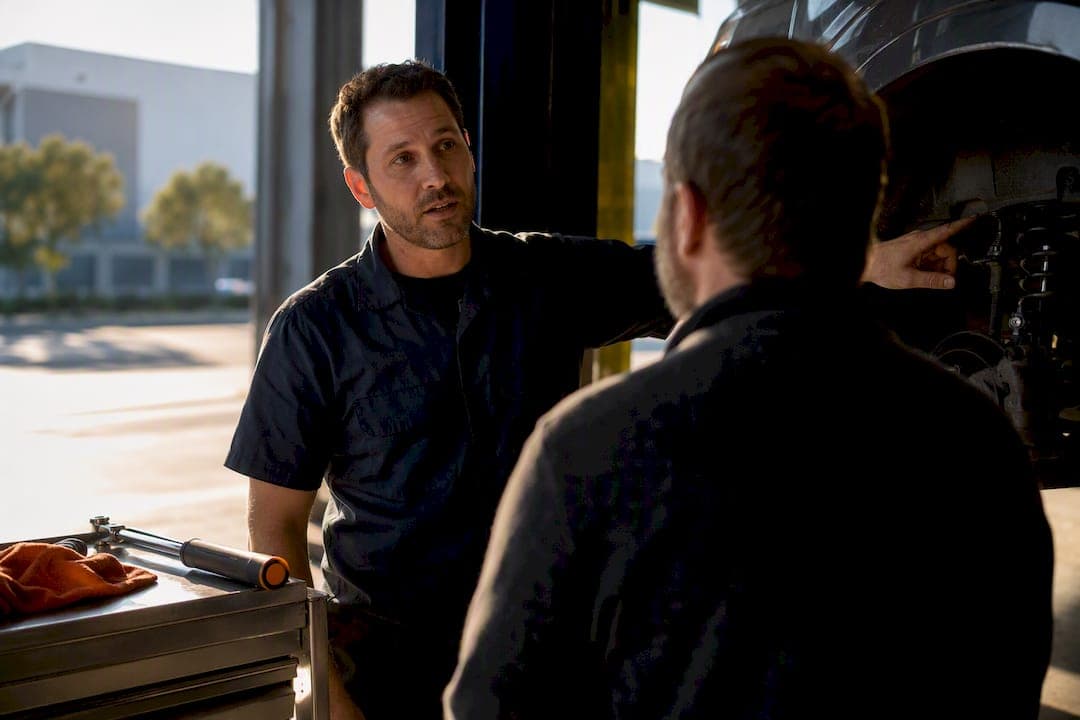
Prioritise a shop with verifiable credentials, a written itemised estimate, and clear warranty terms on parts and labour. Check recent reviews for patterns, not star averages, then confirm the fit with a small job like an oil change before trusting them with anything major. When you call, ask about ASE certification, get a price in writing, and see how they answer.
TL;DR:
- Mechanics should provide a written, itemized estimate and clear warranty terms on parts and labor before starting any work.
- Verify the shop's credentials, such as ASE certification and OEM training, especially for complex repairs or electric vehicle service.
- Focus on recent, detailed reviews and reviews' patterns over star ratings alone, paying attention to responses to negative feedback.
- Conduct a small, low-risk repair first to assess communication quality, transparency, and service standards before authorizing major repairs.
- Price should be a secondary factor; prioritize shops that demonstrate clarity, honesty, and professionalism through documentation and responsive communication.
Table of Contents
- Where to start your search for a reliable mechanic
- Which type of repair shop fits your repair
- Reading reviews for patterns, not just stars
- Questions to ask and red flags that should end the call
- Test the shop with a small job first
- A five-step checklist to decide between shops
- How a vetted local directory can help
- Certifications and credentials worth checking
- Verifying experience with EVs, hybrids, and newer technology
- Understanding pricing transparency and typical repair costs
- Reading communication style as a quality signal
- Why shop cleanliness signals professionalism
- What I'd actually do differently than most guides suggest
- Sources
- FAQ
Where to start your search for a reliable mechanic
The best way to find a mechanic starts with people who already own your vehicle. Ask neighbours, coworkers, or your vehicle's local owners' club specifically about your make and model. A great answer for someone's Honda Civic means nothing if you drive a diesel truck with different maintenance needs.
From there, widen the net using sources built for this exact decision:
- Trade locators through the ASE website, which lists certified technicians by postal code.
- AAA's mechanic locator, which favours AAA-approved facilities that meet minimum service standards.
- Local Facebook groups or neighbourhood apps, where complaints and praise tend to be blunt and unfiltered.
- Aggregated directories that let you filter by service type instead of scrolling through unrelated listings.
Once you have five or six names, triage fast. Skip anything with only a handful of reviews from years ago. Favour shops with a steady stream of recent, detailed feedback, and pay attention to whether the owner responds publicly when something goes wrong. A shop that engages with a bad review, rather than ignoring it, tells you more than a shop with zero complaints and zero history.
Which type of repair shop fits your repair
Not every shop suits every job, and picking the wrong category wastes money either way. Consumer Reports generally favours independent shops for routine and out-of-warranty work but notes dealerships still make sense for manufacturer-specific repairs.
- Dealerships: the right call for warranty work, recalls, or software updates tied to your specific brand.
- Independent shops: usually better value, and you tend to build a longer relationship with the same technician over years of visits.
- Specialty shops: worth seeking out for transmissions, EV battery systems, or performance tuning, where general shops often lack the right tools.
- Chains: convenient for tires, oil changes, and inspections, though depth of expertise on complex repairs varies by location.
Before committing, ask directly whether they've handled your model before, whether they have access to OEM service bulletins, and what scan tools they use. A shop that hesitates on that last question probably isn't set up for anything beyond basic maintenance.
Reading reviews for patterns, not just stars
A 4.8 star average tells you almost nothing on its own. CarTalk recommends reading individual, recent reviews instead of trusting the aggregate number, because patterns reveal what a summary score hides.
Look for repetition. One complaint about a surprise charge is a bad day. Five complaints about surprise charges over six months is a business practice. Slow turnaround times, vague answers about pricing, or complaints about being pressured into extra work are the signals worth weighing heavily.
- Check the shop's Better Business Bureau profile for formal complaints and how many were resolved.
- Read the shop's responses to negative reviews. Defensive or dismissive replies are a preview of how they'll treat you.
- Give real weight to three-star reviews. They're often the most balanced, praising the work while flagging one honest gripe.
Pro Tip: Sort reviews by "most recent" before you sort by "highest rated." A shop's quality can shift after a change in ownership or staff, and last month's reviews matter more than the ones from three years ago.
Questions to ask and red flags that should end the call
Before you book anything, run through a short set of questions that separate professional shops from the rest.
- "Have you worked on this make and model before, and how often?" A confident, specific answer beats a vague "sure, we can handle it."
- "Can you provide a written, itemised estimate before starting work?" This should be a yes without hesitation, per AAA's guidance.
- "What warranty do you offer on parts and labour?" Listen for a specific term, not a shrug.
- "Will you show me the failed part, or send photos, before replacing it?"
AARP's consumer guidance flags four warning signs worth memorizing: rock-bottom advertised prices, mechanics who claim to fix absolutely everything, extra work added without your consent, and answers that dodge your actual question. A refusal to itemise labour and parts on paper is its own red flag, since it strips away your ability to compare pricing or dispute a bill later, according to Mercury Insurance's consumer advice. If a shop won't put numbers in writing, that's your answer before you've even started the job.
Test the shop with a small job first
A routine oil change or tire rotation makes a low-risk trial run, and Consumer Reports treats this kind of test as a strong predictor of how a shop will handle bigger repairs later. Watch how they communicate, whether the courtesy inspection is thorough or rushed, and whether they explain findings clearly instead of just handing you a bill.
- Ask for an itemised invoice, even for something small.
- Keep old parts, or ask for photos, when anything gets replaced.
- If the original problem showed up while driving, ask for a short test drive with the technician present.
If something goes wrong after a bigger job, put your request for rework in writing and reference the warranty terms you were given, following FTC guidance on documenting disputes. For major repairs, get a second opinion before authorizing more work. If the shop won't cooperate, a complaint to the Better Business Bureau or your local consumer protection office creates a paper trail that matters.
A five-step checklist to decide between shops
When you're comparing two or three candidates, run them through the same five steps in order:
- Confirm ASE certification and ask directly about experience with your specific model.
- Compare recent review patterns and check BBB complaint history for each shop.
- Request written estimates and confirm warranty terms on parts and labour.
- Book a small trial job and evaluate communication and transparency.
- Choose the shop that scored highest on clarity and honesty, not just price.
| Repair urgency | What to weight most | What to weight least |
|---|---|---|
| Emergency (breakdown, safety issue) | Proximity and availability | Long-term relationship potential |
| Routine maintenance | Price and convenience | Speciality equipment |
| Complex or specialised repair | Model experience and diagnostic tools | Lowest quoted price |
Convenience matters more when you're stranded. Specialisation matters more when the repair is complex or expensive. Price should almost never be the deciding factor on its own, though it's a reasonable tiebreaker once everything else checks out.
How a vetted local directory can help
A directory works best as a shortlisting tool, not a replacement for the checklist above. There are online directories that aggregate and compare multiple shops across cities like Calgary, Airdrie, Chestermere, and Okotoks, letting you filter by the exact service you need instead of scrolling through unrelated listings.
- Filter by service type, like brakes, diagnostics, or tire changes, to skip shops that don't specialise in your repair.
- Compare listings across four Alberta markets from one search instead of checking four separate sites.
- Use the shortlist you build as your starting point, then apply the phone questions and review checks before booking.
Pair a search on GarageMap's Calgary listings with the trial run strategy: shortlist three shops through the directory, then test the strongest candidate with a small job like an inspection or maintenance visit before committing to anything bigger.
Certifications and credentials worth checking
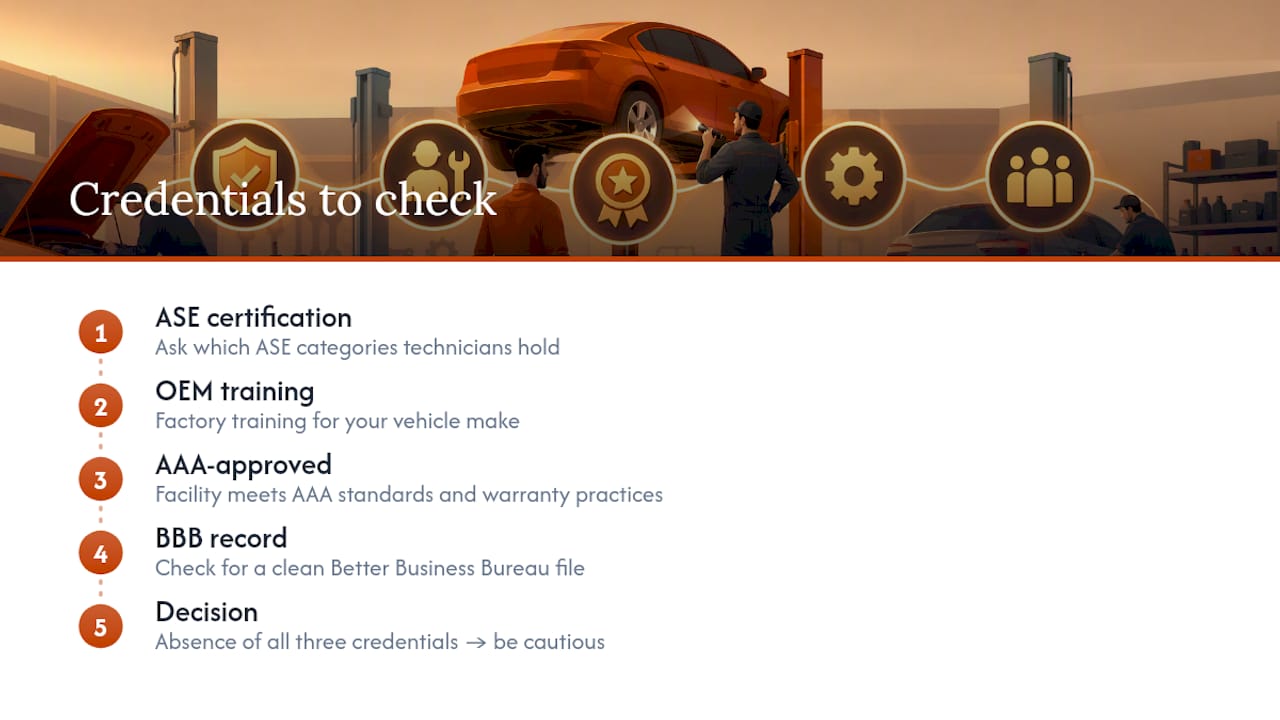
ASE certification is the baseline credential to look for, since it confirms a technician passed standardized tests in specific repair areas, from brakes to engine performance. Ask which ASE categories a shop's technicians hold, not just whether "someone" is certified.
OEM training matters just as much for brand-specific work. A technician with factory training on your exact manufacturer will know software quirks and service bulletins a generalist might miss entirely.
AAA-approved status is another useful filter, since AAA requires facilities to meet minimum standards around cleanliness, customer satisfaction, and warranty practices before they can display the AAA logo. Combine that with a clean Better Business Bureau file, and you've stacked three independent checks in your favour before you've even walked in the door. None of these credentials guarantees a perfect experience, but the absence of all three should make you cautious.
Verifying experience with EVs, hybrids, and newer technology
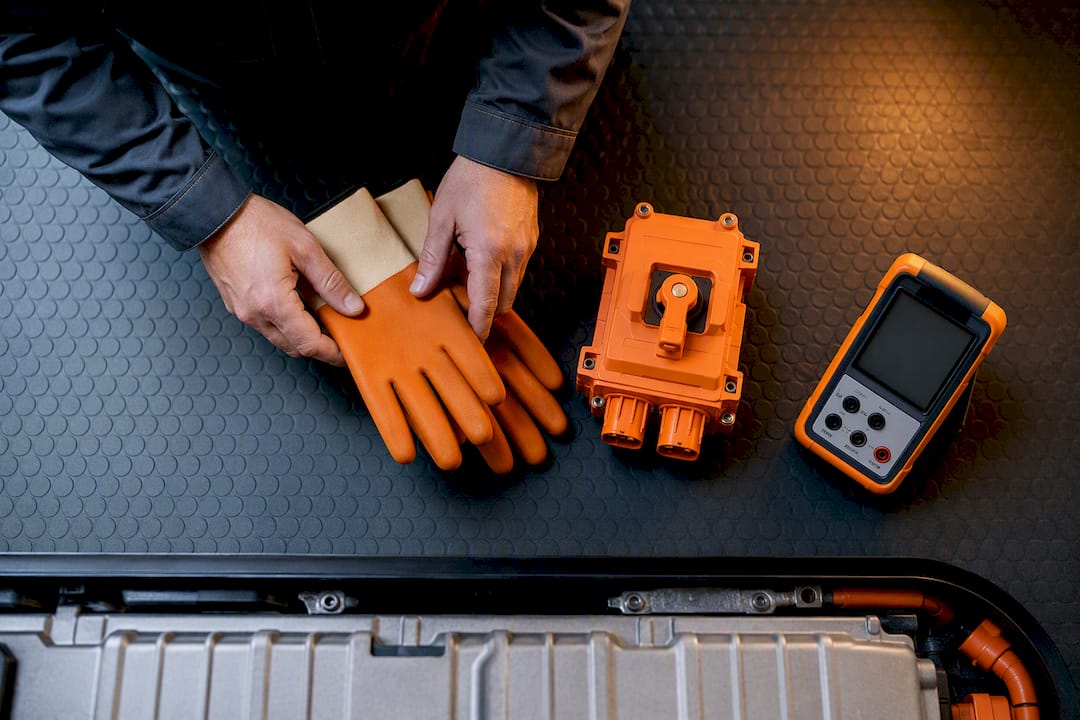
Electric and hybrid vehicles need more than a general mechanic's toolkit. Compatibility depends on up-to-date diagnostic software and specialised training on high-voltage systems, and a shop without that training simply can't service certain repairs safely, according to AARP's guidance.
Ask directly whether the shop services EVs or hybrids regularly, and whether their technicians hold specific battery-handling training. A shop that services one Tesla a year isn't the same as one that handles them weekly. For anything involving high-voltage battery packs, treat vague answers as a hard stop rather than a minor concern. Expert technicians also point out that diagnostic tool access varies significantly by manufacturer, so a shop that's excellent with older gasoline engines may lack the specific equipment your newer vehicle actually needs, per community-sourced repair advice. If you drive an EV, prioritise this question above almost everything else on your checklist.
Understanding pricing transparency and typical repair costs
A written, itemised estimate should break down parts and labour separately, with enough detail that you could compare it against a second quote line by line. Vague lump-sum numbers make comparison shopping nearly impossible, which is exactly why some shops prefer them.
Ask how labour rates are calculated, whether by flat-rate manuals or hourly billing, since the two methods can produce very different final bills for the same job. Parts pricing should distinguish between OEM and aftermarket options, with the shop explaining the trade-off rather than defaulting to whichever costs more. If a quote comes back dramatically lower than every other estimate you've collected, that's not automatically good news. It's often a sign of corners being cut on parts quality or a bait-and-switch once the car is already on the lift.
Reading communication style as a quality signal
How a shop talks to you before any work begins tells you almost as much as their technical skill. A good service advisor explains what's wrong in plain language, walks through options without pressure, and answers follow-up questions without getting defensive.
Watch for responsiveness too. Shops that return calls promptly and give you realistic timelines, rather than optimistic guesses that slip repeatedly, tend to run tighter operations overall. If a shop's staff seem irritated by basic questions about pricing or timelines during your first call, that attitude rarely improves once your car is already in the bay and you have less leverage.
Why shop cleanliness signals professionalism
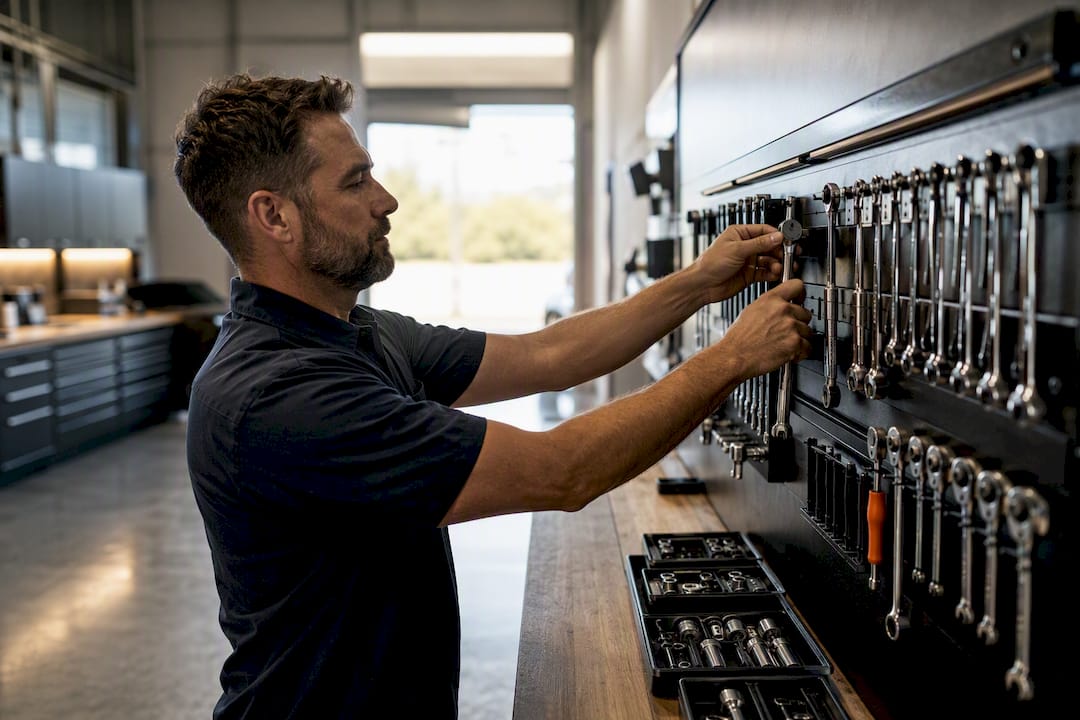
A shop's physical condition reflects how it treats the work itself. Organized tool storage, clean floors, and labelled work bays suggest a business that takes pride in process, while a chaotic, grease-covered waiting area often mirrors chaotic recordkeeping and rushed repairs.
This isn't about cosmetic polish. It's about whether parts get tracked, invoices get filed correctly, and technicians work in a space set up to avoid mistakes. Walk through the shop if they'll let you, and notice whether tools are organized or scattered across every surface. A cluttered shop can still do good work, but a clean, organized one rarely does careless work.
What I'd actually do differently than most guides suggest
Most advice treats price as the tiebreaker. I'd flip that. Clarity and evidence, a written estimate you can read twice and still understand, a warranty term stated without hedging, matter more than saving forty dollars on a brake job. The cheapest quote with the vaguest explanation is usually the most expensive mistake waiting to happen.
Build a relationship with one trustworthy shop rather than chasing the lowest price every visit. Keep a simple repair log with dates, mileage, and what was done, and hang onto contacts for both a generalist and a specialist for your vehicle type. That log becomes leverage in any future dispute and a time saver at every future visit.
Pro Tip: Book your next oil change or inspection with the shop you're testing, not just a one-off repair. Routine visits build the kind of rapport that gets you honest answers when something bigger eventually goes wrong.
— Andrii
Sources
Consumer Reports and AAA cover shop evaluation in depth, the FTC explains warranty rights, AARP lists practical red flags, and CarTalk breaks down how to read reviews properly. These sources shaped the advice throughout this guide.
- How to Find a High-Quality Car Repair Shop - Consumer Reports
- How to Find a Good Mechanic: A 5-Step Guide | AAA Automotive
- How to find a good mechanic - CarTalk
- Find Out How to Choose a Trustworthy Mechanic - AARP
FAQ
How should you select a mechanic?
Check for ASE certification or OEM training, get a written itemised estimate, confirm warranty terms on parts and labour, review recent feedback for patterns, and test the shop with a small job before trusting them with major repairs.
How much should I pay for a mechanic?
Costs vary widely by repair type and region, so get at least two written estimates for anything beyond routine maintenance and compare labour rates and parts sourcing line by line rather than judging on the total alone.
What type of mechanic is paid the most?
Specialists with advanced credentials, particularly those trained on EV and hybrid high-voltage systems or complex diagnostics, typically command higher rates than general service technicians because fewer shops offer that expertise.
What are the red flags of a bad mechanic?
Watch for rock-bottom advertised prices, vague or verbal-only estimates, claims to fix absolutely anything, extra work performed without your consent, and reluctance to show you the failed part or provide documentation.