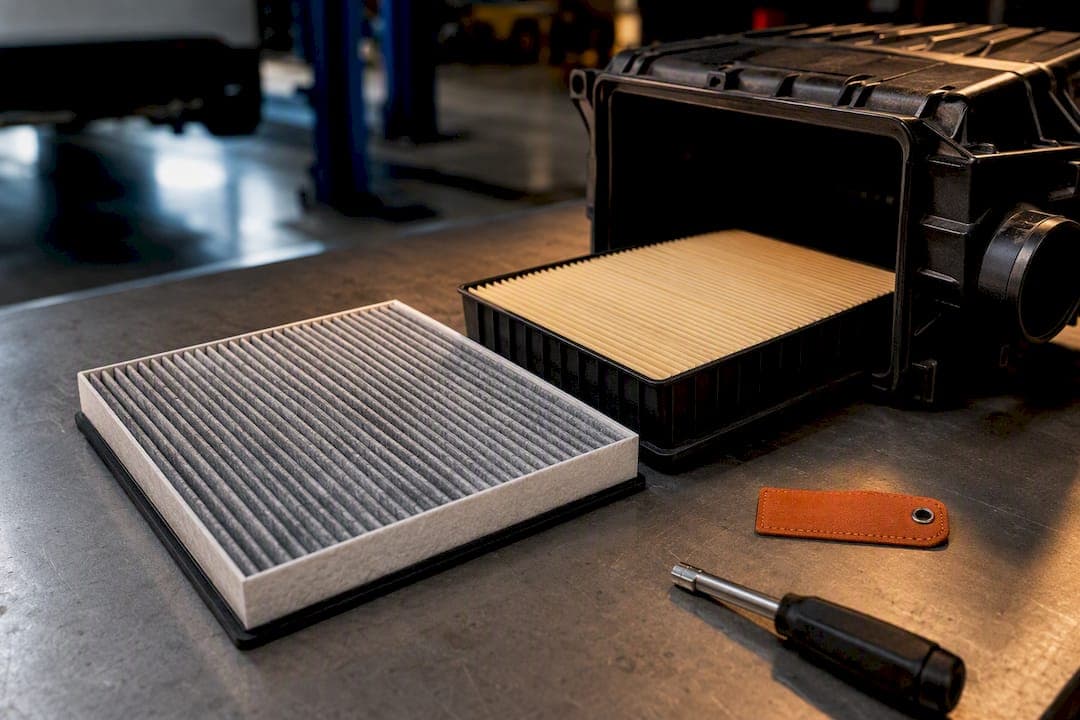
The engine air filter protects the engine and your fuel economy; the cabin air filter protects the people inside the car and the HVAC system. They look similar, sit in different parts of the vehicle, and fail in completely different ways. Follow your owner's manual for both, but check them sooner if you drive on dusty roads or sit in heavy traffic often.
TL;DR:
- Replacing engine filters is crucial when experiencing sluggish acceleration or decreased fuel economy, as a clogged filter restricts airflow and efficiency.
- Cabin filters should be replaced every 20,000 to 25,000 kilometers or once a year, especially during pollen season or heavy traffic conditions that accelerate dirt buildup.
- A dirty engine filter may trigger check engine lights through fault codes, while a clogged cabin filter only causes weak airflow and musty odours, without engine impact.
- Installing filters without proper checks can lead to sensor faults or continued odour issues, making professional assessment necessary if problems persist.
- Genuine OEM or high-quality filters, including activated carbon or HEPA-grade options, provide better filtration, especially for allergy sufferers or in polluted areas.
Table of Contents
- Cabin vs engine air filter: what each one does and where it sits
- Key differences at a glance
- When to replace each filter: intervals and what shortens them
- Signs and consequences of a clogged filter
- How to check and replace a cabin or engine air filter
- Choosing replacement filters: OEM, oiled, HEPA, and carbon options
- Health and vehicle-performance impacts worth knowing
- How GarageMap helps with filter-related servicing decisions
- Get your filters checked without the runaround
- Sources
Cabin vs engine air filter: what each one does and where it sits
The engine air filter cleans the air going into the engine before combustion. It sits in a plastic housing under the hood, usually connected to the intake tube that runs to the throttle body. A clogged one starves the engine of clean air and can throw off the mass airflow (MAF) sensor's readings over time.
The cabin air filter cleans the air blown through your vents, heater, and air conditioner. It's usually tucked behind the glove box or under the dashboard, sometimes low enough that you'd never spot it without looking. Many newer models add activated carbon layers to that filter for odour control.
Quick way to tell them apart:
- Engine air filter: bigger housing, under the hood, connects to the air intake tube.
- Cabin air filter: smaller, flatter, hidden near the glove box or dash, connects to nothing visible from outside.
- Confirmation source: your owner's manual will show exact location diagrams for your specific model, since placement varies by manufacturer.
Key differences at a glance
The two filters protect entirely different things, use different materials, and fail with entirely different symptoms.
- What it protects: engine filter guards the combustion chamber and internal engine components; cabin filter guards the people breathing inside the car.
- Typical media: engine filters use pleated paper or oiled cotton gauze; cabin filters use pleated paper, and increasingly activated carbon or HEPA-grade material for finer particle capture.
- Effect of clogging: a dirty engine filter chokes airflow to the engine; a dirty cabin filter chokes airflow through your vents and taxes the blower motor.
- Check engine light risk: only the engine filter can trigger fault codes, and usually only indirectly, through a fouled MAF sensor. A clogged cabin filter will never affect combustion, no matter how bad it gets.
When to replace each filter: intervals and what shortens them
There's no single number that works for every vehicle, which is why manufacturers publish two schedules: normal service and severe service. Car and Driver notes that severe service (dusty roads, stop-and-go city driving, extreme temperatures) can cut recommended intervals significantly compared to highway driving.
By the numbers: cabin filters generally need replacement every 20,000 to 25,000 kilometres, or at least once a year. Engine filters vary more widely, often falling somewhere between 20,000 and 80,000 kilometres depending on the vehicle and filter type.
Factors that push those intervals earlier:
- Regular driving on gravel or unpaved roads
- Heavy urban traffic with lots of idling
- Pollen season, if you or a passenger deal with allergies
- Winter driving where road salt and grit get kicked into the intake
If you can only deal with one filter right now, prioritize based on symptoms. Rough idle or a drop in fuel economy points to the engine filter. Weak airflow or musty odours point to the cabin filter, and neither problem gets better with time.
Signs and consequences of a clogged filter
A clogged engine filter and a clogged cabin filter feel completely different behind the wheel, and knowing which symptom belongs to which filter saves a lot of guesswork.
- Loss of power or sluggish acceleration usually traces back to the engine filter restricting airflow, and dirty filters measurably reduce performance until replaced.
- Worse fuel economy often shows up before the power loss becomes obvious, since the engine compensates by running richer.
- Weak airflow from the vents, even with the fan on high, almost always points to a clogged cabin filter rather than a blower motor failure.
- Musty or stale odours when you turn on the AC or heat mean the cabin filter is likely saturated with trapped debris and moisture.
- Excess windshield fogging in cold or humid weather is a lesser known cabin filter symptom, since restricted airflow slows the defrost system.
One filter can throw a check engine light. The other cannot, no matter how bad it smells.
How to check and replace a cabin or engine air filter
Both jobs are within reach for most vehicle owners with basic tools, and neither typically requires lifting the car.
- Locate the filter using your owner's manual. The engine filter housing usually has spring clips or screws; the cabin filter panel is often just a latch or a couple of small screws behind the glove box.
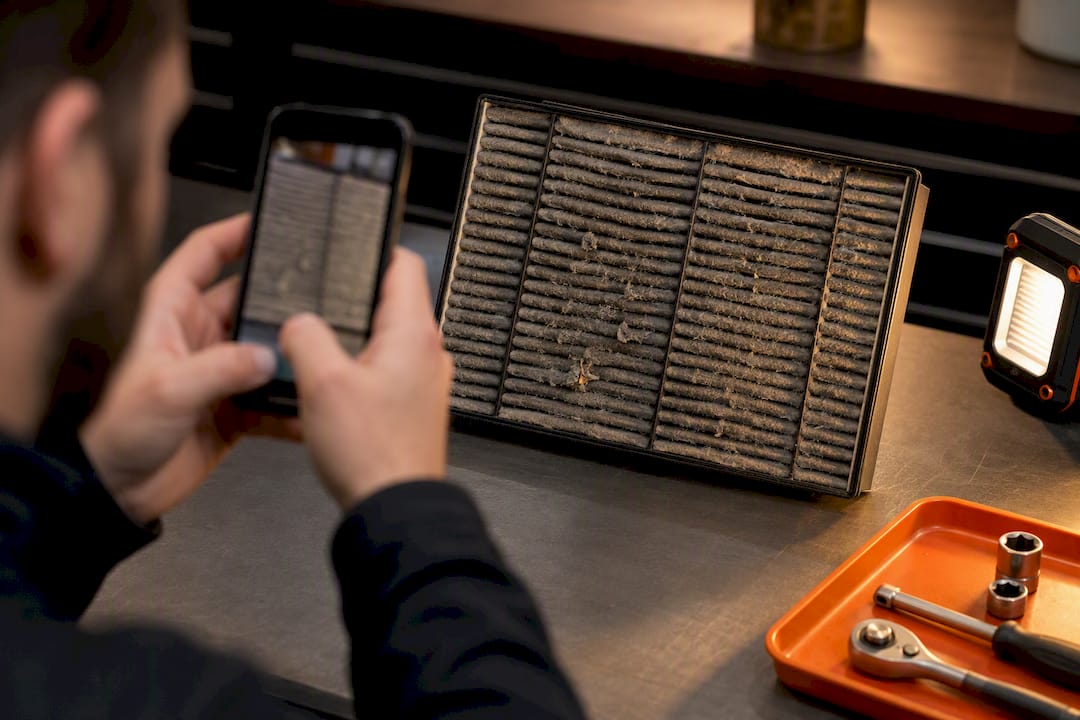
- Pull it out and hold it up to a light. If you can't see light through a paper filter, it's overdue. Visible dirt, leaves, or a grey film are all signs to replace it now.
- Note the airflow direction arrow printed on the old filter before removing it completely, so the new one goes in facing the right way.
- Seat the new filter fully and check that all clips, screws, or covers are secured. A gap around the edges lets unfiltered air bypass the filter entirely.
A DIY engine or cabin filter swap typically takes 10 to 20 minutes and the parts alone often run less than a shop's labour charge. Book a technician instead if you smell mould that persists after replacement, if the glove box assembly won't come apart cleanly, or if a MAF fault code appears after installing an oiled performance filter.
Pro Tip: Take a photo of the old filter before tossing it. If a shop questions your maintenance history later, that photo timestamp is proof you've been staying on top of it.
Choosing replacement filters: OEM, oiled, HEPA, and carbon options
For most daily drivers, a reputable OEM or aftermarket paper filter is the safer call over a reusable oiled filter, mainly because it needs zero maintenance to keep working correctly.
- OEM and name-brand aftermarket filters typically match factory filtration efficiency at a lower price point than dealer parts.
- Oiled cotton-gauze performance filters improve airflow and are reusable, but only if you clean and re-oil them on schedule. Over-oiling is the single biggest cause of contaminated MAF sensors, which can trigger fault codes.
- Activated carbon cabin filters trap odours in addition to particles, worth considering if you commute near industrial areas or heavy traffic.
- HEPA-grade cabin filters capture particles down to roughly 0.3 microns, a meaningful upgrade if anyone in the car deals with allergies or asthma.
Unknown, no-name budget filters are where corners actually get cut. Fit tolerances and filtration ratings vary enormously between brands you've never heard of.
Health and vehicle-performance impacts worth knowing
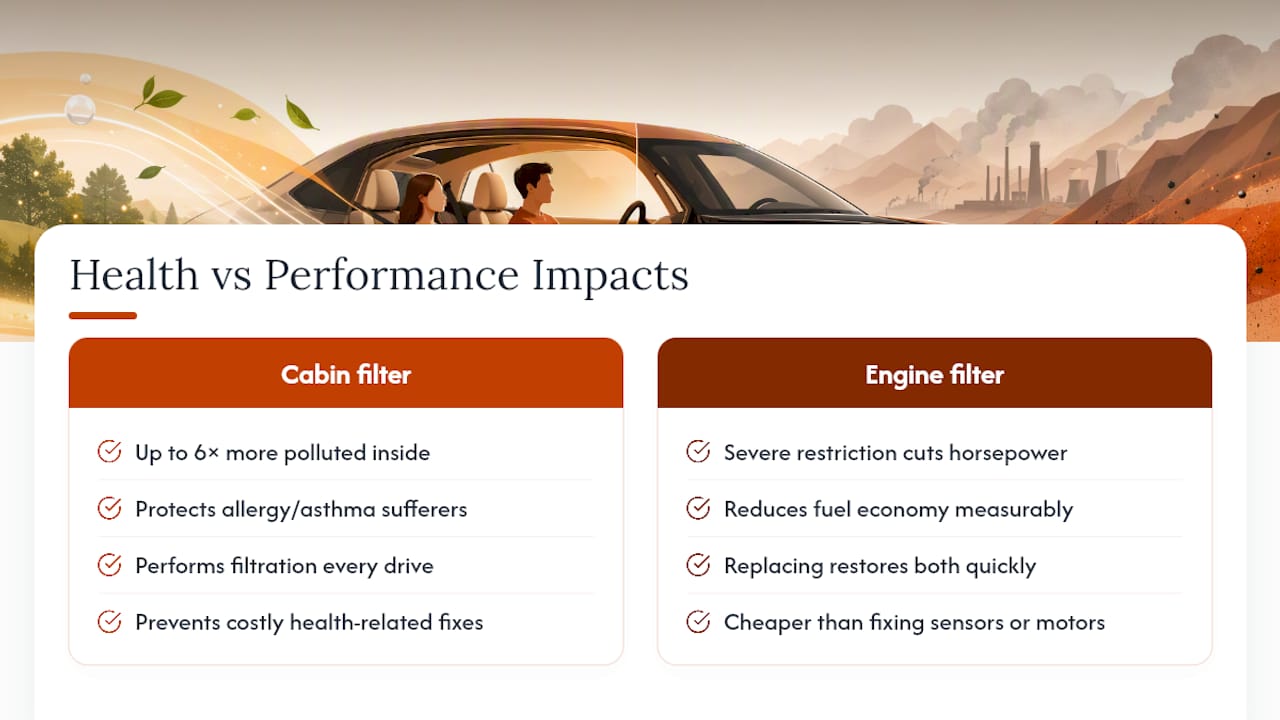
Unfiltered cabin air in heavy traffic can run up to six times more polluted than the air outside the vehicle. For anyone with allergies or asthma, a working cabin filter isn't a comfort feature. It's doing real filtration work every time you drive.
On the engine side, a severely restricted air filter can measurably cut horsepower and fuel economy, and replacing it typically restores both almost immediately. The math is simple either way: a filter costs a fraction of what a fouled sensor, a strained blower motor, or a rough-running engine costs to fix later.
How GarageMap helps with filter-related servicing decisions
Not every filter job is a DIY job, and knowing when to hand it off matters as much as knowing how to check it yourself. A platform aggregates a large number of vetted shops across multiple cities, letting you filter by exact service type instead of scrolling through unrelated listings. If a filter check turns up a fault code, a stubborn odour, or an access panel that won't budge, A focused search gets you to a shop that handles exactly that job, without the guesswork.
— Andrii
Get your filters checked without the runaround
Diagnosing a MAF-related fault code yourself, or wrestling with a glove box that won't come apart, isn't worth the frustration when a proper shop visit costs less than the time you'd burn troubleshooting it. This platform offers a route to vetted mechanics across various cities. Instead of calling around or gambling on an unfamiliar shop, you compare providers by the exact service you need.
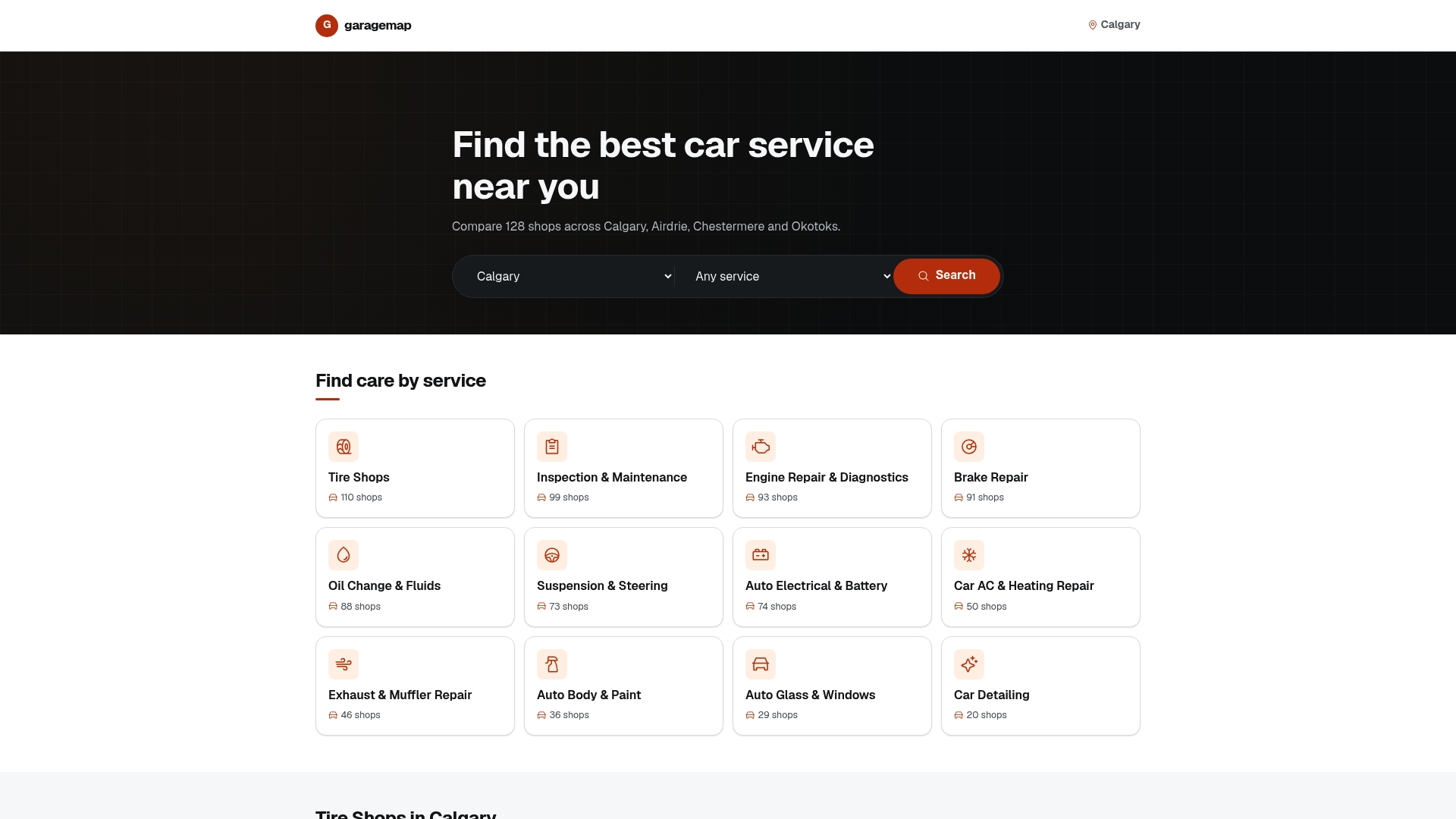
If your check engine light came on after a filter swap or your AC has been blowing warm and musty air, start with Vehicle Inspection & Maintenance Near Me in Alberta to get a professional read on what's going on. Suspect a sensor issue tied to the intake? Engine Repair & Diagnostics Near Me in Alberta connects you with shops that specialize in exactly that. Browse listings, check reviews, and reach out directly through GarageMap today.
Sources
The Filter Manufacturers Council, Car and Driver, Mann+Hummel, and AAA each publish independent guidance on filter function and replacement cadence worth checking against your owner's manual. If persistent car odour is your main concern, this guide on diagnosing odour sources covers steps beyond filter replacement.
- The importance of servicing cabin air filters (Filter Manufacturers Council / Autocare bulletin)
- Cabin air filters explained (Car and Driver)
- Cabin air filter: purpose, function & benefits (Mann+Hummel)
- The importance of cabin air filter replacement for your vehicle (AAA)