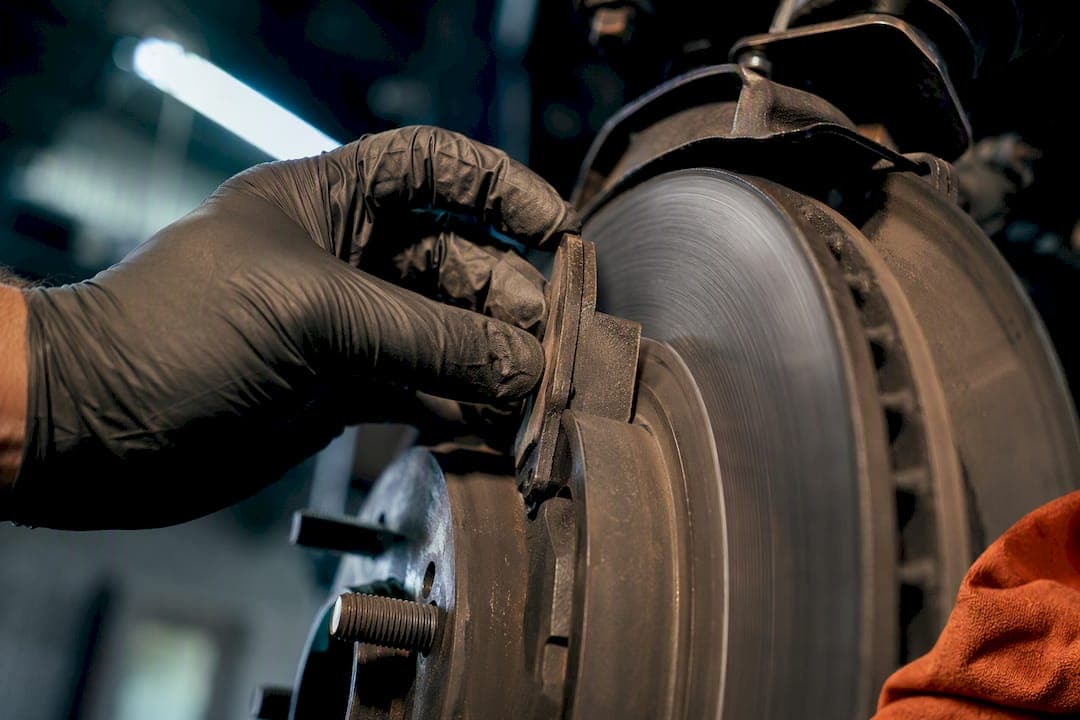
Most brake squeaks come down to four things: pad vibration, moisture on the rotors, worn pads hitting their wear indicator, or a sticking caliper keeping metal in contact too long. None of those demand you pull over right now. Grinding, a burning smell, a soft pedal, or a dashboard warning light do. Below is a checklist to sort out which one you've got and what to do about it.
TL;DR:
- Squeaking caused by worn pads or wear-indicator tabs signals that new pads are needed soon.
- Light squealing at low speeds or in the morning often results from moisture, surface rust, or glazing, which typically clear over time.
- Persistent squeals at all times or constantly on one wheel suggest hardware issues, stuck calipers, or debris trapped between the pad and rotor.
- Fixes like cleaning the components, proper bedding-in, and applying high-temperature brake grease can resolve most squeaks without visiting a mechanic.
- Immediate professional inspection is crucial if you hear grinding, notice brake warning lights, smell burning, or feel a soft pedal, to prevent costly damage.
Table of Contents
- What causes brakes to squeak?
- How do you know which cause you've got?
- DIY fixes you can try before booking a shop
- When should you actually see a mechanic?
- How GarageMap helps you find and compare vetted brake shops
- A quick word on trusting your ears
- Find a brake shop or book an inspection through GarageMap
- Sources
What causes brakes to squeak?
Brake squeal is almost always mechanical, not electrical, and most of the causes below are cheap to fix once you know which one you're dealing with.
- Worn pads and the wear-indicator tab. Most pads have a small metal tab built in that scrapes the rotor on purpose once the friction material gets thin, producing a sharp, consistent squeal. It's a built-in alarm, not a malfunction, and it means new pads are due soon.
- Pad friction material. Ceramic pads run cleaner and last longer than semi-metallic ones, but they're also more prone to a high-pitched squeal under light braking because of how the compound behaves at low pressure. That's a trade-off, not a defect.
- Surface rust or moisture. Rotors are bare cast iron, and overnight dew, rain, or a car wash leaves a thin film of rust that squeaks for the first few stops of the day. It's one of the most common causes of a morning-only squeal that fades quickly once the surface scrubs clean.
- Glazed pads or rotors. Riding the brakes down a long hill, or towing without adjusting your driving, can overheat the friction surface until it hardens and turns shiny. Glazing cuts stopping power and often comes back repeatedly if it's tied to a caliper that's not fully releasing.
- Trapped debris or brake dust. A small stone, road grit, or built-up dust between the pad and rotor creates a gritty, often intermittent squeak that can sometimes clear itself after a few hard stops.
- Sticking caliper slides or a seized caliper. When the slide pins gum up or a caliper piston won't retract fully, the pad drags against the rotor constantly, which wears it unevenly and keeps it noisy on every stop, not just the first ones.
- Missing or damaged hardware. Shims, anti-rattle clips, and the small springs that hold pads in place are easy to skip or misplace during a rushed brake job. Loose or missing hardware is a common reason squeal shows up right after a brake service rather than fading with time.
- New pads or rotors bedding in. Fresh friction material needs a transfer layer to build up before it runs quietly, and that process is expected, not a warranty issue, in the early life of the parts.
At low speeds specifically, there's a physics reason behind the noise: pad and rotor alternately grip and release in a rapid cycle called stick-slip vibration, which produces an audible tone that's often independent of how fast you're actually going. That's why a car can squeal pulling out of a parking spot and go dead silent on the highway.
How do you know which cause you've got?
Run through this order before you assume the worst. It takes about five minutes and a flashlight.
- Note exactly when the squeak happens. A squeal only on the very first stops of the day points to moisture or rust. A squeal only at slow speed or light pedal pressure often means pad vibration or a ceramic compound doing what ceramic compounds do. A constant squeal on every stop, at every speed, points toward hardware or a caliper problem.
- Check if it stops once you press the pedal firmly. If firmer braking quiets it, the culprit is usually the wear-indicator tab or light-pressure pad vibration. If it keeps going regardless of pedal pressure, suspect debris, a stuck caliper, or missing hardware.
- Watch for other symptoms. Pulsation through the pedal usually means warped rotors, not squeal at all. The car pulling to one side under braking suggests a caliper that's dragging on that wheel. A burning smell after a drive is a strong sign of overheating or a caliper that isn't releasing.
- Pull a wheel and look. With the car safely on stands, check pad thickness against the wear line, look for a shiny or blue-tinted rotor surface (glazing), check for visible debris wedged in the caliper bracket, and try wiggling the caliper to feel whether the slide pins move freely.
- Take a short test drive. If the noise clears after five or six moderate stops, it was likely rust or light glaze. If it gets louder as the brakes heat up over a longer drive, that's a stronger sign of a sticking caliper, and one wheel running noticeably hotter than the others after a short drive all but confirms it.
This same when-does-it-happen-plus-visual-check approach is the standard sequence mechanics use before replacing any parts, and it saves you from buying pads when the real problem is a $15 clip.
DIY fixes you can try before booking a shop
A lot of squeaks are fixable in an afternoon with basic tools, as long as you respect a few hard rules about what touches the friction surface.
- Clean the rotors and pads properly. Spray brake cleaner on the rotor face and wipe it down, and brush loose dust off the pads and caliper bracket. Never use soap, water, or general household cleaners near the friction surfaces.
- Grease the right spots only. High-temperature brake grease goes on the back of the pad (where it contacts the caliper piston) and on the caliper slide pins, never on the pad's friction face or the rotor itself. Household lubricants like WD-40 have no place on brakes at all; they contaminate the friction material and can cause the pedal to feel spongy or the car to pull under braking.
- Bed in new pads or rotors the right way. Do a series of gentle stops from moderate speed, letting the brakes cool between each one, instead of one hard stop from highway speed. Expect some squeak for the first 200 to 400 miles while the transfer layer forms, and if it's still squeaking after that, go back to whoever installed them.
- Replace worn hardware, not just pads. Shims, anti-rattle clips, and retaining springs are cheap, and reusing tired ones is one of the most common reasons a brake job squeaks right out of the gate.
- Skip anything not made for brakes. No adhesives, no silicone sprays, no anti-seize on the friction face. If it isn't labelled for brake use, it doesn't belong anywhere near the pad or rotor surface.
Pro Tip: A thin bead of anaerobic anti-squeal adhesive applied to the piston face (never the pad's friction side) bonds acoustically to the backing plate and shifts the resonant frequency that causes squeal. It's a legitimate shop trick for persistent noise that survives a normal pad swap, but it has to go on the right surface or it does nothing.
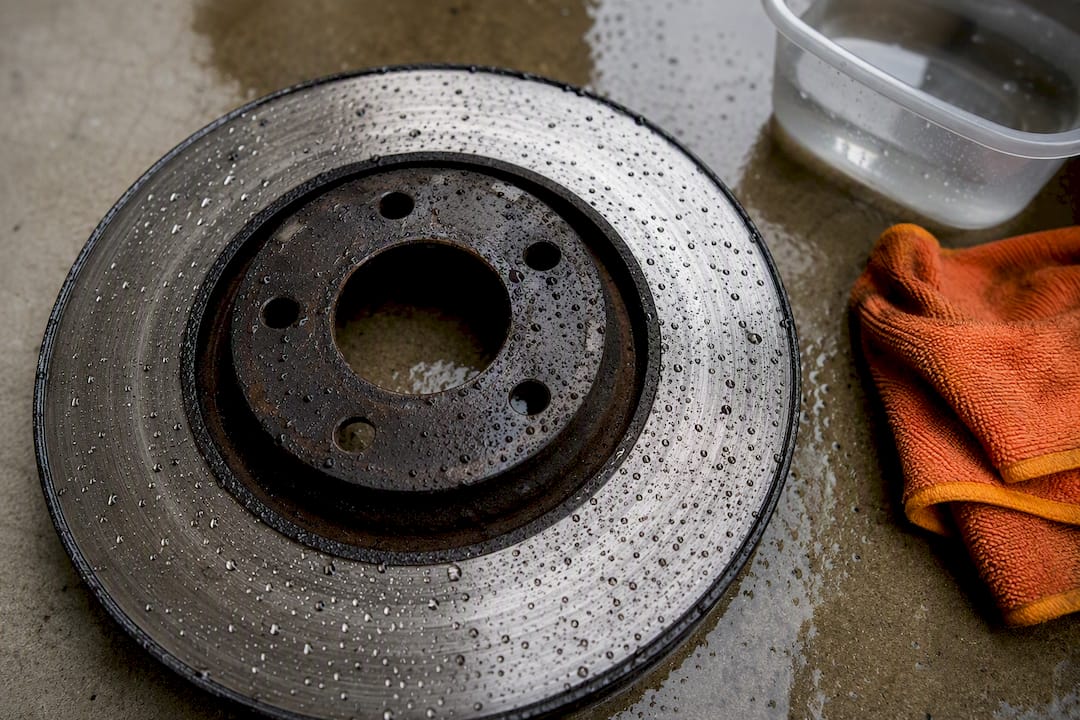
Standing water and road grit after a wash or a wet drive can leave more than rust behind. If you're chasing down moisture-related noise, it helps to understand how contaminants affect exposed metal surfaces before assuming the worst about your rotors.
When should you actually see a mechanic?
Some squeaks are cosmetic annoyances. Others are your brakes telling you they're running out of margin, and the two look similar until you know what to listen for.
Get it looked at immediately if you notice any of the following:
- Grinding metal-on-metal noise, which usually means the pads are gone and the backing plate is cutting into the rotor
- A brake warning light on the dash
- A soft, sinking, or noticeably longer-travel pedal
- Smoke or a strong burning smell after normal driving
Book service soon, but it's not an emergency, when you're dealing with:
- A squeal that hasn't faded after the normal bedding-in window
- One wheel squealing constantly while the others stay quiet
- Pulsation through the pedal, which points to warped rotors rather than pad wear
On cost, expect a wide range depending on your vehicle and whether the shop uses OEM or aftermarket parts: pad replacement is generally the cheapest fix, rotor resurfacing costs less than full rotor replacement (though many shops now recommend replacement over resurfacing on thinner modern rotors), and caliper service or replacement runs highest because of the labour involved. Ask the shop up front whether the quote includes hardware kits, what brand of pads they're installing, and what warranty covers the work.
How GarageMap helps you find and compare vetted brake shops
Once you've narrowed down the likely cause, the next step is getting a second set of eyes on it. GarageMap lets you search vetted local shops by the exact service you need, including brake inspections and repair, across a network of 128 providers. Listings show reviews, location, and services offered, so you can compare options before committing to a bay appointment instead of guessing which shop actually handles brake work well.
A quick word on trusting your ears
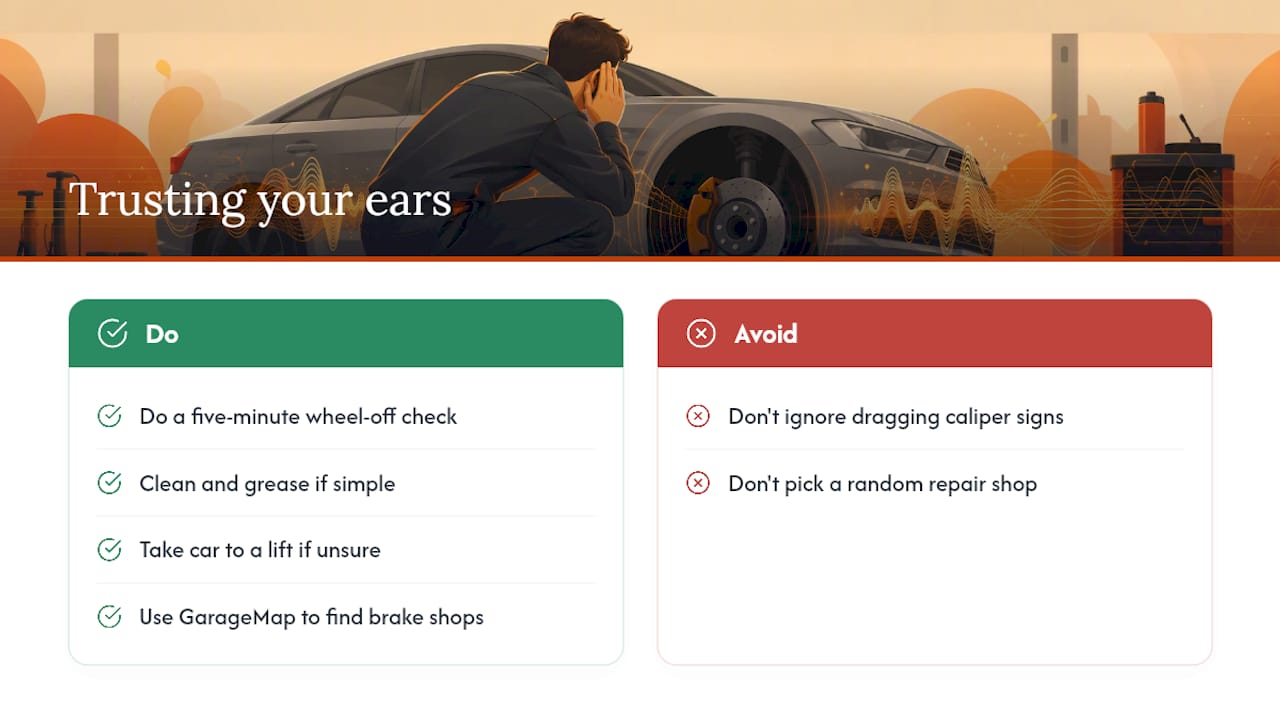
Brake noise gets dismissed too often as a nuisance, and diagnosed too aggressively the rest of the time. Both mistakes cost money. The stick-slip physics behind most low-speed squeal means a good number of these noises are genuinely harmless quirks of pad material and geometry, not a sign your car is falling apart. At the same time, the squeaks that come from a dragging caliper or missing hardware get worse and more expensive the longer they're ignored, because they wear the rotor unevenly while you wait.
The honest answer is that a five-minute wheel-off check almost always tells you more than another week of listening and hoping it stops. If the checklist above points to something beyond a quick clean and grease job, get it in front of someone who can put it on a lift, and use GarageMap to line up a shop that's actually reviewed well for brake work rather than picking one at random.
— Andrii
Find a brake shop or book an inspection through GarageMap
Diagnosing the squeak yourself only gets you halfway there. If the checklist points to a sticking caliper, worn hardware, or pads that are past their wear line, the next move is getting a shop to confirm it before it turns into a grinding noise and a bigger bill. GarageMap's brake shop listings let you compare vetted providers by reviews, location, and services offered, so you're not calling shops blind or driving to three different garages for quotes.
If you're in the Calgary area, you can search shops directly through the Calgary car repair listings, or check the Airdrie, Chestermere, or Okotoks pages if that's closer to home. Pick a shop, check what other drivers said about their brake work, and book the inspection before the noise turns into something worse.
Sources
The causes and fixes above draw on a mix of engineering explanation and repair-trade guidance. The Harvard SEAS breakdown of squeak physics covers why stick-slip vibration produces sound at low speeds. RAC Drive and Direct Brakes both detail wear indicators, moisture noise, and bedding-in timelines. Popular Mechanics explains glazing and anti-squeal adhesive technique, while BestParts covers what never belongs on a rotor or pad.
- Physics of squeak — Harvard SEAS
- Squeaky brakes: causes and solutions | RAC Drive
- How to fix squeaky brakes — Popular Mechanics
- What’s causing your brake pads to squeak? — BestParts