In Calgary, a brake line or hose repair usually lands between $150 and $500, and it climbs well past that when several rusted lines need replacing or the vehicle is a truck, a large SUV or a luxury model. The wide range comes from one question: are you replacing a single flexible hose, or running new steel line along the underside of the car? Below, we break down both, show what moves the price and explain how to compare quotes without overpaying.
TL;DR
- Local Calgary pricing guides put brake line and hose repair at roughly $150 to $500+, depending on damage and labour.
- A rough per-hose figure from a general guide is $150 to $300, and a car has four hoses.
- Full replacement of rusted lines can run higher: one owner reported a $700 quote for a complete job on a Honda with badly corroded lines.
- A leaking line is not a drive-to-the-shop situation. Tow it.
- Ask for a written, itemized quote. In Alberta, a licensed shop can't exceed an estimate by more than 10%, or $100.
Table of Contents
- What brake line work costs in Calgary
- Why the price swings so much
- Signs a brake line is failing
- If you think a line is leaking, don't drive it
- How to read a brake line quote
- Our view: why quotes beat averages
- Compare Calgary brake shops in one request
- Preventing brake line corrosion before it gets expensive
- A realistic budget plan
- FAQ
- Sources
What brake line work costs in Calgary
Brake systems have two kinds of "lines". Rigid steel lines run along the frame and underbody. Flexible rubber hoses connect them to each wheel's caliper. Shops quote them differently, so a number you hear from a friend may not describe your job.
| Job | Typical range | Source and notes |
|---|---|---|
| Brake line or hose repair, Calgary | $150 to $500+ | Calgary pricing guide, 2026; varies with damage and labour |
| Replacing one hose | $150 to $300 per hose | General guide, 2023; not Calgary-specific |
| Complete line replacement, heavy rust | About $700 (one reported quote) | Owner discussion; a single data point, not a rule |
| Brake fluid flush | From about $80 | Calgary pricing guide |
| Full brake job, compact car | $350 to $600 per axle | Same Calgary guide |
| Full brake job, truck or large SUV | $600 to $900 per axle | Same Calgary guide |
Treat these as planning figures, not quotes. Prices change, and the same guide notes luxury vehicles can pass $1,200 per axle on a full brake job.
The part itself is rarely the expensive bit. A rubber brake hose often costs $10 to $50 as a part. What you pay for is labour, the brake fluid, and the bleeding of the system afterwards.

Why the price swings so much
Two cars with a "brake line leak" can produce a $200 invoice and a $900 one. Here is what separates them.
One hose or the whole run
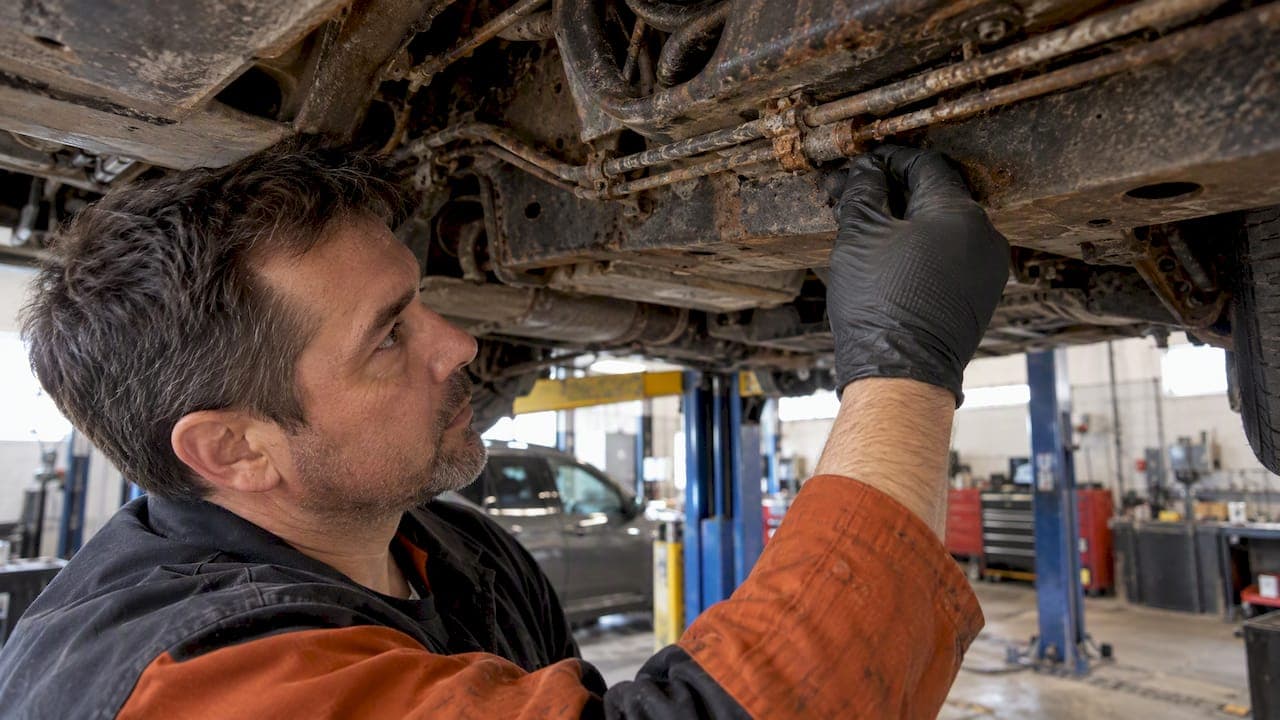
A perished rubber hose at one wheel is a short job. A rusted steel line that has to be routed from the master cylinder to the rear axle is not. The more of the underbody a technician has to work along, the more labour hours land on the bill.

Rust, seized fittings and the Calgary winter
Calgary's cold and heavy road salt accelerate corrosion on under-vehicle components like brake lines. Corroded fittings often seize or round off, which turns a simple swap into a slow one. This is why older vehicles that have lived through many Calgary winters tend to sit at the top of the range.
Vehicle type
Longer, more complex routing on trucks and large SUVs means more material and time. Some models also have unusual connections, and make and model can add labour time. Luxury and European vehicles often need specific parts.
Parts quality and shop type
According to local Calgary mechanics, the gap between an independent shop and a dealership often comes down to overhead and OEM-only versus aftermarket parts. Neither is automatically wrong. What matters is that you know which one you are being quoted.
Add-ons that appear once the wheels are off
Many drivers assume a brake job is just pads and rotors, but a failed line or a seized caliper can quickly escalate the bill. If you are already planning pad work, it is cheaper to have the lines inspected at the same visit. Our guides on brake pad costs in Calgary and rotor replacement in Calgary show what those jobs run on their own.
Signs a brake line is failing
You don't need to be a mechanic to spot the warning signs. Look and listen for:
- A brake pedal that feels soft, spongy or sinks toward the floor.
- Longer stopping distances than you are used to.
- A brake warning light on the dash.
- Fluid under the car, near a wheel or along the frame. Brake fluid is typically clear to amber and slippery.
- A low brake fluid level in the reservoir with no pad wear to explain it.
- Visible rust, flaking or wet spots on metal lines if you can see them on a lift or while changing tires.
Any of these deserves an inspection. A pedal that sinks or goes to the floor means stop driving.
If you think a line is leaking, don't drive it
Driving with a leaking or broken brake line is extremely dangerous and not recommended under any circumstances. A break in the hydraulic system means reduced braking and longer stopping distances, which raises the risk of a crash. If you suspect a leak, have the vehicle towed to a repair shop. A tow is a small cost next to a collision.
Two more points where the shortcut tempts people:
- Don't patch it. Brake tape and generic repair kits are emergency measures to reach a shop at most, not a repair. A leaking line needs proper replacement.
- Think hard before DIY. Experts caution that skimping on parts or doing hydraulic work without expertise can compromise the whole vehicle's stopping ability. If you are not trained to flare lines and bleed a system, this is a job for a licensed technician.
If the car still brakes normally but you have found rust or a weeping fitting, call a shop the same day and ask whether it is safe to drive to them. Let a qualified technician make that call, not a forum thread.
How to read a brake line quote
A good quote lets you compare shops on the same footing. Ask each shop to put these in writing:
- Scope: which lines or hoses are being replaced, and on which wheels or axle.
- Line type: custom-bent, one-piece lines are the better standard. Be wary of shops that join sections with many compression fittings, since one-piece lines are safer and more durable than spliced setups.
- Parts: OEM or aftermarket, new or reconditioned. Alberta's regulator says businesses should tell you whether parts are original, new, used or reconditioned.
- Labour: hours and rate, shown separately from parts.
- Fluid and bleeding: whether a full brake fluid flush is included.
- Inspection findings: ask the shop to inspect all lines during any brake service, particularly given Calgary's road salt.
Getting itemized quotes from several local shops helps you pay for the work you need without unnecessary markups.
Your rights under Alberta rules
Alberta's motor vehicle regulator, AMVIC, says that if you ask for an estimate you should receive it in writing. A shop is only required to provide one if you ask, so ask. A licensed business cannot exceed the estimate by more than 10%, and that increase cannot add up to more than $100. You also have to agree to additional costs before the extra work starts.
That matters for brake lines, where a technician may find a second corroded line once the first is off. If the new total would pass the cap, the shop must come back to you first.
Our view: why quotes beat averages
The numbers above are useful for setting expectations, but no average can tell you what your car needs. Brake line jobs are a good example: the real cost depends on what a technician sees under your vehicle, and two honest shops can scope the same leak differently.
What we see on the platform is that most drivers lose time, not money, at the start. They phone shop after shop, describing the same symptom, and get vague ballparks that don't compare. A written quote from a shop that has described exactly which lines it will replace, and with what, is worth far more than a phone guess.
So our advice is simple. Describe the symptom once, collect itemized quotes, and compare scope before price. If one quote is far lower than the rest, check whether it covers the same lines and a fluid bleed. And if rust is the cause, ask the shop to look at the rest of the system while it is there, because Calgary winters rarely corrode just one line.
Brakes are not the place to chase the bottom of the range. Pick the shop that explains the work clearly, puts it in writing and is licensed.
— Andrii
Compare Calgary brake shops in one request
GarageMap lists vetted shops across Calgary, Airdrie, Chestermere and Okotoks. For brake work you can compare quotes from 103 Calgary brake shops with one inquiry, instead of contacting each shop one by one. You get quotes from the garages themselves, not generic estimates. Prefer to stay close to home? There are also pages for NW Calgary, NE Calgary and Okotoks. Living north of the city? Our Airdrie brake repair cost guide covers local pricing there.
When you request quotes, say plainly that you suspect a brake line problem, mention any leak or pedal change, and ask for line type, parts and labour to be itemized.
Preventing brake line corrosion before it gets expensive
You can't stop Calgary from salting its roads, but you can slow the damage and catch it early.
- Rinse the underbody. Wash the undercarriage after salt-heavy weeks in winter, especially around wheel wells and the frame.
- Look at the lines when the wheels come off. Seasonal tire swaps are a free chance to ask the shop to check lines and hoses for rust, cracking or seepage.
- Protect what you can. There are products and habits aimed at reducing damage from salt; this overview of road salt protection for cars explains what works on exterior surfaces, though it won't replace a technician checking the brake system itself.
- Replace fluid on schedule. Old fluid is a separate issue from line corrosion, but a flush is one of the cheaper brake services, from about $80 locally.
- Don't wait for failure. Regular inspection is the most effective way to avoid emergency, high-cost repairs.
Some recalls also involve brake lines. A Transport Canada notice for certain Kia vehicles, for example, required a second inspection after an earlier campaign inspection may not have been done correctly. Check your own vehicle's VIN against Transport Canada's recall database before assuming a line failure is only down to rust.
A realistic budget plan
Here is how the numbers might play out, using the ranges above.
- One leaking hose, otherwise healthy car: plan on the lower to middle part of the $150 to $500 range, plus fluid bleeding if not included.
- Several rusted lines on an older vehicle: expect the upper end or beyond, with reported complete replacements near $700 and sometimes more on trucks and larger SUVs.
- Brake line plus pads and rotors in the same visit: your total will be the line work plus a per-axle brake job of about $350 to $600 on a compact car or $600 to $900 on a truck or large SUV. Having it all done together can save you a second visit, though it is worth asking each shop how they price the combination.
If a quote is more than you expected, don't just negotiate down. Ask the shop to show you the damaged line, then get a second written quote. The difference between a good and a bad quote is usually scope, not the hourly rate.
FAQ
Can I drive with a broken brake line?
No. A leaking or broken line compromises the hydraulic system, which means reduced braking and longer stopping distances. If you suspect a leak, have the vehicle towed to a shop.
Why are brake lines so expensive to replace?
The parts are cheap; the labour is not. Lines have to be routed along the underbody, rusted fittings often seize, and the system must be bled and refilled with fluid afterwards. In Calgary, road salt makes corroded fittings more common, which adds time.
How much does it cost to flush brake fluid in Calgary?
A routine flush starts at about $80, according to a Calgary pricing guide. Shops price it differently, so confirm whether bleeding is included when you are quoted for line work.
Can I fix a leaking brake line with a repair kit or tape?
Not as a lasting fix. Those products are emergency measures to get to a shop at best, and leaking lines need proper replacement to keep the system sealed.
Can a shop charge more than its estimate?
Only within limits. In Alberta, a licensed repair business can't exceed an estimate by more than 10%, up to a maximum of $100, and you must agree to additional work first.
Sources
- Brake Repair Cost in Calgary: A Complete Breakdown
- How Much Do Brake Lines Cost, Synchrony
- $700 for a complete brake line replacement? CarGurus.ca
- Brake Repair Cost in Canada (2026 Guide)
- Typical cost of a brake job in Calgary, My Calgary Mechanic
- Brake Line Hose Replacement Costs, AutoZone
- Repairing a vehicle, AMVIC
- Vehicle service and repair consumer guide, AMVIC (PDF)
- AMVIC's top consumer advice
- Transport Canada Recall 2024163, Kia