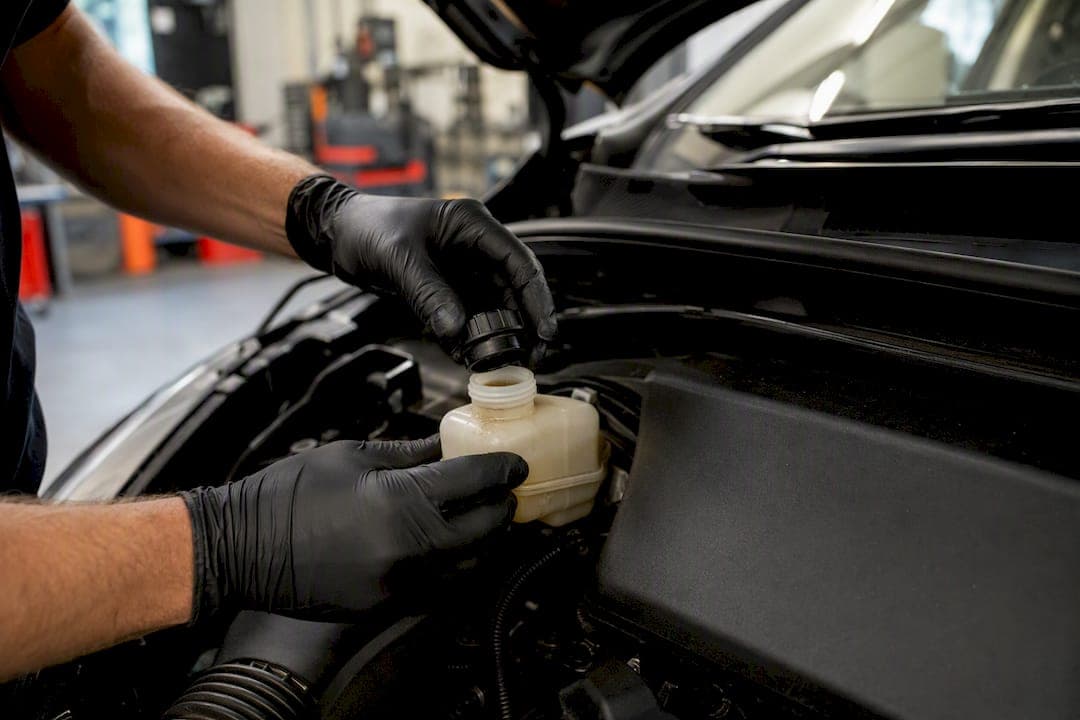
Most vehicles need a brake fluid change every two to three years, or roughly 30,000 to 48,000 kilometres, whichever comes first. That baseline comes with one caveat: your owner's manual overrides it. Check the manual first, follow whichever milestone hits sooner, and shorten the schedule if you tow, track, or drive in a humid climate. A moisture test settles any doubt about whether the fluid still meets spec.
TL;DR:
- Brake fluid should generally be changed every two to three years, but the specific interval depends on the owner's manual and driving conditions.
- Moisture absorption reduces the boiling point of brake fluid significantly, increasing the risk of vapour lock and corrosion in braking components.
- Moisture test strips and electronic testers provide more accurate assessments of brake fluid quality than relying solely on reservoir color.
- Severe driving conditions, such as towing, mountain driving, or high humidity climates, warrant more frequent fluid changes, sometimes as often as annually.
- Proper disposal of used brake fluid is essential, and professional shops handle disposal safely, preventing environmental contamination.
Table of Contents
- Brake fluid change interval: what manufacturers actually recommend
- Why brake fluid degrades: moisture, boiling point and vapour lock
- How to check whether your brake fluid needs replacing
- When to shorten the brake fluid change interval
- What a proper brake fluid flush includes and what it costs
- A quick maintenance checklist for staying on schedule
- Finding a shop that actually tests before it flushes
- Environmental considerations: disposing of used brake fluid properly
- Why the "just check the colour" advice needs to die
- Book a brake fluid flush without the guesswork
- Sources
Brake fluid change interval: what manufacturers actually recommend
There's no single number every automaker agrees on. Honda's service documentation calls for replacing brake fluid every 2 years or 30,000 miles (48,000 km), whichever arrives first, for both the braking and ABS systems. Other brands land in a similar window but frame it differently, and some barely mention it at all in the standard schedule.
The "whichever comes first" rule matters more than people think. A driver who puts on 8,000 km a year might hit the two-year mark long before they'd ever reach 30,000 km, and the calendar wins. Moisture creeps into brake fluid whether the car sits in a garage or racks up highway kilometres, so time alone can trigger the swap.
Owner's manuals vary widely on this point:
- Some manufacturers specify annual replacement under severe service classifications.
- Others stretch to two or three years, or list only a periodic inspection with no hard replacement date.
- A handful of manuals leave brake fluid off the maintenance schedule almost entirely, relying on inspection instead.
If your manual is vague, silent, or long gone, default to the 2 to 3 year window and have the fluid tested at your next service. That's cheaper insurance than guessing.
Why brake fluid degrades: moisture, boiling point and vapour lock
Brake fluid is hygroscopic. It pulls moisture out of the air through hoses, seals, and the reservoir cap over time, and that moisture doesn't stay separate. It mixes directly into the fluid.
That absorbed water changes how the fluid behaves under heat. Hard, sustained braking, like riding the brakes down a long grade, generates enough heat to boil contaminated fluid inside the lines. Once it boils, it forms vapour bubbles, and vapour compresses under pedal pressure instead of transmitting force to the calipers. That's vapour lock, and it shows up as a soft, sinking pedal right when you need stopping power most.
Pro Tip: If your brake pedal ever feels lower than usual after a steep descent, don't write it off as "warm brakes." That's a textbook vapour lock warning sign, and it's worth an inspection before your next drive.
The numbers back up how serious this is. A DOT 4 fluids dry boiling point sits around 446°F, but once it absorbs enough moisture, that boiling point can fall to roughly 311°F. That's a drop of well over 100 degrees, achievable with ordinary time and humidity, not abuse. Contaminated fluid also corrodes the metal components it touches, attacking calipers, lines, and the master cylinder from the inside.
How to check whether your brake fluid needs replacing
Reservoir colour tells you less than most drivers assume. Fluid darkens naturally with age even when it's still within spec, and clean-looking fluid can already be dangerously saturated with moisture. Colour is a rough clue at best, never a verdict on its own.
A few better options exist:
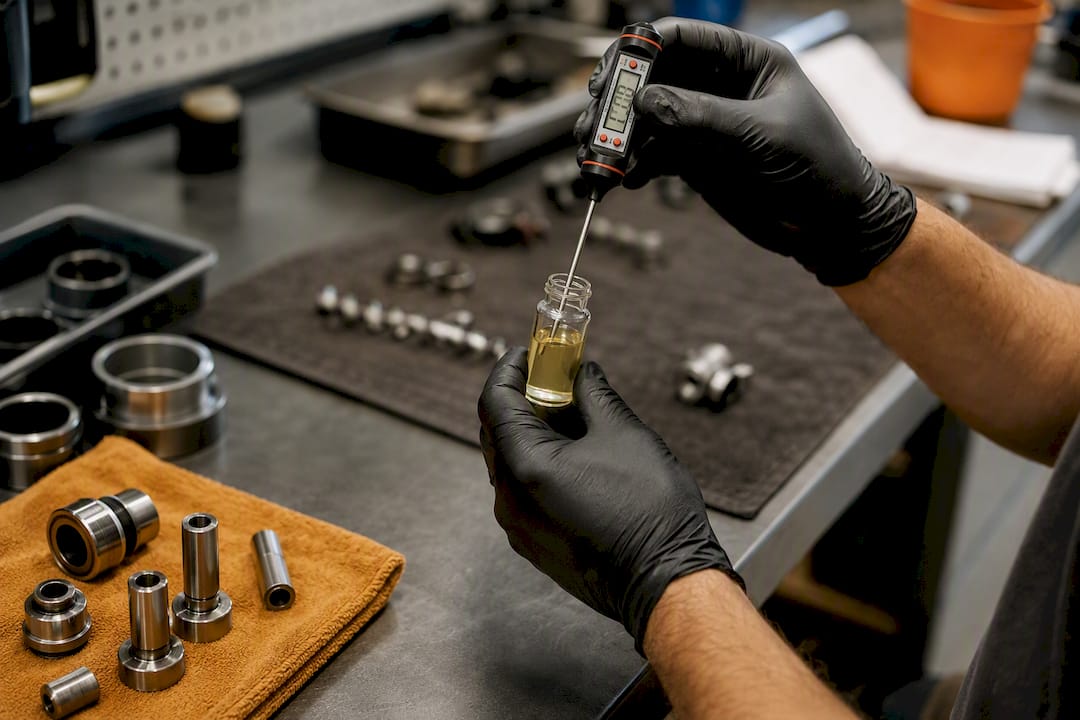
- Inexpensive moisture test strips, sold at most auto parts counters, dip into the reservoir and change colour based on water content. They're a decent early warning but not lab-accurate.
- Electronic moisture testers, the kind shops use, give a more reliable percentage reading and are worth asking for by name.
- Professional testing at a shop combines the electronic reading with a visual check of the whole system, including lines and calipers.
The threshold that matters: water content approaching 3% is considered close to the danger zone, and that's your cue to schedule a flush regardless of when the fluid was last changed.
Don't wait for a test if you notice symptoms directly. A spongy pedal, longer pedal travel before the brakes bite, or a pedal that sinks slowly under steady pressure all warrant an inspection immediately, not at your next scheduled visit.
When to shorten the brake fluid change interval
Some driving patterns burn through brake fluid's protective margin faster than the calendar accounts for. If any of these describe your driving, treat the standard 2 to 3 year window as the outer limit, not the target.
- Towing or hauling heavy loads regularly. Extra weight means more braking force and more heat generated at every stop, which accelerates fluid breakdown.
- Mountain or steep-grade driving. Long descents with sustained braking push fluid temperatures higher than flat-road commuting ever does.
- Track days or aggressive performance driving. This is the closest thing to a stress test for brake fluid, and shops generally recommend annual replacement, sometimes every 12 to 18 months, for cars used this way.
- Humid climates. Fluid absorbs ambient moisture faster where relative humidity stays high most of the year, so the chemical clock runs faster even with light driving.
What a proper brake fluid flush includes and what it costs
A full flush pushes new fluid through the entire system, forcing out every drop of old fluid from the master cylinder down to each caliper. A top-up, by contrast, just adds fluid to the reservoir and does nothing to remove the moisture-contaminated fluid already circulating. If a shop offers only a top-up when you've asked about a change, that's not the same service.
DOT ratings matter too. DOT 3, DOT 4, and DOT 5.1 are glycol-based and generally compatible with each other in a pinch, but DOT 5 is silicone-based and should never be mixed with the others. Always use the type specified in your owner's manual.
Cost depends on fluid type, labour rates, and vehicle complexity, so a fair quote for a straightforward sedan will differ from one for a vehicle with an electronic parking brake or complex ABS module. Before agreeing to a price, ask:
- Is this a full flush or a top-up?
- What DOT type will you use, and does it match my manual's spec?
- Can you provide the moisture test result before and after the service?
A quick maintenance checklist for staying on schedule
- Write down the date and odometer reading every time fluid is changed or tested, whether on paper, in your phone, or in a maintenance app.
- Glance at the reservoir level monthly. A dropping level without a fresh top-up can point to a leak, not just normal wear.
- Have the fluid visually inspected at each annual service, even between scheduled flushes.
- If your pads or rotors are due, ask the shop to combine that job with a fluid flush. Both jobs involve opening the same system, so it often saves labour cost to do them together.
| Task | How often |
|---|---|
| Reservoir level check | Monthly |
| Visual/professional inspection | Annually |
| Fluid change (baseline) | Every 2 to 3 years or 30,000 to 48,000 km |
| Fluid change (severe use) | Every 12 to 18 months |
Finding a shop that actually tests before it flushes
Not every shop tests moisture content before recommending a flush, and that's the detail worth confirming before you book. GarageMap compares 128 vetted shops across Calgary, Airdrie, Chestermere, and Okotoks, with focused search that filters specifically for brake service providers instead of a generic mechanic list. Before booking, ask whether the shop performs electronic moisture testing, which DOT fluid they'll use, and whether the job is a full flush.
Environmental considerations: disposing of used brake fluid properly
Used brake fluid is hazardous waste, and it doesn't belong in a household drain, a storm sewer, or the garbage. Glycol-based fluid is toxic to soil and waterways, and even small quantities can contaminate groundwater if poured onto the ground or into a ditch.
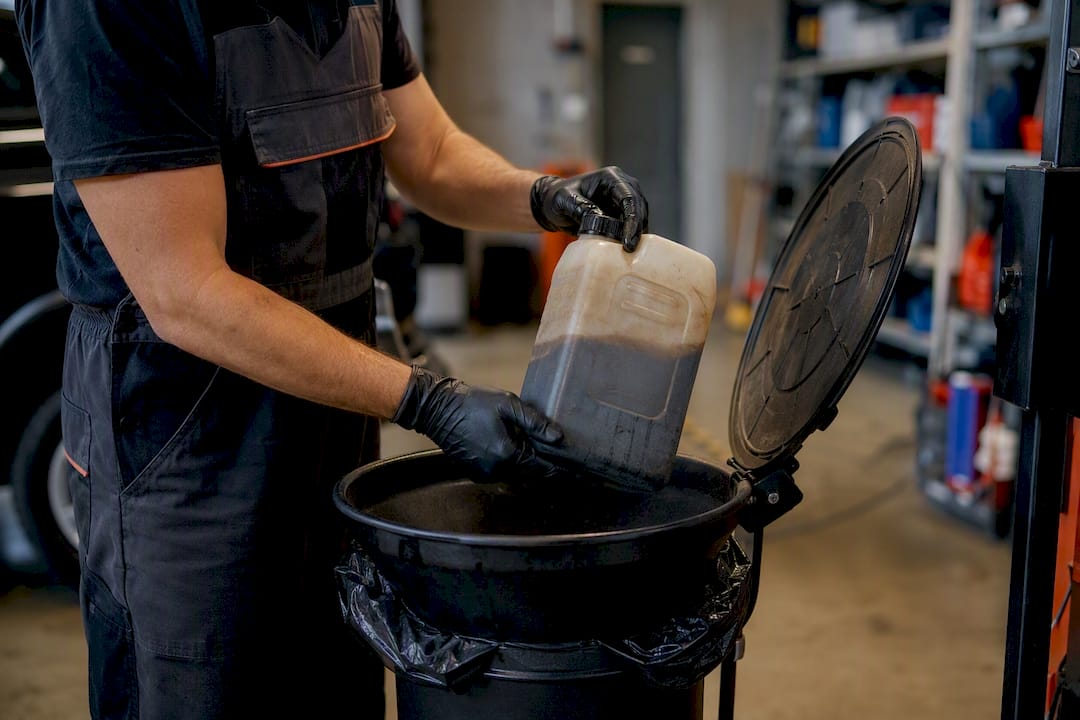
The straightforward fix is to let whoever performs the flush handle disposal, since licensed shops are set up to collect used fluid and send it to a certified recycling or hazardous waste facility. That's one advantage of paying for a professional flush rather than doing it in your own driveway: the shop absorbs the disposal responsibility along with the labour.
If you do change your own fluid, most municipalities operate household hazardous waste depots that accept used automotive fluids, usually the same ones that take used motor oil and antifreeze. Never mix brake fluid with other automotive fluids in the same container, since some combinations react or complicate recycling. Keep it in a sealed, labelled container until it reaches a proper drop-off point.
Old brake fluid that's absorbed significant moisture also isn't something to reuse or "top up" a system with later. Once it's out of the reservoir, treat it as waste, not backup supply.
Why the "just check the colour" advice needs to die
The most persistent piece of bad advice on this topic is that you can eyeball brake fluid and know whether it's due for a change. It's not true, and it's not a minor nuance. Clear fluid can already carry enough moisture to knock 100 degrees off its boiling point, while darker fluid might still test fine. Colour tells you the fluid has aged. It says nothing about whether it's safe.
The manufacturer's schedule deserves more weight than most drivers give it, too. People treat the owner's manual as a suggestion and lean on generic "every couple of years" advice instead, but OEM intervals exist because engineers tested that specific brake system, that specific fluid, and that specific seal material together. When the manual and the internet disagree, trust the manual, then confirm with a moisture test if you're unsure.
If there's one habit worth building, it's testing before assuming. A five-minute moisture check costs far less than diagnosing corrosion damage later, and it turns a guessing game into a documented decision.
— Andrii
Book a brake fluid flush without the guesswork
Once you know your fluid's overdue, the harder part is finding a shop that does the job right instead of just topping off the reservoir and calling it done. GarageMap solves that specific problem: it lets you filter its directory of 128 vetted shops across Calgary, Airdrie, Chestermere, and Okotoks by service type, so you land directly on shops that list brake fluid flushes rather than scrolling through general listings that may or may not offer it.
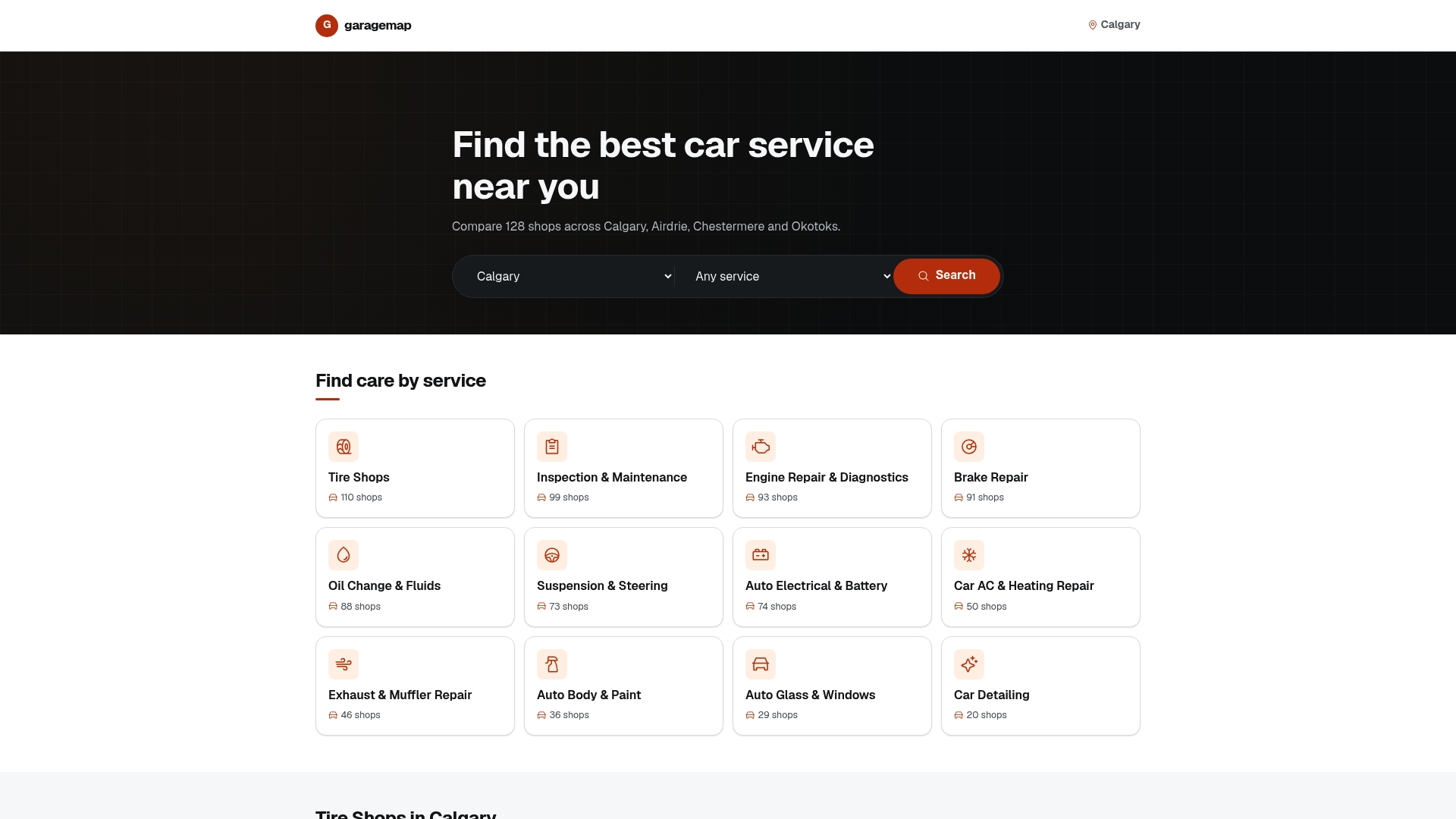
Search the brake shop directory to compare shops by service and location before you call anyone. If you're also due for pads, rotors, or a general inspection, GarageMap's Calgary listings make it easy to bundle that work with the same visit. Start your search on GarageMap and book a shop that documents its moisture test results instead of guessing.