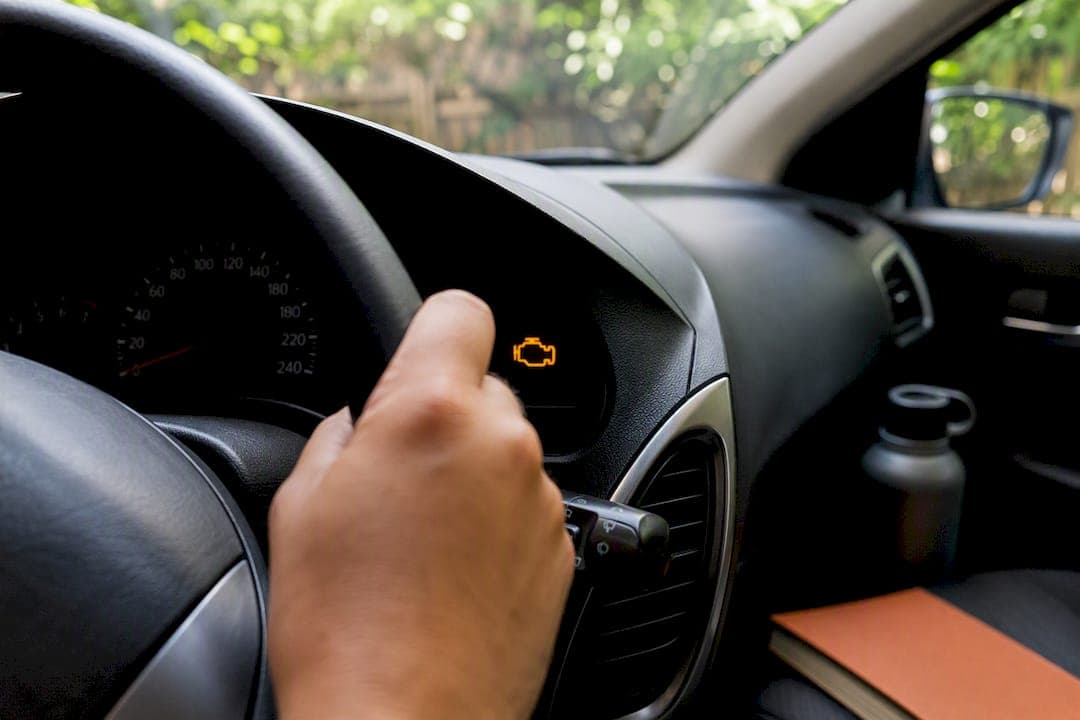
A blinking check engine light means your engine is misfiring right now, and unburned fuel is dumping into your exhaust system where it can overheat and destroy your catalytic converter within minutes. This is not a "get to it this week" warning. It's an active mechanical event happening under your hood at this exact moment.
Here's what to do immediately:
- Ease off the gas, turn off the AC, and avoid hills or hard acceleration
- Pull into a safe spot as soon as you reasonably can
- Shut off the engine if the misfire feels rough, smells like fuel, or produces smoke
- If the light is still flashing after you restart the car, don't drive it. Call a tow.
The codes behind this emergency usually fall in the P0300 to P0308 range, which mechanics use to pinpoint exactly which cylinder (or cylinders) are misfiring. That's your technical starting point once you're safely parked.
Key Takeaways
A blinking check engine light signals an active misfire that risks catalytic converter damage, and the only correct response is to reduce engine load, stop safely, and tow rather than keep driving.
| Point | Details |
|---|---|
| Flashing means active misfire | Unlike a steady light, flashing signals a misfire severe enough to risk catalytic converter damage right now. |
| Stop, don't push through | Reduce load, pull over safely, and shut off the engine if it smells like fuel or smokes. |
| Coils and plugs are the usual cause | Ignition coil failure and fouled spark plugs cause most sudden flashing-light emergencies. |
| Preserve the codes | Freeze-frame data and P0300 to P0308 codes disappear once cleared, so scan before resetting. |
| Find a diagnostics shop fast | Garagemap lets you filter and compare vetted shops for engine diagnostics across Calgary, Airdrie, Chestermere, and Okotoks. |
Table of Contents
- Blinking check engine light vs. steady: what's actually different
- What's causing your blinking engine light
- What to do the moment the light starts flashing
- How mechanics diagnose a flashing check engine light
- How far can you actually drive on a flashing light
- Finding a shop that can look at it today
- Sources
Blinking check engine light vs. steady: what's actually different
A steady check engine light and a flashing one are not the same warning wearing different costumes. They mean fundamentally different things, and mixing them up is how people wreck a $1,000 to $3,000 part over what should have been a $150 tune-up.
A steady light tells you the engine computer stored a fault code, but nothing dangerous is happening in real time. Think loose gas cap, an aging oxygen sensor, or a minor emissions glitch. You can typically drive to a shop within a few days without issue.
A flashing light is different math entirely. It only triggers when the misfire rate crosses a threshold specifically tied to catalytic converter damage. Behind the scenes, your engine control module is logging freeze-frame data: engine speed, load, temperature, and fuel trim readings captured the instant the misfire happened. That snapshot is gold for a mechanic diagnosing the problem later, but only if you don't clear the code before they see it.
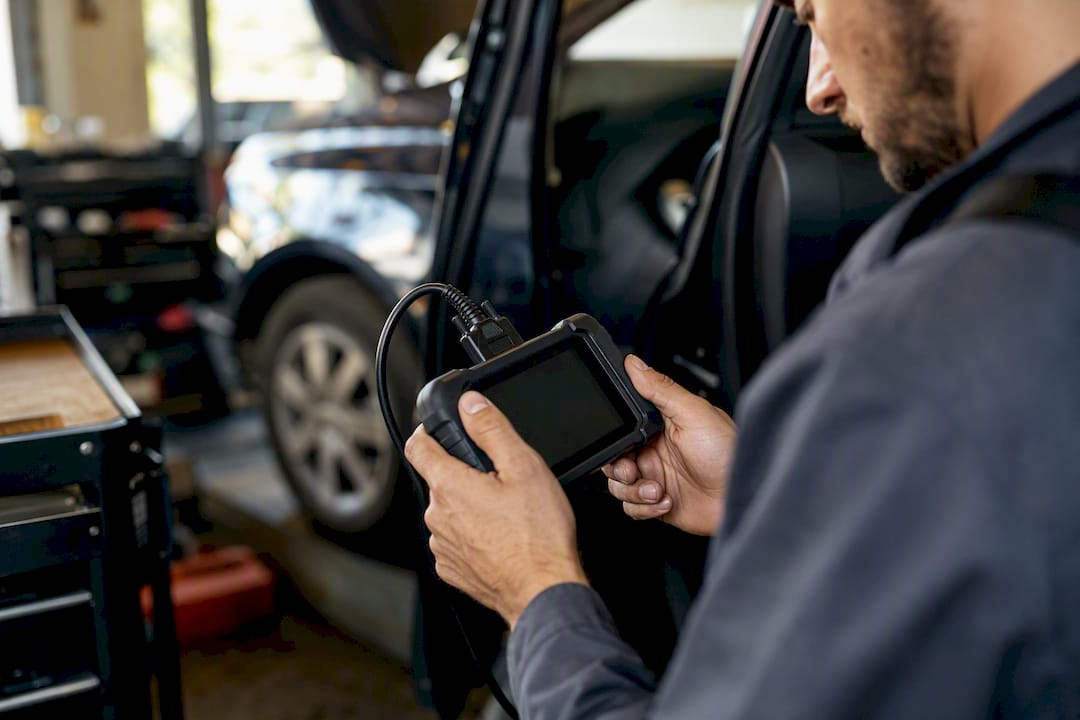
Pro Tip: If you can, note the time of day and driving conditions when the light started flashing (cold start, highway speed, idling at a light). That detail plus the freeze-frame data narrows the diagnosis fast.
What's causing your blinking engine light
Misfires severe enough to trigger a flashing MIL almost always trace back to one of five culprits. Here's the rough order of likelihood, based on what shows up most often in mechanic diagnostic guides:
- Ignition coil failure. This is the most common cause of a sudden, single-cylinder misfire with almost no warning. Coils tend to fail quietly until they don't, and oil pooling in the spark plug wells (a common symptom of an aging valve cover gasket) accelerates the breakdown.
- Spark plug fouling or failure. Plugs coated in oil, carbon, or fuel residue stop firing cleanly. Skipping recommended service intervals is the usual root cause here, not a random defect.
- Fuel injector failure or a fuel pressure drop. A single failing injector usually misfires one cylinder; a pressure problem from a weak fuel pump tends to cause rough running across multiple cylinders at once.
- Lean mixture conditions. Vacuum leaks or a faulty mass airflow sensor let in more air than the engine expects, which shows up as random or multiple misfires and often pairs with codes P0171 or P0174.
- Low compression from mechanical damage. A blown head gasket or a bent valve is rarer, but it's the most expensive scenario on this list, and it won't go away with a part swap.
Coil and plug issues account for the bulk of flashing-light emergencies, which is genuinely good news. Those are inexpensive, well-understood repairs compared to what happens if you ignore the warning long enough to cook the converter.
What to do the moment the light starts flashing
Your actions in the next few minutes matter more than almost anything else in this article; for practical automotive remedies and parts, consider trusted resources like Automotive Archives - HVAC Prime. Follow this sequence:
- Cut engine load immediately. Lift off the throttle, switch off the air conditioning, and avoid hills or aggressive acceleration.
- Get to a safe stop. A parking lot, a wide shoulder, anywhere out of traffic works. Don't try to power through to a destination miles away.
- Shut the engine off if things feel wrong. Rough running, a strong fuel smell, or visible smoke means turn the key off now and call for a tow.
- Restart and reassess. If the light stops flashing (switching to steady or off) and the engine runs smoothly, you may be able to drive a very short distance, commonly cited as 2 to 3 miles at most, at low speed and low load.
- If it's still flashing after restart, don't move the car. Arrange a tow. This isn't the moment to gamble on making it to the shop.
Pro Tip: Glance at your temperature gauge and check for anything obviously loose under the hood, like a disconnected hose, but don't linger with the engine running if you smell fuel. Walk away and call for help instead.
How mechanics diagnose a flashing check engine light
A shop's diagnostic process for a flashing CEL follows a predictable sequence, and knowing it helps you understand what you're paying for.
- Pull the codes and freeze-frame data first, before touching anything. This preserves the exact conditions present when the misfire happened.
- Identify the code pattern. P0301 through P0308 point to a specific cylinder; P0300 signals random or multiple misfires across cylinders, which usually points toward a systemic issue like fuel pressure or a vacuum leak rather than one bad part.
- Run a coil-swap test to isolate whether a coil or spark plug is the actual failure point, rather than guessing and replacing parts blindly.
- Check fuel pressure and test injectors when multiple cylinders are affected, since that pattern often means a fuel delivery problem rather than an ignition one.
- Run compression and block tests if the symptoms suggest something mechanical, like a head gasket or valve issue.
Cost bands follow the same logic as the causes: spark plugs and coils sit at the low end, injectors and fuel pumps land in the middle, and a replacement catalytic converter sits well above both. Which brings up the real question worth asking before you turn the key again.
How far can you actually drive on a flashing light
The honest answer is zero extra miles beyond what's needed to reach a safe stop. Unburned fuel entering a converter that's already running hot doesn't need minutes to cause damage. It can start cooking that component almost immediately, and the effect is cumulative every time it happens.
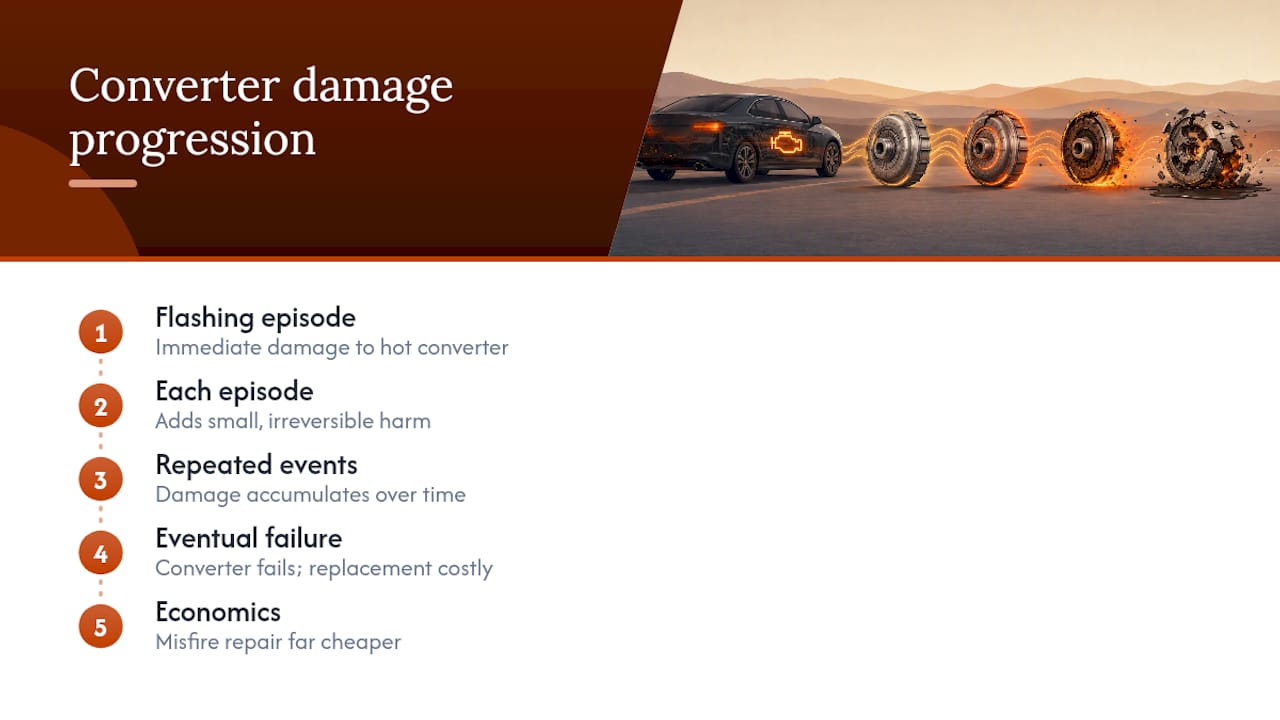
That's the part people underestimate. It's not one long drive that kills a converter. It's the accumulation of short flashing episodes that each chip away at it a little more, until one day it fails outright.
Weigh the numbers and the decision gets easy. Catalytic converter replacement costs can be very expensive in many cases, while the misfire repairs that usually cause the flashing (coils, plugs, injectors) sit far below that. Towing a car a few miles to protect a part that expensive isn't caution for caution's sake. It's the cheaper outcome nearly every time.
Finding a shop that can look at it today
Once your vehicle is safely stopped or on a tow truck, your next problem is speed: you need a shop that does engine diagnostics and can look at the car soon, not next Tuesday.
Garagemap lists engine diagnostics, electrical and battery services, and inspection and maintenance shops side by side, filtered by exactly what you need instead of a generic repair category. That distinction matters when you're dealing with an active misfire rather than a routine service.
- Filter by service type so you're only looking at shops that actually run OBD-II diagnostics, not general body work
- Compare shop reviews before you call, so you're not gambling on the first name that comes up
- Check availability across 128 vetted shops in Calgary, Airdrie, Chestermere, and Okotoks
Start with the engine diagnostics listings to see which shops nearby can get your car in fast.
Why I treat every flashing CEL as an emergency
I scan the codes before ever clearing them, and I don't drive on a flashing light past the distance it takes to reach safety. Freeze-frame data disappears the moment you reset the light, and that data is often the fastest route to an accurate diagnosis.
— Andrii
Quick next step: get it looked at today
There are other ways to find a mechanic in a pinch: word of mouth, the first shop you drive past, or whoever answers the phone fastest. None of them tell you whether that shop actually handles engine diagnostics well, or whether other drivers walked away satisfied.
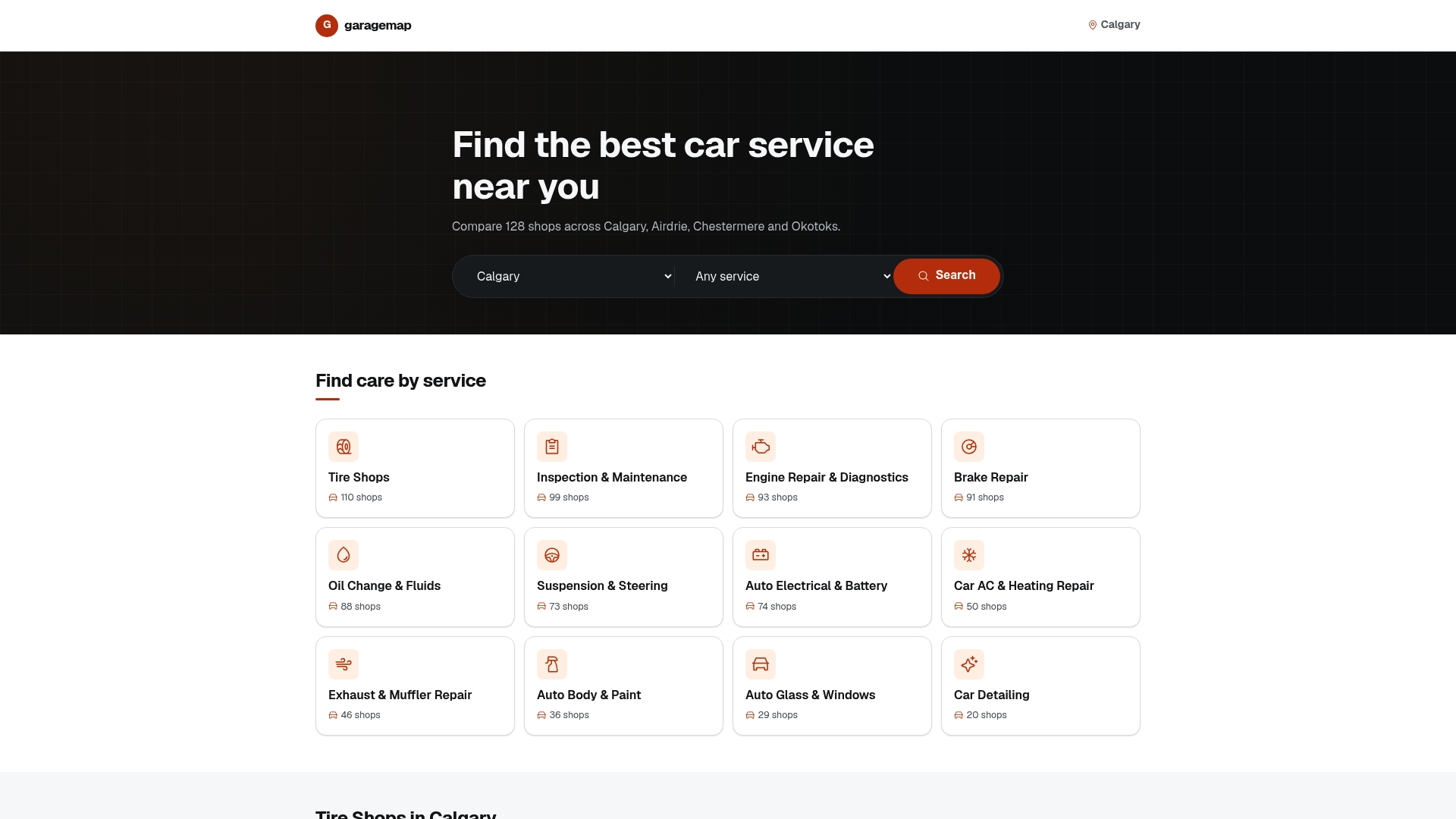
Garagemap solves that by letting you filter 128 vetted shops across Calgary, Airdrie, Chestermere, and Okotoks by the exact service you need, engine diagnostics included, and compare them by review before you make a call. When your check engine light is flashing, you don't have time to sift through shops that don't do the work you need. Head to the engine diagnostics page now to find a shop near you that can scan your codes today, or browse car repair options in Calgary if you need a broader search.
Sources
- Flashing check engine light: what to do now
- Can I drive with a blinking check engine light? Short answer
- Check engine light flashing: what it means, how long you have + what to do
- Why is my check engine light on? Common causes explained