
If a jump start gets your car running and it keeps running once the cables come off, the battery was likely the problem. If the engine dies again within a few minutes, suspect the alternator. No crank at all, or just a clicking sound, usually points to a dead battery, a bad starter, or a loose connection. If the car stalls while driving or you smell anything burning, stop and get it looked at rather than continuing to drive.
TL;DR:
- Jump-start tests can distinguish whether the battery or alternator is at fault, but a failing alternator often causes repeated dead batteries despite new replacements.
- Voltage readings above 13.8 volts with the engine running indicate a healthy charging system, while near 12.6 volts at rest suggest a weak or failing battery.
- Visual and auditory clues such as a whining alternator noise, corroded terminals, or dimming headlights help identify underperforming alternators.
- Mechanics should perform both a battery load test and an alternator output test before replacing parts, to avoid unnecessary spending.
- Drivers should get a proper diagnostic with a multimeter and jump-start observation before buying a new battery or alternator, especially if experiencing repeated starting issues.
Table of Contents
- The 30 to 60 second decision flow
- Signs of a failing battery
- Signs of a failing alternator
- Safe home testing: jump-starts and multimeter checks
- When to call a mechanic
- Finding a shop that diagnoses this correctly
- A practitioner's take on getting this right
- Book a diagnostic before you buy a part
- Sources
- FAQ
The 30 to 60 second decision flow
You don't need a repair manual to narrow this down. Four quick checks, done in order, will tell you almost everything you need to know before you call anyone.
- Try to start the car. No crank at all points toward the battery, a corroded connection, or a failed starter. A slow, groaning crank usually means low battery voltage. If it starts and then immediately stalls, that's a different problem, often fuel or electrical, worth mentioning to a technician.
- Attempt a jump start. If the engine catches and runs smoothly once you disconnect the cables, the battery was almost certainly too weak to start the car on its own. If it runs briefly then dies, the alternator is likely failing to recharge the battery fast enough to keep the engine going.
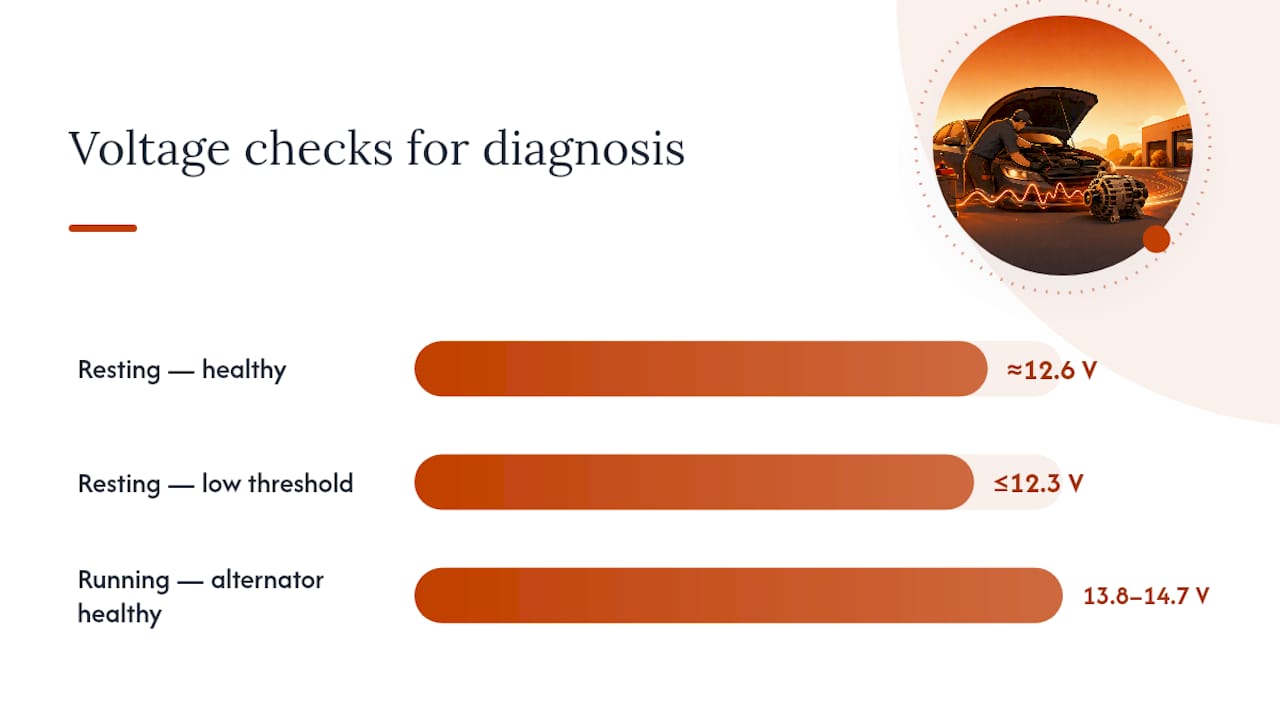
- Check voltage with a multimeter, if you have one. With the engine off, a healthy battery reads about 12.6 volts. With the engine running, a properly charging system reads a voltage reading higher than resting voltage, typically between about 13.8 and 14.7 volts. A reading that stays near 12.6 volts with the engine running is a strong signal the alternator isn't charging.
- Look and listen. Corroded or loose terminals, a cracked or slipping serpentine belt, and a whining noise from the alternator pulley are all visual and audible clues worth checking before you assume anything.
Two things can throw off this whole process: a parasitic drain (something left on overnight, draining the battery even when the car is off) and a failing starter motor, which can mimic a dead battery even when the battery itself is fine.
Signs of a failing battery
A battery on its way out tends to announce itself gradually, then fail all at once, usually on the coldest morning of the year. Watch for these signs:
- Clicking when you turn the key, without the engine turning over
- Slow, laboured cranking that gets worse in cold weather
- Needing a jump start more than once in the same week
- A swollen, bulging battery case
- Visible white or greenish corrosion around the terminals
Most standard car batteries last a few years, and extreme heat or cold, short trips that never fully recharge it, and constant parasitic draws from aftermarket electronics all shorten that window. A healthy battery reads close to 12.6 volts at rest; anything from 12.3 volts down is considered weak and worth testing further.
Here's the catch: replacing the battery only fixes the problem if the battery itself is the fault. If the alternator isn't charging properly, a brand new battery will drain right back down to nothing within days, and you'll be back where you started, only poorer.
Signs of a failing alternator
The alternator's job is to keep the battery topped up and run your electrical system once the engine is going. When it starts failing, the symptoms show up while you're driving, not just when you're trying to start the car.
Watch for:
- A battery or "ALT" warning light appearing on the dash while the engine runs
- Headlights that dim, then brighten again as engine RPM changes
- Radio, power windows, or infotainment cutting out or acting glitchy
- Needing repeated jump starts even after the battery has been replaced
- A high pitched whine or grinding noise from the front of the engine
The most common mechanical causes are worn brushes or diodes inside the alternator, failing bearings, a slipping or broken serpentine belt, and contamination from oil or coolant leaks. An alternator that's undercharging starves the battery of the current it needs, so the battery looks like the villain when it's actually the victim. Less commonly, an alternator that overcharges can cook a battery from the inside, shortening its life dramatically even if it's brand new.
Safe home testing: jump-starts and multimeter checks
Two tools, five minutes, and you'll know far more than guessing ever tells you.
- Jump-start and observe. Connect the cables correctly, start the vehicle, and let it idle for a minute before disconnecting. If it stays running smoothly, the battery was the likely culprit. If it dies again shortly after, or runs only until the battery's stored charge runs out, the charging system is the more likely suspect.
- Test voltage at rest. With the engine off, touch a multimeter's probes to the battery terminals (red to positive, black to negative). A healthy reading sits around 12.6 volts. Anything under 12.3 volts suggests the battery is undercharged or degrading.
- Test voltage running. Start the engine and take the same reading. A properly functioning alternator should push that number to roughly 13.8 to 14.7 volts. If the reading barely moves from the resting number, the alternator isn't doing its job.
Here's the number that matters most in this whole diagnostic process: a jump from 12.6 volts at rest to somewhere in the 13.8 to 14.7 volt range with the engine running is the single clearest sign your charging system is healthy.
Pro Tip: Write down both voltage readings, engine off and engine running, before you call a shop. Handing a technician real numbers instead of "it just seems dead" gets you a faster, more accurate diagnosis.
One safety point matters more than any test: never disconnect the battery while the engine is running to "test" the alternator. On modern vehicles, this old trick can send the voltage regulator into an unregulated spike with no battery to absorb it, and that can fry sensitive electronic modules in seconds. It's a shortcut from an era before cars were full of computers, and it doesn't belong in a garage today.
While you're checking voltage, glance at the battery case for swelling or leaking, check the terminals for corrosion, and give the serpentine belt a look for cracking or glazing. A grinding or whining noise near the belt is often the alternator's bearings giving out.
When to call a mechanic

Some situations aren't worth troubleshooting further on your own. Call a shop if the car stalls while you're driving, you notice a burning smell, or you've needed more than one jump start in a short span.
When you call, give the technician the full picture:
- When the problem started and how it's changed since
- The battery's approximate age, if you know it
- What happened after your last jump start: did it run fine, or die again?
- Any warning lights that appeared on the dash
A shop will typically run a battery load test alongside a charging-system output test, inspect the serpentine belt and wiring, and check for corrosion at every connection point before recommending a fix. This matters because about a third of vehicles brought in for a "dead battery" actually have a charging-system fault. Ask specifically whether they tested the alternator's output before replacing anything. That one question saves plenty of drivers from paying for a new battery that dies again a week later.
Finding a shop that diagnoses this correctly
There are platforms that aggregate multiple automotive service shops across cities, letting you filter specifically for electrical and battery service or engine diagnostics rather than scrolling through listings that don't specialize in either.
Before booking, ask three things: what diagnostic tests they'll run (a load test and alternator output test, at minimum), whether parts come with a warranty, and their estimated labour time. A shop that jumps straight to "you need a new battery" without mentioning a charging-system check is one worth asking more questions of. Comparing a few options through a filtered electrical and battery service search beats calling shops one by one and hoping the first one gets it right.
A practitioner's take on getting this right
The biggest mistake drivers make isn't misreading a symptom. It's skipping the fifteen minutes of testing and jumping straight to buying a part. A multimeter costs less than a tow truck call, and two voltage readings tell a shop more than a paragraph of "it just wouldn't start." Most of these cases resolve safely with a battery swap, an alternator replacement, or a cleaned terminal, nothing exotic. Document what you saw, bring the numbers, and let a technician confirm it rather than guess twice.
— Andrii
Book a diagnostic before you buy a part
GarageMap exists so you're not stuck choosing a repair shop blind, especially when the symptom (a dead car) could point to two completely different fixes. Instead of calling around one shop at a time, you can compare options that list electrical and diagnostic services side by side, then pick based on what they actually test, not just who answers the phone first.

If your car struggled to start this week, search car repair shops in Calgary or check engine and electrical diagnostics near you and book a proper charging-system test before you spend money on a part you might not need. A battery that keeps draining despite being new is also worth checking against your vehicle's onboard power draw. Related reading on backup battery power sources covers how auxiliary electronics can add to that load.
Sources
- Bad Alternator vs. Bad Battery: A Quick Guide | AAA Automotive
- How To Test an Alternator | Family Handyman
- Signs of a Bad Battery vs. Alternator Issue
- Alternator or Battery? A 30-Second Decision Tree
FAQ
How do you tell if it's a bad battery or a bad alternator?
Jump the car and drive for a few minutes. If it runs fine, the battery was weak; if it stalls again once the jump charge runs out, the alternator likely isn't recharging it.
Should I replace my alternator or battery first?
Test the charging system before replacing either part. A multimeter reading near 12.6 volts that barely rises with the engine running points to the alternator, not the battery.
How does a car act when the alternator is going out?
Expect a battery-shaped warning light while driving, headlights that dim or brighten with engine speed, accessories cutting out, and a battery that keeps dying even after being jumped or replaced.
Should I replace the battery if the alternator is bad?
Not on its own. A new battery installed on a failing charging system will drain again within days, so confirm alternator output with a load test before buying a replacement battery.
Is a jump start a real diagnosis or just a temporary fix?
It's a clue, not a diagnosis. A jump start that holds points to the battery; one that fails again shortly after points to the alternator, but a multimeter reading confirms which one for certain.