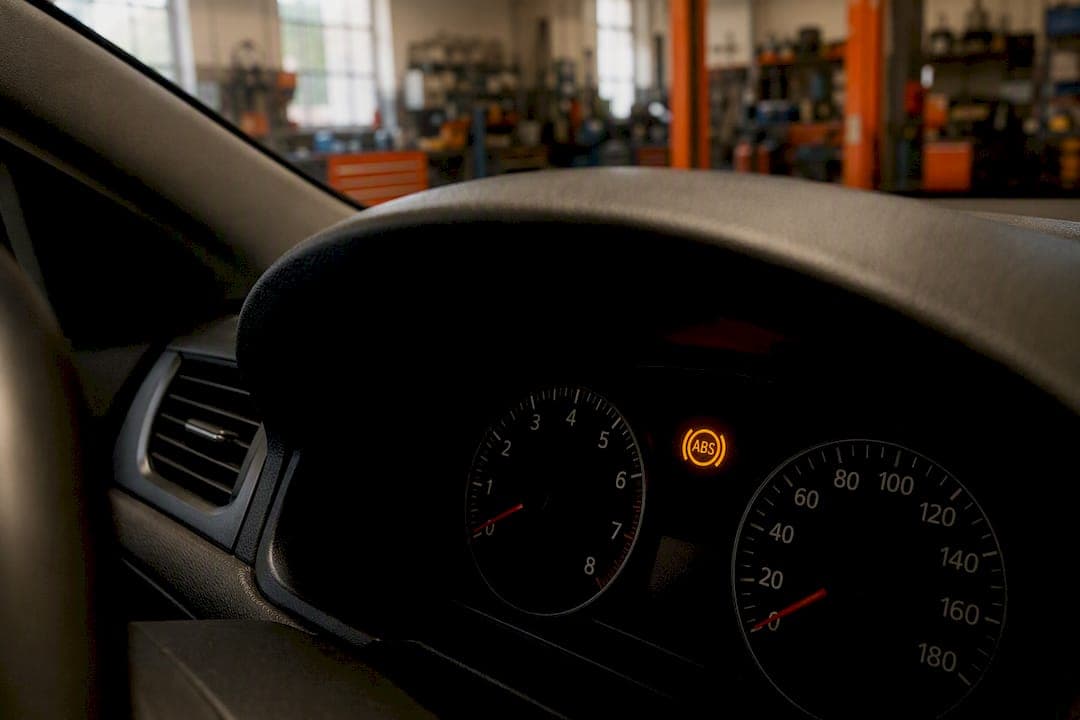
An illuminated ABS light means the anti-lock system has detected a fault and has likely disabled itself. Your mechanical brakes still work, but you've lost the anti-lock safety net that keeps your wheels from locking up in a hard stop. If that's the only warning lit, a short, careful drive to a shop is generally fine. If the red brake warning light joins it, or the pedal feels soft, pull over and call for a tow.
TL;DR:
- The most common cause of an ABS warning light is a faulty wheel speed sensor, often due to dirt, salt, or corrosion, which is usually easy to clean or fix.
- Checking brake fluid level, tire pressure, and ABS fuses can resolve many ABS warning issues without needing a shop visit.
- Immediate stopping is necessary if the brake pedal feels soft, or the red brake warning light appears, indicating a potential brake failure.
- Diagnosing ABS faults reliably requires a dedicated ABS scan tool that reads specific codes, helping avoid unnecessary part replacements.
- Routine maintenance such as cleaning sensors, inspecting wiring, and monitoring brake fluid can dramatically reduce the likelihood of ABS light problems.
Table of Contents
- Why is ABS light on and what does the system actually do?
- What causes the ABS warning light to come on?
- What should you do right now when the ABS light comes on?
- How do mechanics diagnose an ABS system malfunction?
- How much does it cost to fix the ABS light, and how long does it take?
- When should you stop driving immediately?
- How do you prevent ABS light problems in the future?
- How do you reset the ABS light after a repair?
- A practical note on when to stop worrying and just book the appointment
- Book a diagnostic through GarageMap before the ABS light becomes a bigger bill
- Sources
Why is ABS light on and what does the system actually do?
Anti-lock braking prevents your wheels from locking during a hard stop by rapidly pulsing brake pressure at each wheel individually, dozens of times per second. That pulsing is what lets you keep steering while stopping hard. Without it, a wheel that locks up simply skids, and a skidding tire steers nowhere near as well as a rolling one.
Your standard hydraulic brakes don't disappear when the ABS light comes on. Press the pedal and the calipers still clamp the rotors the same way they always have. What changes is what happens under threshold braking, the kind of stop where you're mashing the pedal because a deer just ran across the road or the car ahead slammed its brakes.
Losing ABS matters most in a few specific situations:
- Panic stops on dry pavement, where locked wheels extend stopping distance and kill steering
- Wet roads, where the margin between rolling and skidding is already thin
- Ice and packed snow, where a locked wheel can send the car into an uncontrolled slide
- Emergency swerves, where you need to brake and steer at the same time
Without ABS, the driver has to manually modulate brake pressure to avoid lockup, and most drivers can't do that reliably under stress. That's the real risk here. It's not that your brakes are broken. It's that the system built to compensate for human panic reactions has gone quiet.
What causes the ABS warning light to come on?
Four or five culprits account for the overwhelming majority of ABS lamp complaints, and they range from a five-minute fix to a genuinely expensive repair.
Wheel speed sensors top the list. These sensors sit near each wheel hub and read a toothed ring (called a reluctor ring) to tell the ABS module how fast that wheel is spinning. Road salt, brake dust, and general grime foul the sensor face or damage the ring teeth, especially in climates where winter roads get salted heavily. A contaminated sensor is often a clean and recheck, not a replacement.
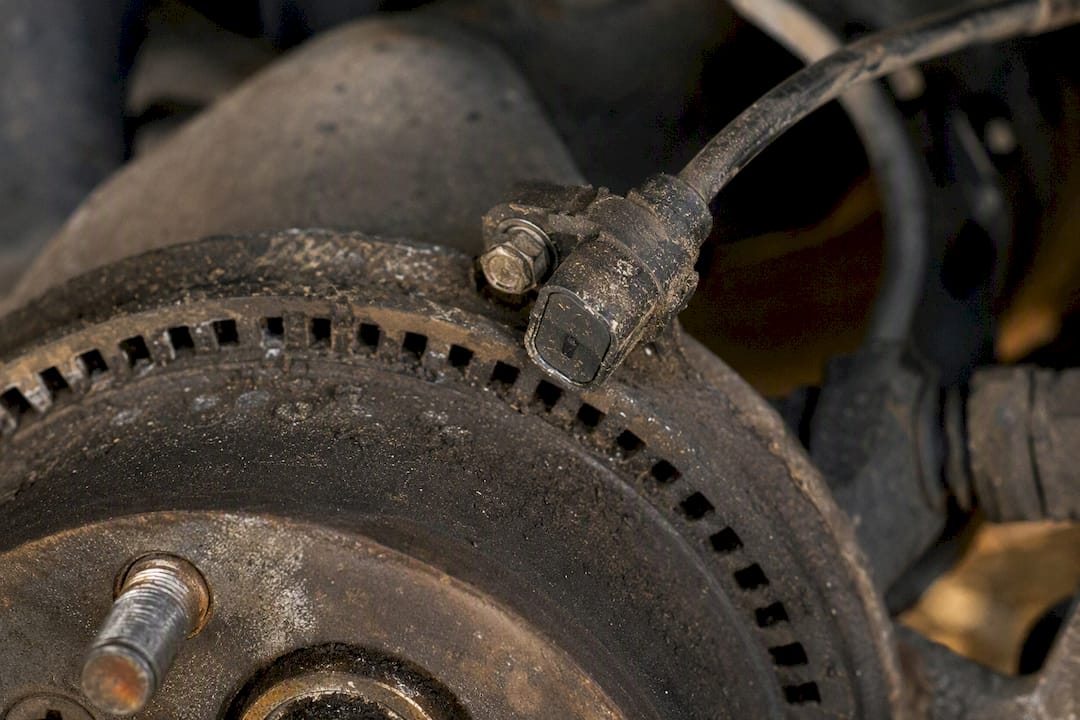
Low brake fluid is next, and it's worth checking before anything else because it takes thirty seconds. Fluid drops from a slow leak, worn pads, or a master cylinder issue, and the ABS module treats low fluid as a system fault.
Electrical gremlins cause more ABS lights than most owners expect. A blown ABS fuse, corroded wiring at a wheel connector, or a weak battery throwing odd voltage readings can all trip the lamp without any actual brake hardware failing.
The ABS module or hydraulic pump is the least common cause but the most expensive. When the module itself fails or the pump loses pressure, you're looking at a real repair bill rather than a quick fix.
One detail worth knowing before you assume the worst: checking tyre pressure, brake fluid, and the ABS fuse resolves or at least clarifies a meaningful share of ABS complaints before a shop visit is even needed. Corrosion at sensor connectors is common enough in salted-road regions that it's treated as a standard failure mode by parts suppliers, not an outlier.
What should you do right now when the ABS light comes on?
Work through this in order, and don't skip steps just because the car still drives fine.
- Pull over safely and scan the whole dash. Is it just the ABS light, or is the red brake warning light on too? That single distinction decides everything that follows.
- Check brake fluid level at the reservoir under the hood. Low fluid is an easy, visible clue.
- Check tyre pressures. An underinflated or mismatched tyre can occasionally confuse wheel speed readings enough to trip a fault.
- Look for anything obvious, a visible fluid leak under the car, chewed-up wiring near a wheel well, a loose connector.
- Restart the vehicle. Some ABS faults are one-off glitches that clear on a restart, particularly after a battery reconnect or a voltage dip.
- Check your owner's manual for any model-specific reset procedure before assuming you need a shop.
If everything checks out and only the ABS light stays lit, you can typically continue to a shop. Drive at reduced speed, leave extra following distance, and avoid hard braking or slick sections of road you'd normally trust ABS to handle.
Pro Tip: Snap a photo of your dash with every light that's on before you restart the car. If the ABS light clears on restart but the fault was intermittent, that photo is useful information for a technician even after the light goes away.
If the fluid is visibly low, the pedal feels different, or you're not comfortable driving another kilometre, call for roadside assistance rather than gamble on a short trip.
How do mechanics diagnose an ABS system malfunction?
Not every code reader can see ABS faults. A basic OBD-II scanner pulled from a parts store shelf often reads only engine codes, so a shop or serious DIYer needs a scanner with ABS module access specifically.
These tools read what's called C0xxx codes, a code family dedicated to the anti-lock and stability systems. A code like C0035 typically points to a specific wheel speed sensor circuit, while others point to the pump motor, the valve body, or a wiring fault. Reading these codes first narrows the problem to a component or circuit before anyone touches a wrench, which is exactly the point.
From there, a technician typically runs through:
- Sensor resistance and output testing at each wheel
- Physical inspection of the reluctor ring for chipped or missing teeth
- Wiring continuity checks from sensor to module connector
- Module and pump function tests using the scan tool's live data
The reason this sequence matters is simple: guessing gets expensive. A scan-first approach avoids swapping parts blindly, which is how owners end up paying for a new sensor when the real problem was a $12 corroded connector. ABS-capable scanners themselves aren't exotic. Units that read ABS module codes are available at affordable prices., which is why more independent shops carry them as standard kit now.
How much does it cost to fix the ABS light, and how long does it take?
Repair costs split roughly into three tiers, and the range is wide because it depends entirely on what triggered the light in the first place.
- Low cost, same-day fixes: a blown fuse, a brake fluid top-up, or cleaning a contaminated sensor face. Parts here are inexpensive and labor is minimal.
- Moderate cost: replacing a wheel speed sensor, a reluctor ring, or a wheel hub assembly. Parts and labour vary a lot by make and model, since some sensors are a ten-minute swap and others require partial suspension disassembly.
- Higher cost: an ABS pump or control module. These jobs sometimes need special ordering and programming time, so expect the vehicle to sit longer at the shop.
Get the diagnostic code read and ask for a written estimate before authorizing any parts order. A quote based on a guess, rather than a code, is how simple jobs turn into expensive ones.
When should you stop driving immediately?
Some combinations aren't a "drive carefully to the shop" situation. They're a "pull over now" situation.
- The ABS light and the red brake warning light are on together
- The brake pedal feels soft, sinks toward the floor, or loses power dramatically
- You see brake fluid pooling under the car
- The steering feels loose or unresponsive, or several warning lights are lit at once
Any one of these means stop driving and arrange a tow rather than risk driving on brakes that may be failing outright, not just missing their anti-lock function.
How do you prevent ABS light problems in the future?
Most ABS faults trace back to neglect rather than bad luck, which means most of them are avoidable with a bit of routine attention.
Rinse road salt and grime off wheel wells during winter months, since sensors and reluctor rings sit right in the splash zone where salt accumulates fastest. Keep brake fluid topped up and have it flushed on the schedule your manufacturer recommends. Old fluid absorbs moisture over time, which affects both braking feel and the sensors that monitor system pressure.
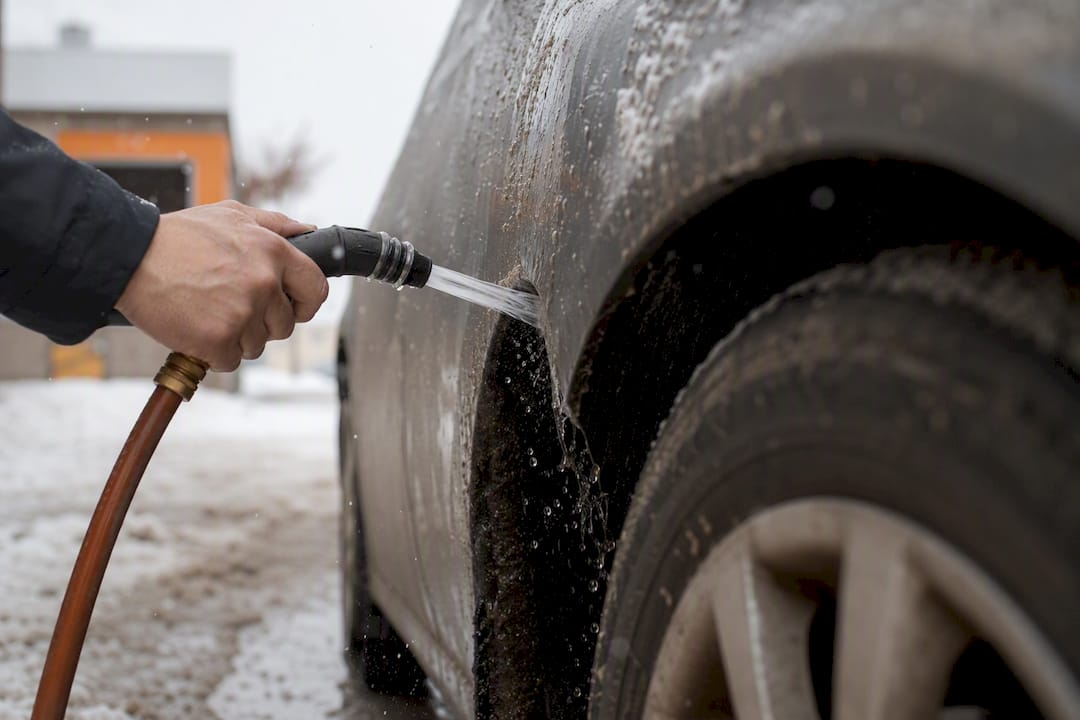
Address worn brake pads before they wear down to metal. A worn-out pad changes how fluid moves through the system and can drag fluid levels low enough to trigger a fault. Have wheel bearings inspected during regular service, since a failing bearing can throw off the sensor's read on wheel speed even when the sensor itself is fine.
A yearly inspection that includes a look at sensor wiring and connector condition catches corrosion before it becomes a warning light. Booking that through a service that covers general inspection and maintenance alongside brake work means one visit catches both.
None of this guarantees you'll never see the ABS light again, but it shifts the odds. Most contamination and corrosion faults are the direct result of dirt and salt sitting on a sensor for months, not a design flaw in the part itself.
How do you reset the ABS light after a repair?
Once the underlying fault is actually fixed, not just patched, the light usually clears on its own within a short drive as the module reruns its self-check. If it doesn't, you've got two realistic options.
The first is a manual reset through the vehicle's diagnostic system, which most shops handle as the last step of any ABS repair using the same scan tool that pulled the original code. This clears the stored fault memory rather than just turning off the bulb.
The second is a battery disconnect, unhooking the negative terminal for a few minutes to force every onboard module to reboot. This works on some vehicles and does nothing on others, since some ABS modules store fault codes independently of battery power. It's also worth knowing that a battery disconnect resets more than just the ABS light. It can clear your radio presets, some seat and mirror memory settings, and occasionally trigger a relearn cycle for the transmission or throttle body.
One thing to avoid: resetting the light without actually fixing the cause. The fault is still there. The light will come back, usually within a few days of driving, and now you've lost the early warning that made it easy to diagnose the first time around.
A practical note on when to stop worrying and just book the appointment
Most ABS lights aren't a crisis. They're a signal that something in a sensor, a wire, or a fluid level needs eyes on it before the small problem becomes a bigger one. The mistake I see drivers make most often isn't ignoring the light entirely, it's sitting on it for weeks because the car "still stops fine." That's true right up until the one time you need ABS and it isn't there.
Garagemap exists for exactly this moment: connecting drivers with vetted shops for diagnostics and brake repair without the guesswork of picking a name off a search results page. If you're not sure what's wrong, search engine diagnostics first. If you already suspect a sensor or fluid issue, search brakes directly.
— Andrii
Book a diagnostic through GarageMap before the ABS light becomes a bigger bill
Chasing down a reliable shop for an ABS diagnostic shouldn't take longer than the actual repair. Garagemap compares 128 vetted shops across Calgary, Airdrie, Chestermere, and Okotoks, so instead of cold-calling garages and hoping one has an ABS-capable scanner on hand, you search by the exact service you need and see who's nearby and set up for it.
Before you book, gather what a technician will actually ask for: any fault code your own reader picked up, when the light first came on, whether it flickers or stays solid, and any recent brake or suspension work. That handful of details often shaves real time off the diagnostic step.
Start at the engine diagnostics listings if you need the ABS codes read, or head straight to brake repair shops if you already suspect a sensor or fluid issue. Either way, Garagemap gets you to a vetted shop faster than sorting through generic search results on your own.
Sources
For deeper technical detail on ABS fault codes and repair procedures, see ABS fault light diagnosis, how ABS works, and this complete auto repair checklist for preparing for any shop visit.